




PCHi 2026 live: Jaka Biotech looks to redefine skin longevity with Anglysin IB


Key takeaways
- Anglysin IB targets skin aging through three mechanisms: blocking, clearing, and regulating advanced glycation end products.
- Unlike most anti-glycation actives, Anglysin IB actively removes accumulated AGEs rather than simply blocking their formation.
- Clinical validation across six efficacy dimensions positions Anglysin IB strongly for both Chinese and European longevity markets.
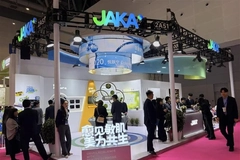
Jaka Biotech is showcasing its latest innovation, Anglysin IB, a multifunctional anti-glycation active targeting skin aging, at PCHi 2026 in Hangzhou, China, taking place March 18–20, 2026. The ingredient, which is extracted from Inula britannica flowers, contains phenols, flavonoids, and sesquiterpenes — a naturally occurring organic compound often used in cosmetic products for their skin-healing, soothing, and anti-irritant properties. The company says product works at the genetic level and also contributes to natural whitening of the skin. at stands out for working at the gene.
The company says the product works at the genetic level and also contributes to natural whitening of the skin.
Recently clinically validated across six efficacy dimensions, it is positioned for both the Chinese and European markets under the skin longevity trend. Innova Market Insights’ Top Personal Care Trends 2026 report indicates that consumers are becoming more accepting of aging as inevitable, while still seeking products that support long-term skin health, resilience, and confidence.
Personal Care Insights meets with Lannie Huang, Jaka Biotech’s regional marketing manager EMEA, live on the showroom floor to discuss the science behind the active, its differentiators, and the broader trajectory of ingredient innovation from Chinese manufacturers.
“It appeals to Chinese consumers because, apart from the in vitro and ex vivo test, we have also done a lot of clinical tests,” Huang reveals. “These show clinically that Anglysin IB has six dimensions of function.”
“These include reduced glycation, firming of the skin, increasing skin elasticity, and anti-wrinkle, to name a few.”
Inside the mechanism
Huang explains how the multifunctional active positions the ingredient for the Chinese and European markets. Additionally, the ingredient works through three “strategies.”
“The first strategy is to block protein glycation, the second is to clear the advanced glycation end products (AGEs), and the third strategy is to regulate the AGE signals,” Huang explains. “This third part means we have done the test on melanocytes and fibroblasts.”
Melanocytes in the epidermis produce melanin for UV protection and pigmentation, while fibroblasts in the underlying dermis generate collagen and other extracellular matrix components that give skin its structural integrity, firmness, and elasticity.
They are the primary targets of glycation — a process where sugar molecules bind to proteins, creating AGE products that accelerate aging.
“In fibroblasts, AGEs interact with AGE receptors (RAGE), triggering the senescence-associated secretory phenotype (SASP),” says Huang. “This causes aging in the fibroblasts and the melanocytes.”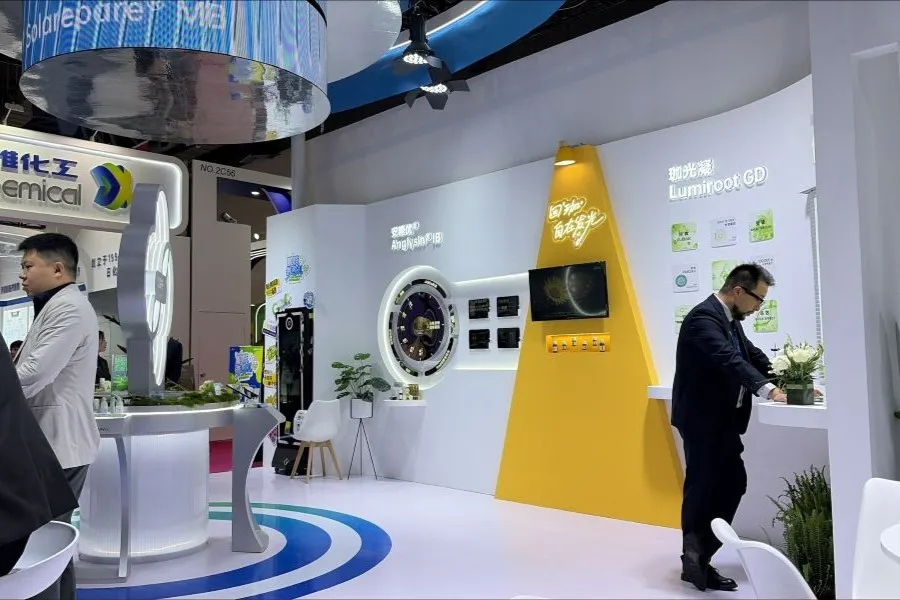 Jaka Biotech showcases Anglysin IB at its stand at PCHi 2026 in Hangzhou, China.
AGEs also increase tyrosinase, a rate-limiting enzyme that controls the production of melanin in the skin, hair, and eyes. It is the primary driver for the multi-step process of melanogenesis, but as people get older, the increase has been linked to age spots and “inflammaging.” Huang says that Anglysin IB can help block these actions.
Beyond blocking AGEs
Huang emphasizes that, while most anti-glycation actives on the market focus on blocking protein glycation, carbonylation, or receptor signaling. Anglysin IB adds a further step by actively clearing accumulated AGEs. Jaka Biotech states this mechanism is the ingredient’s primary point of differentiation.
Furthermore, Huang points out that Jaka Biotech’s R&D team has also investigated the ingredient’s effects at the gene regulation level, identifying a link between microRNA 145 and glycation-related aging.
Huang adds Anglysin IB has demonstrated the ability to regulate this microRNA, meaning it actively addresses glycation not only through biochemical pathways but at the genetic level.
“In this way, Anglysin IB gives consumers the whitening of skin naturally, and not just by makeup or some other ingredient that is not healthy to the skin,” Huang concludes. “Globally, I think this can also be connected to skin longevity, which is a wide concept that is also popular in Europe.”
Innova Market Insights data suggests that anti-aging claims in personal care launches grew 11% between 2020 and 2024, with skin care leading the category.
In future product development, Huang teases that Jaka Biotech will lean into pharmaceutical science and innovations in the brain health sphere.
With live reporting by Sabine Waldeck at PCHi 2026 in Hangzhou, China.