


Johnson & Johnson offers US$5.5B to end ovarian cancer talc lawsuits


Key takeaways
- J&J has proposed US$5.5 billion to settle around 76,000 talc claims.
- Scientific and regulatory disagreement over talc’s cancer risk continues.
- Consumer awareness of talc contamination and cosmetics oversight remains low.
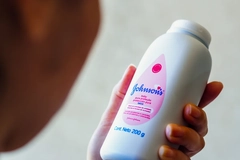
Johnson & Johnson (J&J) has proposed to pay US$5.5 billion to settle around 76,000 remaining lawsuits that claim its talc-based baby powder caused plaintiffs’ ovarian cancer. The deal requires the participation of lead plaintiff firms, which represent approximately 95% of the remaining claims.
The proposed settlement follows a favorable legal outcome for J&J. On July 22, 2026, a federal judge required plaintiffs to explain why their cases should not be dismissed based on a lack of evidence of how J&J’s talc products caused individual claimants’ ovarian cancer.
The ruling came after the plaintiffs withdrew their own specific causation experts on the issue.
“After decades of litigation and full vetting of the science in an extensive hearing, plaintiffs effectively conceded their inability to prove specific causation by withdrawing their experts on the topic in two bellwether cases,” Erik Haas, worldwide VP of Litigation at J&J, said in a statement.
“In a watershed moment, the court thereafter ordered plaintiffs to show why the remaining claims should not be dismissed, confirming what we have maintained for years: that these claims lack scientific merit and were sustained only by unreliable expert opinions that could not survive rigorous judicial review.”
If J&J’s proposal is accepted, the company would make an initial payment of no more than US$3 billion in 2027, but would then cease to make the additional payments until 2028.
Fight to end all fights?
J&J has been caught in talc-related legal battles for years, as thousands of claimants have alleged its talc-based products were linked to their cancers. Mesothelioma claims generally involve asbestos-contaminated talc being inhaled and causing tissue damage.
.webp) Talc was widely used in baby powder to absorb moisture and reduce friction.Meanwhile, ovarian cancer lawsuits have alleged that repeated use of talc-based baby powder around the genital area has allowed talc particles, or those contaminated with asbestos fibers, to travel through the reproductive tract and reach the ovaries, potentially causing inflammation or contributing to the development of cancer.
Talc was widely used in baby powder to absorb moisture and reduce friction.Meanwhile, ovarian cancer lawsuits have alleged that repeated use of talc-based baby powder around the genital area has allowed talc particles, or those contaminated with asbestos fibers, to travel through the reproductive tract and reach the ovaries, potentially causing inflammation or contributing to the development of cancer.
The link between asbestos and mesothelioma, among other cancers, is well established. Asbestos is a known carcinogen. But whether talc causes ovarian cancer remains disputed.
The wider controversy stems from how talc is mined: near asbestos deposits. Due to known contamination risks, regulatory bodies have disagreed on how to classify talc. EU scientific advisors rule it a probable carcinogen, but other regulators have rejected that classification, despite reviewing the same evidence.
US Food and Drug Administration (FDA) commissioned testing found asbestos in nine out of 52 talc-containing cosmetic products in 2019, including a sample from one lot of J&J baby powder. The findings prompted a recall. At the time, J&J reported that its own testing found no asbestos.
J&J stopped selling talc-based baby powder in the US and Canada in 2020, but by then, it already had tens of thousands of lawsuits.
The company attributed the switch to cornstarch-based formulas to internal business adjustments during the COVID-19 pandemic. It also announced a global phase-out of talc baby powder in 2022 and completed it in 2023.
All throughout, J&J has maintained that its products are safe, and has repeatedly referred to contradictory assertions as “junk science.”
However, in March, The Lancet retracted a 1977 article that lawyers defending cosmetics companies had used to argue that asbestos in talc was not considered dangerous. The article’s author was found to have been a paid J&J consultant who, at the time, shared a draft with the company before publication.
J&J denies that this was improper or affected the outcome of any talc lawsuits in its favor. The company’s VP of Litigation maintains that there is still no evidence to support the connection between the company’s baby powder and the plaintiffs’ cancer claims.
“The court’s order placed plaintiffs in an untenable position of having to present specific causation evidence... that does not exist,” Haas says.
 Haas says the proposed settlement would help J&J move past litigation and “develop medicines and devices that save lives.”“While we are confident the company would have ultimately prevailed with further litigation, as it has in the vast majority of cases tried to date, this resolution allows the company to put this matter behind it and remain focused on its mission to develop medicines and devices that save lives.”
Aspirationally asbestos-free?
The proposed settlement comes after a survey found that 73% of US adults wrongly believe the FDA tests cosmetics for safety before they go to market. The survey was conducted by ELSM Law, specializing in asbestos and mesothelioma litigation.
Almost half (41%) of the respondents said that they were completely unaware that talc can be contaminated with asbestos. Moreover, 45.5% of consumers believe asbestos testing is legally required for talc-containing cosmetics in the US, which it is not.
The US FDA proposed mandatory asbestos testing for talc-containing cosmetics in December 2024. However, the agency withdrew that proposal the following year under an order from the Trump administration, as a part of its Make America Healthy Again strategy.
The FDA cited scientific, technical, and legal concerns that were raised during the consultation, particularly what the ripple effects would be on other sectors.
Earlier this year, when the UK Health and Safety Executive (HSE) weighed its classification of cosmetic talc, it raised questions about whether “asbestos-free” status can be achieved and consistently demonstrated.
The HSE emphasized its scientific opinions — which fell short of classifying talc as a carcinogen — apply only to talc that does not contain asbestos. However, it cited a 2021 review that concluded: “cosmetic talc is not and never was asbestos-free.”