

How South Korea exports the K-beauty ecosystem
Korea’s cosmetics exports climb to US$12.4 billion as diplomacy, market-entry firms, service brands, and investors carry K-beauty into new markets
Key takeaways
- South Korea’s cosmetics exports reached US$12.4 billion in the first 10 months of 2026, up 27.3% year on year.
- Trade diplomacy, market-entry firms, and partnerships help K-beauty products and services expand into Africa, North America, and Latin America.
- Wall Street debuts and Korean IPOs are attracting investment into the wider K-beauty value chain.

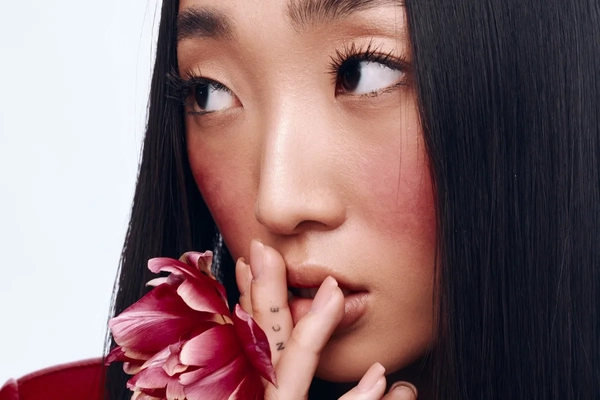
K-beauty has moved beyond exporting products to exporting the entire system behind its success. Manufacturers, platforms, market-entry specialists, service salons, aesthetic clinics, and investment vehicles are all following the products abroad as South Korea enters its trillion-dollar trade era.
The country’s Ministry of Trade, Industry, and Resources announced today that it has surpassed US$1 trillion in total exports, with cosmetics among the trade records driving it. Cosmetics exports alone reached US$12.4 billion in the first 10 months, marking a 27.3% climb since last year.
Diplomacy is helping pave the category’s path to new shelf space. In Nigeria, Seoul’s ambassador is pitching K-beauty as the next step in the two countries’ US$1.1 billion trade relationship, asking for predictable customs and tax slack in return.
Meanwhile, in Brazil, South Korean President Lee Jae-myung is pressing for relief from a 25% tariff on Korean cosmetics.
Market entry companies are also moving to facilitate easier collaboration between international partners. Korea-based Hansol Bio has launched an online platform for overseas buyers, and growth partner Front Row has opened a Seoul office to funnel Korean brands into the US.
At the same time, Korean labels are pouring into Western retailers, and service-based companies are finding their footing. Korea’s largest chain of hair salons backed by Blackstone private equity, Juno Hair, is expanding its salons and training to the US, while Vain’s derma-products are rolling out into medical aesthetic clinics.
The multi-faceted expansion routes come as capital backing for K-beauty also grows. Guinness Atkinson has launched a dedicated K-beauty exchange-traded fund (ETF), opening the K-beauty value chain up to Wall Street investors.
“Korea has been quietly laying the foundation for an export titan,” says Jim Atkinson, CEO at Guinness Atkinson. “What looks like an overnight sensation on social media is actually a structural shift in global consumer behavior.”
Countries talk trade
In Nigeria, South Korean ambassador Jeong Yo-an said during a November briefing that he wants to grow K-beauty in the country. “Many Nigerians already love Korean skin care and cosmetics. With so many young consumers, Nigeria can become a major new market for K-beauty in Africa,” The Sun quotes him. “In time, we hope to see local distribution, local jobs, and Nigerian partners in this business.”
.webp) Korean beauty brands are entering new markets through retail partnerships and local distribution.The pitch came with a list of requests, including clear rules on foreign exchange, customs and tax, and an overdue tax agreement.
“Investors need one thing above all: predictability… Our two countries signed a double taxation agreement in 2006. Twenty years later, it is still waiting for ratification. Moving it forward would send a strong signal to investors.”
The talks came days after Skncon, Africa’s annual K-beauty conference, which took place in Lagos, Nigeria. At the event, 15 K-beauty companies showcased their products. Choi Hyung-kwon, chief of the Korean embassy’s commercial arm, said the agency is increasing its focus on consumer industries like beauty.
Nigeria’s side pushed for exchange, rather than just accepting imports. Gertrude Danquah Addo, general manager of Ghana-based GoodSkin Company, emphasized that Africa should help shape its skin care industry, not just receive it, The Guardian Nigeria reports. She moved for “an exchange of knowledge and expertise.”
Korea’s trade push extends beyond Africa. In Brazil, President Lee told a cabinet meeting that Brazil’s current 25% tariff on Korean cosmetics “makes no sense,” and said that negotiations “have to be done fast,” according to the Seoul Economic Daily.
Lee proposed that Korean brands could produce in Brazil to dodge the fee. “The answer was that if it’s not ‘Made in Korea,’ they won’t buy it,” he said. “People on the ground told me it has to be manufactured in our country.”
Foreign Minister Cho Hyun said the re-election of Brazilian President Luiz Inácio Lula da Silva in October had created favorable political conditions to drive business forward. “I think we can now drive on the highway,” he said, hinting at the expectation for a prompt follow-up to Lee’s “special appeal to him” to lower the tariffs, according to the Seoul Economic Daily.
With Seoul bargaining for lower tariffs and clearer rules in the markets it deems profitable, Korean brands gain a government-assisted slipstream into new shelf space, raising the bar for competitors without the boost.
Smoother cross-continental business
K-beauty’s overseas push is also helped along by expanding infrastructure connecting Korean suppliers and brands with foreign buyers. Hansol Bio, a K-beauty cosmetics contract manufacturer, has launched an online platform for its overseas clients.
.webp) South Korea’s cosmetics exports are rising as K-beauty companies expand internationally.It currently exports to 71 countries, and boasts a monthly production capacity of over 1.2 million units. The platform works to make it easier for its overseas clients to browse formulation options, packaging, ready-to-launch concepts, and request quotes and samples.
Meanwhile, Front Row, a US-based growth partner, has opened an office in Seoul to give Korean brands a direct route into the country.
Jinny Kim, senior VP of Korea at Front Row, says that Korean brands “move at a speed and with a cultural instinct that’s hard to replicate anywhere else — trend cycles are shorter, content and commerce are inseparable, and founders expect a partner who understands that rhythm.”
The company plans to connect Korea’s innovation ecosystem with its expertise in accelerating brands across beauty and wellness in the US and Europe.
“We are building a bridge in both directions: helping Korean brands turn local strength into durable global growth, while bringing our global partners closer to the innovation and thinking coming out of Korea,” says Christopher Skinner, co-founder of Front Row.
Boardrooms eye North America
With multiple lanes easing market entry, the wave of Korean companies realizing their expansion strategies has yet to stall.
In Canada, K-beauty giant APR has rolled out its Medicube brand to over 1,300 Shoppers Drug Mart stores. The company cites data that Canadian sales of K-beauty products rose 57% last year to US$164 million. As such, it has plans to widen its Medicube range and launch through Costco Canada later.
In the US, CJ Olive Young says it will expand to seven stores by the first half of 2027, adding five locations across the Los Angeles and San Diego areas.
The US is K-beauty’s largest export market, with exports hitting US$2.35 billion from January to September, up 40.6% from the previous year, according to Korea’s Ministry of Food and Drug Safety.
Tapping into that momentum, K-beauty brand Glow Recipe is making its market entry through a nationwide Ulta launch in December, with a planned 1000 stores to carry its products. The move marks the brand’s first major retail expansion.
.webp) Investment is increasingly targeting the wider K-beauty value chain.A number of moves are uniquely taking K-beauty beyond products into services. Juno Hair, Korea’s largest salon chain backed by private equity giant Blackstone, announced it plans to establish a network of salons across the US.
Meanwhile, Korean biomaterials company Vain has partnered with US-based medical device company Cartessa Aesthetics. Their collaboration will bring Vain’s Juvelook serum to US aesthetic practices, joining the fleet of derma-driven business moves.
Capital in motion
K-beauty’s profitability is also attracting investor attention. In July, US investment firm Guinness Atkinson filed a request to launch a dedicated K-beauty investment fund on the New York Stock Exchange. The request has now been approved, establishing the ETF, with KBTY as the ticker.
The ETF gives investors exposure to the entire K-beauty value chain, including brands, contract manufacturers, retailers, and medical aesthetics companies, rather than just investing in one link.
“What looks like an overnight sensation on social media is actually a structural shift in global consumer behavior. With [the ticker] KBTY, we are excited to give investors a dedicated vehicle to participate directly in the rapid global expansion of K-beauty,” says CEO Atkinson.
Five days later, Goodai Global, owner of Beauty of Joseon, applied to list on the country’s main stock market, the Korea Exchange. The listing would raise the company’s capital and create a publicly traded currency, boosting an already smooth road to further expansion.