

EADV 2026: Kenvue data targets skin barrier health and hair regrowth


Key takeaways
- Kenvue is spotlighting new clinical research on niacinamide, colloidal oat, and 5% minoxidil for skin and hair health.
- Neutrogena and Aveeno findings point to benefits for hydration, skin barrier support, redness, hyperpigmentation, and eczema care.
- Regaine data suggests earlier treatment of male hair loss may deliver greater hair regrowth.
Neutrogena, Aveeno, and Regaine have revealed skin and hair care efficacy findings for hero ingredients such as niacinamide, trehalose, colloidal oat, and 5% minoxidil.
The Kenvue subsidiaries are presenting findings on the efficacy of the formulations at the European Academy of Dermatology and Venereology (EADV) Congress in Vienna, Austria, (September 30–October 3).
The research focuses on Neutrogena’s multifunctional sun care solutions and the efficacy of Aveeno’s colloidal oat formulations in skin care. In hair care, the company is presenting findings on the impact of early intervention on Regaine’s 5% minoxidil hair regrowth performance.
“The research we are presenting at EADV advances our understanding of how ingredients such as niacinamide, colloidal oat, and 5% minoxidil can support skin barrier health, improve visible skin concerns, and promote hair regrowth, respectively,” says Kate Stockman, VP and head of EMEA R&D at Kenvue.
Stockman also underscores that improvement in these categories can contribute to consumers’ well-being as they provide confidence that is integral to the overall quality of life.
Multifunctional sun care
Kenvue’s skin care subsidiary Neutrogena’s research is highlighting multifunctionality in sun care formulations as consumers increasingly gravitate to sunscreens that address broader skin care touchpoints.
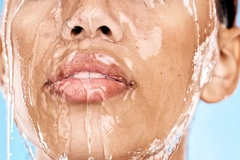
The research on Neutrogena Ultra Sheer Invisible Fluid Sunscreen Oil Control 50+ demonstrates how a broad-spectrum sunscreen formulated with 2% trehalose and 2% niacinamide can help address oily and acne-prone skin while providing daily sun protection.
The research, which had a sample of two small multi-ethnic Brazilian populations with acne-prone and oily skin, demonstrated 56% reduction in visible redness after 28 days and a 46% reduction in acne-related hyperpigmentation. Skin oiliness and visible shine were also reduced, and skin hydration increased by 13%.
The brand cited high consumer satisfaction, with 90% of participants reporting less skin oiliness and 78% reduced acne marks.
A second study examined the multifunctional benefits of the brand’s sunscreen, Ultra Sheer Invisible Fluid Sunscreen Hydration Fluid 50, in women with dry skin. The product is formulated with 2% niacinamide and vitamins C and E.
The findings indicated that regular use resulted in skin hydration improvement by 22% and that skin barrier integrity was bolstered. The researchers also reported that skin tone uniformity and radiance showed improvements, and visible facial spot size associated with hyperpigmentation was reduced.
Consumer satisfaction was also high in the study, as over 90% of participants reported noticing increased skin moisture after 28 days of use. The brand reported that refinements in visible skin tone and discoloration continued for 56 days.
Tapping the multifunctionality and skinification trends in UV protection, Neutrogena recently launched a sunscreen technology called Cloud-Tech, centering the recently US FDA-approved UV filter bemotrizinol. The ingredient touts stronger UVA protection than older filters while offering a lighter skin feel.
Colloidal oat for skin barrier
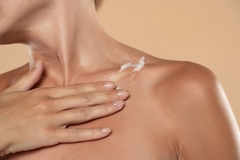
Aveeno is presenting its research on the efficacy of a colloidal oat formulation and its support in skin recovery after UV-related damage. The dermacosmetic skin care brand, which focuses on oat-based formulas, underscores the oat’s skin-soothing properties. Aveeno’s new research shows how colloidal oat can bolster skin barrier integrity and recovery after UV exposure.
The preclinical and clinical studies researching the brand’s proprietary Triple Oat Complex report heightened production of skin barrier proteins, such as filaggrin and loricrin, and protection of the proteins following UV exposure. The complex is also reported to encourage accelerated skin recovery after application and improved moisture and enriched ceramide production.
Furthermore, the brand reports the findings of an international survey of 178 dermatologists and pediatric clinicians across Germany, Italy, the UK, and the US. The survey indicates clinician preference for an Aveeno colloidal oat-based emollient to be used alongside topical corticosteroids in eczema management.
Of the responding clinicians and dermatologists, 87.6% stated that they often suggest a particular colloidal oat-based emollient alongside topical corticosteroids. Additionally, 92.7% of respondents reported that the emolient reduced or eliminated the need for corticosteroid use for skin treatments.
The brand states that clinicians reported benefits regarding skin barrier support, moisture, and mitigated treatment-related concerns.
Kenvue adds that the findings demonstrate the perceived value of colloidal oat-based emollients as a supporting formulation for eczema care.
Nipping hair loss in the bud
Regaine’s research indicates that earlier hair loss mitigation may yield better hair regrowth results. The hair loss treatment brand’s research shows that using 5% minoxidil, a hair loss active ingredient, demonstrated better results in treating male androgenetic alopecia.
Male androgenetic alopecia, which impacts an estimated 30%-50% of men by age 50, is the most common form of hair loss for men. With its prevalence, it is increasingly attracting industry efforts to produce efficacious solutions.
Regaine’s latest research examined how age and hair loss severity may impact outcomes in men using its 5% Minoxidil Topical Foam.
The post-hoc analysis of a Phase III clinical trial observed greater hair regrowth in younger men and in those at earlier stages of hair loss, as classified by the Norwood-Hamilton scale. The analysis looked at changes in non-vellus hair count after 16 weeks of treatment with Regaine 5% Minoxidil Topical Foam.
Findings of the analysis showed that men between 20 and 30 years old displayed an average increase of 26.25 hairs from baseline after 16 weeks, in contrast with 19.93 hairs among men over 30 years old.
In the impact of the stage of hair loss, men with Type III hair loss on the Norwood-Hamilton scale showed an average increase of 23.06 hairs, compared with 18.7 hairs among men with Type IV and Type V hair loss.
Statistically significant improvements in hair regrowth versus placebo were observed across all hair loss classifications, Regaine reports.
The study concluded that while the foam encouraged hair regrowth across all ages and stages studied, these factors indicated a notable impact on regrowth value.