


Powered by machine learning: L’Oréal & Nvidia accelerate beauty discovery partnership with AI
The move is slated to “bridge atomic-scale discovery with real-world consumer benefits.”


Key takeaways
- L’Oréal and Nvidia expand their partnership to apply machine learning and computational chemistry to formulation discovery at an atomic scale.
- By simulating ingredient performance in a virtual environment, L’Oréal is reducing product development time by 100, speeding up breakthroughs in skin care.
- With AI-powered simulations, L’Oréal is setting a new standard in skin protection and tone management, creating advanced beauty solutions with precision and efficiency.

French global beauty brand L’Oréal is expanding its AI partnership with tech giant Nvidia, aimed at accelerating and redefining beauty innovation through AI-driven computational chemistry.
By integrating Nvidia Alchemi’s machine learning framework directly into its R&I ecosystem, the beauty giant is creating a beauty and skin care AI engine that is designed to enable breakthroughs in formulation discovery by predicting how molecules will perform and interact on an atomic scale.
Enabling faster, more agile processes
This move will enable L’Oréal to simulate ingredient performance and texture in a virtual environment, empowering L’Oréal scientists to test thousands of variables simultaneously, dramatically reducing the transition from laboratory concept to finished product.
The outcome is a discovery process that is 100 times faster than traditional methods, resulting in a more agile innovation process that maximizes the potential of the group’s proprietary active ingredients for skin protection and preventing premature aging.
The initiative is currently focused on two key pillars of skin science: photoprotection and skin tone management.
Leveraging Nvidia Alchemi for these areas allows for the identification of optimal formulations in a digital environment before they ever reach the physical lab. By optimizing molecular behavior in these categories, L’Oréal aims to set a new industry standard for performance, providing highly advanced and scientifically precise beauty solutions for its global consumers.
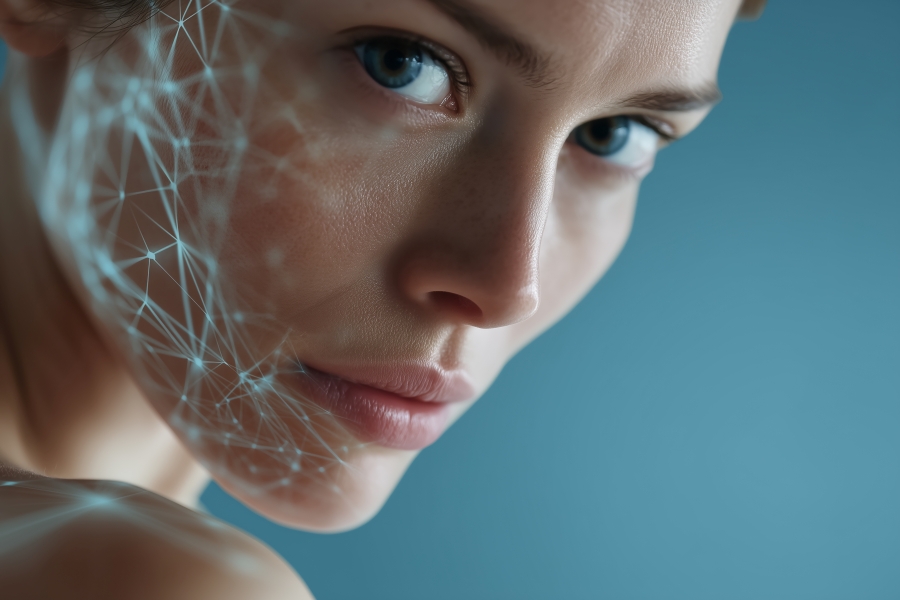 L’Oréal is creating a beauty and skin care AI engine that is designed to enable breakthroughs in formulation discovery.“Our collaboration with Nvidia brings a new dimension into our research labs,” says Barbara Lavernos, deputy chief executive officer of Research, Innovation, and Technology at L’Oréal.
“By applying AI-powered molecular simulation to our most proprietary actives, we’re bridging atomic-scale discovery with real-world consumer benefit — accelerating the development of more effective, more sensorial and accessible products for consumers around the world,” she adds.
“By integrating Nvidia Alchemi into its R&D workflows, L’Oréal can simulate ingredient performance at an atomic scale, accelerating breakthrough discoveries in formulation and delivering advanced beauty and preventive products to consumers,” says Azita Martin, VP and general manager of AI for Retail and Consumer Packaged Goods at Nvidia.
Future-forward beauty discovery
AI is gathering speed in the beauty and cosmetics arena, as it allows users to see the benefits before investing in products, and AI-enabled conceptualization and manufacturing are rapidly creating an accelerated loop for cosmetic innovation.
Subsequently, it appears that the beauty industry has entered a technology race, and cosmetic companies that do not control their own computing power and data risk becoming dependent on those who do. As AI powers product design, manufacturing, and personalization, brands’ technology infrastructure and data now determine whether they can compete in the race.
Last month, Personal Care Insights spoke with Nvidia about tech supplies for the AI race in beauty. Nvidia’s Graphics Processing Unit supply is becoming a strategic asset for beauty, as AI factories and personalization depend on computing power.
Beauty’s new battleground? AI and data drive skin care tech race
The move comes as a continuation of the history between the companies. In June 2025, Personal Care Insights reported that L’Oréal and Nvidia partnered to scale AI’s use across product development, marketing, and consumer experience.
The collaboration aimed to apply Nvidia’s AI Enterprise software to speed up how L’Oréal builds and rolls out AI tools, especially for 3D product rendering, generative content creation, and personalized By simulating ingredient performance in a virtual environment, L’Oréal is reducing product development time by 100, speeding up breakthroughs in skin care. shopping services. Using Nvidia’s infrastructure, L’Oréal hopes to increase its efficiency and reach in digital campaigns and platforms.
The company already had several projects underway at the time of publication, including CreAITech, L’Oréal’s generative AI platform for 3D content, and Noli, an AI-driven personalized beauty marketplace.
L’Oréal will present this next-generation predictive formulation science at the Nvidia GTC AI Conference in San Jose, California, US, from March 16-19, 2026. This presence at a global AI event marks a major milestone for the partnership, showcasing L’Oréal’s position in the future of tech-driven beauty.