




Reshaping men’s grooming: Targeted innovation moves from function to finesse


Key takeaways
- Men’s personal care demands are shifting from basic functionality to personalized, sensory-led, and science-backed grooming solutions.
- Targeted hair, skin, and deodorant products are outperforming multi-function formats as men adopt more structured grooming routines.
- Brands that balance high performance with natural, aluminum-free, and confidence-building positioning are driving growth and retail expansion.

The men’s personal care market continues to gain traction with many product launches so far this year across categories such as deodorants, hair care, skin care, and hand care. Men’s care solutions are increasingly aligning with the consumer bases’ specifications and positioning themselves within the sector’s niches.
In hair care, Nutrafol and Just For Men have introduced anti-aging products combating hair loss and graying hair. Dr. Squatch and Dove released new deodorant collections, increasing the range in scents and natural options. In the shaving product category, Gillette India experienced a 5% stock surge, and BIC released a new two-in-one trimmer-shaver.
Innova Market Insights data indicates that men’s consumer trends are shifting toward more holistic grooming practices rather than purely functional ones, with scents and sensory pleasures playing a key role as drivers. Men are also increasingly opting to buy sustainability-forward, ethically-produced, and science-backed products that are personalized. This demand signals how men are moving away from the one-size-fits-all approach the category has historically taken.
All in the hair
Male consumers’ demand for pinpointed products is resonating across markets. Nutrafol has introduced a hair growth product specifically formulated for men over 50. The product, touted as a “first-of-its-kind,” moves away from generalized offerings around men’s hair loss products and instead takes a holistic, full-body approach to follicle reinforcement. The supplements address the biological differences that come with age.
US-based men’s care brand Just For Men has also expanded its hair and beard color portfolio by introducing Grey Reverse. The daily hair serum uses peptide technology to reinvigorate the hair’s natural pigmentation process and prevent grey hairs. The product further promises to reverse already greying hair.
For the launch of Grey Reverse, Just For Men surveyed 2,000 millennial and Gen Z men and found that 68% of men care more about their appearance today than they did five years ago.
On average, men have seven steps in their daily beauty routine, including body care, facial hair, and head hair. Nearly 60% of the surveyed men were concerned with signs of aging, and 70% said they would take external measures to reduce age-related appearance changes.
The survey also corroborated the shift from convenience-led choices to more personalized and targeted approaches. Only 37% of the men reported using multifunctional products such as two-in-one formats.
Smell good, feel good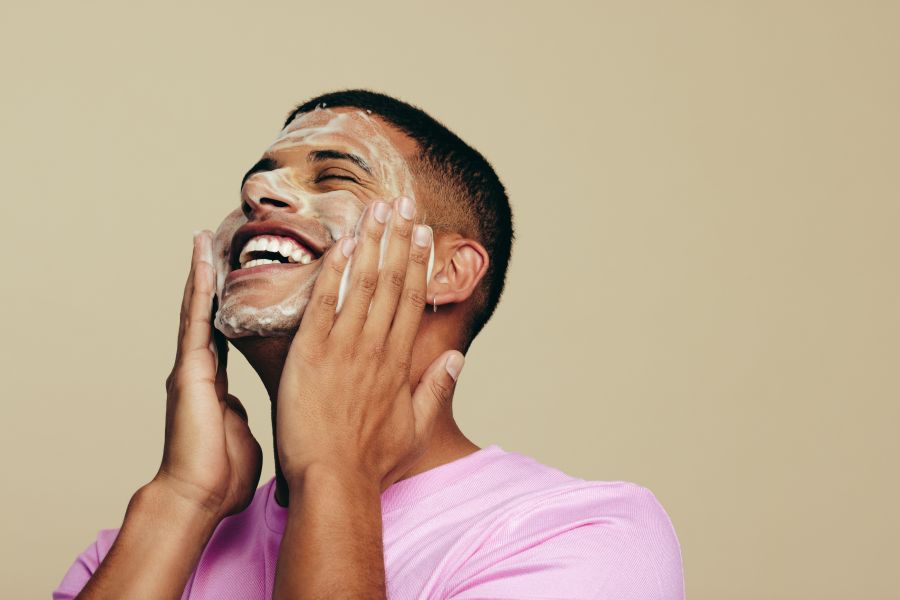
Men are adopting more structured and intentional grooming routines.
Beyond hair care, men’s cosmetic innovation is following the industry trend in olfactory-led product launches in high-performance formats.
Dove Men+Care has unveiled a mood-boosting aluminium-free deodorant collection, tapping into the growing demand for neurocosmetics. The collection targets the natural ingredient-oriented consumers avoiding aluminium in deodorants while offering a range of scents. As part of Dove’s Men+Care range, the collection promises to deliver long-lasting odor protection.
Dr. Squatch is also expanding its natural deodorant range with the introduction of Invisible Glide deodorant and Spray deodorant. The products aim to marry the functionally motivated behaviors of male consumers while tapping sensory demands.
Aiming to de-stigmatize men’s personal care, Moi Aussi released men’s hand care products this year, with a range including hand creams and nail polishes. With the company name translating to “Me Too,” the company aims to lift taboos on men’s personal care by including hand care in its zeitgeist.
Manly money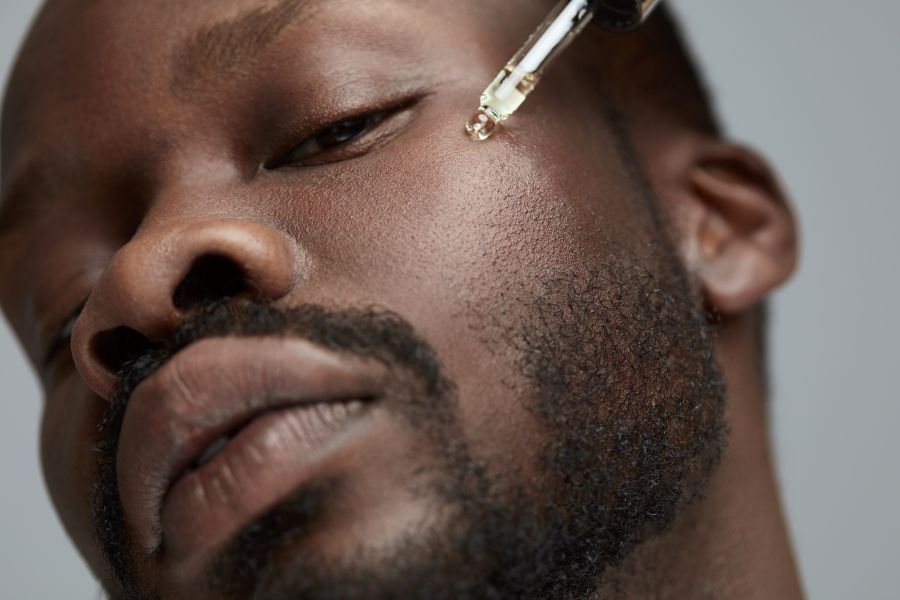
Personalization is reshaping men’s skin and hair care choices.
Personal care brands specifically targeting men’s grooming products are proving lucrative. Viking Revolution, a brand focusing on hair and beard grooming, has sustained consistent year-on-year growth since its inception in 2016. In January, the company expanded its operations by launching in 900 brick-and-mortar Walmart locations after previously operating primarily as an e-commerce brand.
Gillette India reported a 37% profit jump in January, as its tried-and-tested ranges of shaving razors and creams remain in demand, driving shares up by 5%. Demand for grooming products is driven by increased disposable incomes and urbanization in young populations.
Gillette competitor BIC entered another men’s care niche with Flex 5 Trim & Shave, a first-to-market two-in-one grooming product. The product features an interchangeable head that lets consumers switch between shaving and trimming with the same product.
BIC’s insights indicate that 98% of men who trim also shave, suggesting a product convergence. The company highlights that the product offers convenience without compromising on performance.
A number of the companies encourage men to adopt more refined self-care practices while maintaining traditionally masculine brand messaging. Viking Revolution tells its consumers to “enhance your inherent ruggedness” with their products, while Just For Men says “feel like a man, smell like a champion.” Moi Aussi, in promoting their colored nail products, refers to their range as embracing color “with restraint.”
Overall, the trends indicate a move toward refinement, variety, and natural products while maintaining high standards of convenience and performance.