

Beauty in 2026: Neurocosmetics and inclusivity define cosmetic trends

Key takeaways
- Neurocosmetics and inclusivity are predicted to shape beauty trends in 2026 with a focus on sensory solutions and diverse products.
- K-beauty’s second wave is expanding globally with more inclusive options and increasing popularity.
- Biotechnology is said to drive innovation in sustainable beauty products in 2026.

Industry experts predict that next year’s beauty trends will feature dermocosmetics, inclusivity, K-beauty, and biotechnology.
This year was defined by longevity and saw the rise of biotech and K-beauty — all three are predicted to continue increasing, but in new formats.
“By 2026, one of the foremost trends shaping the personal care industry will be the rise of Neuro-Skin Aging, a scientific frontier at the intersection of dermocosmetics, neuroscience, and longevity research,” Amandine Scandolera, head of Biological Evaluation, Givaudan Active Beauty, tells Personal Care Insights.
Meanwhile, Spate’s Future of Beauty report identifies inclusivity, K-Beauty’s second wave, and biotech becoming a standard as the cosmetics industry’s next major swings.
Neuroscience fuels innovation
Givaudan Active Beauty’s latest explorations into skin biology reveal that aging is not only a structural or biochemical process, but also a neurosensory one. The ingredients supplier predicts that this will become pertinent in the next wave of beauty actives.
“Over time, the decline in sensory neuron activity alters the skin’s ability to sense, communicate, and regenerate. This loss of neural connectivity weakens the skin’s responsiveness and vitality, impacting both its physical function and emotional perception,” says Scandolera.
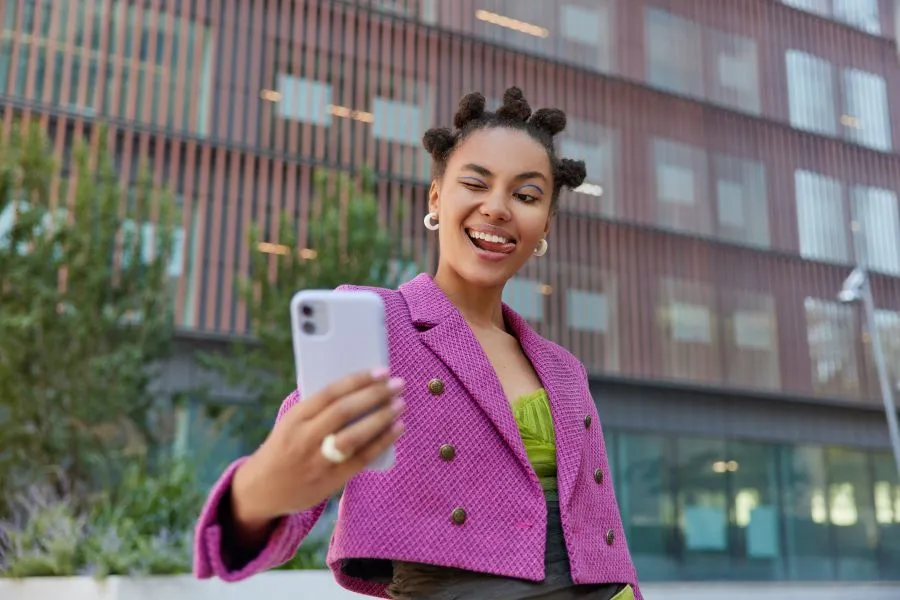 The future of beauty may be more inclusive. The scientific basis for this approach was reinforced by recent recognition at the 35th IFSCC Congress, where Givaudan Active Beauty’s research on “The aging process: understanding the link between neural aging and skin sensitivity,” was ranked among the top 10 presentations.
The work focused on the development of the first ex vivo model of reinnervated aging skin, enabling a study of the decline in sensory neurons and laying the foundations for the development of targeted pro-sensory active ingredients.
Romain Reynaud, R&D director at Givaudan Active Beauty, explains that as research into neuro-cutaneous aging progresses, it is becoming increasingly clear that connectivity underpins skin function at all levels.
“Neural networks connect the epidermal and dermal layers, orchestrating a continuous dialogue between cells and facilitating communication with the central nervous system. This cellular connectivity supports regenerative capacity, maintains sensory acuity, and preserves the overall vitality of the skin,” Reynaud says.
How this effects skin formulations is predicted to proliferate through 2026.
Scandolera adds that the industry is moving beyond traditional anti-aging toward pro-sensation approaches. “By bridging dermocosmetics and neuroscience, we can design next-generation ‘pro-sensation’ active ingredients that preserve both skin function and sensory acuity, redefining the science of skin longevity.”
Aesthetic predictions
Dermatology and cosmetics intersect at aesthetic medical solutions.
Caroline Van Hove, president of Tiger Aesthetics, tells us that aesthetic medicine is undergoing a profound shift away from artificial fillers and short-term solutions toward treatments that work with the body’s natural biology.
“At the forefront of this evolution is AlloClae, the first structural adipose tissue allograft designed specifically for aesthetic body contouring,” says Van Hove.
Van Hove says the industry is pivoting toward more regenerative approaches, and the future will be where beauty and biology work together. Neurocosmetics is predicted to redefine skin care for 2026.
“The clinical need for this innovation is clear. According to a 2025 consumer survey, 84% of aesthetic patients seek treatments that work with their body’s own regenerative processes,” she says.
“Meanwhile, the rapid rise in weight loss medication usage has led to an increased demand for volume restoration, particularly in the hips, buttocks, and breasts. Traditional options — autologous fat transfer and synthetic injectables — come with limitations ranging from invasiveness to lack of longevity.”
Johnny Franco from the Fellowship in the American College of Surgeons also tells us that patients are no longer satisfied with temporary fixes or artificial enhancements. He says, instead, they’re seeking solutions that support long-term skin health, align with their body’s biology, and offer more natural-looking results.
Inclusivity increases
Spate’s Future of Beauty report, created in collaboration with futures agency Future Snoops, has found that inclusive beauty brands grew 1.5 times faster than less inclusive competitors in 2024. The research analyzed data from Google Search, TikTok, and Instagram from July 2024 to June 2025.
Almost all (95.1%) of disabled consumers say there aren’t enough accessible beauty options, and only 4% of beauty brands cater to neurodiverse individuals, revealing a gap in the market brands can consider in 2026.
Also in inclusive beauty, Spate has revealed a 1.1 million monthly popularity for “shade matching” in consumer search. Additionally, the Future of Beauty report showed a 367.8% year-over-year growth in monthly popularity with “sensory-friendly” solutions.
K-beauty’s global rise
Spate says the second wave of K-beauty has addressed inclusivity pain points from consumers, offering more skin tone options and diverse hair products.
Earlier this year, South Korea became the second-largest global cosmetics exporter, surpassing the US and trailing behind France. According to the Korea International Trade Association, the country exported US$3.61 billion worth of beauty products from January to April, edging out the US with US$3.57 billion. South Korea is also expanding beyond skin care into hair care, color cosmetics, nail art, body care, beauty tech, and wellness solutions.
 K-beauty will continue and lead global beauty trends. The Spate data show that the popularity of K-Beauty is becoming a global phenomenon, with an average monthly search of 70.6 million, representing a 40.0% combined year-over-year growth.
Korean skin care garnered 80.6 million in average monthly popularity, with a 64.9% combined year-over-year growth. The popularity of Korean makeup averaged 9.8 million monthly searches.
K-beauty often offers multifunctional solutions, such as blending skin care with makeup. The Future of Beauty report finds that up to 67% of American women surveyed cite a desire for multifunctional products.
However, multifunctionality is not always confined to ingredients. Product multifunctionality can be a bright spot for brands in 2026. Searches for lip gloss keychain had a 404.8% year-over-year growth, and “lipstick case” searches gained 55.1% year-over-year growth.
Biotechnology boom
Implementing biotechnology in beauty emerged strongly this year and is expected to increase in 2026. Dr. Prateek Mahalwar, co-founder and CEO of Bioweg, previously told Personal Care Insights that biotech ingredients will move from “interesting” to “industry standard.”
Biotech achieved a 10% year-over-year growth in popularity, according to Spate. Biotechnology boosts sustainability, which remains a major want from consumers. The report shows that “sustainable beauty” gains 2 million average weekly views and 26.9% year-over-year growth in views.
Bianca McCarthy, global strategic marketing manager, Active Ingredients at Lubrizol, told us: “The next generation of biotech beauty ingredients will be defined by breakthroughs in advanced biotechnological techniques and the integration of digital technologies.”