

November in review: Kimberly-Clark acquires Kenvue, COP-6, FDA withdraws talc cosmetic testing

Key takeaways
- Kimberly-Clark acquired Kenvue for US$48.7 billion, adding major health brands to its portfolio.
- COP-6 resulted in a global agreement to eliminate mercury in cosmetics, supported by Interpol.
- The FDA withdrew its proposal to mandate asbestos testing in talc-containing cosmetics.
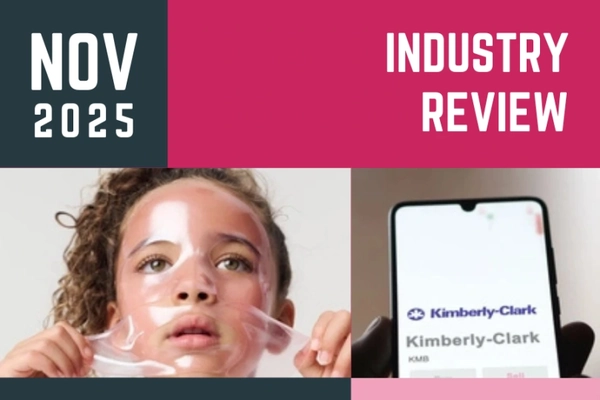
Last month in industry news, Kimberly-Clark announced its acquisition of Kenvue in a US$48.7 billion deal.
At the beginning of November, country delegates gathered at the COP-6 convention to discuss how to address mercury in cosmetics. Over 150 governments agreed on a global plan to crack down on cosmetics containing the toxin.
Meanwhile, the US Food and Drug Administration (FDA) withdrew its proposal for mandatory testing of talc-containing cosmetics for asbestos. The withdrawal followed an order from the Trump administration, as part of its “Making America Healthy Again” strategy.
Personal Care Insights breaks down the biggest new stories from November.
Breaking news: Kimberly-Clark to acquire Kenvue in US$48.7B deal
Kimberly-Clark announced plans to acquire Kenvue in a US$48.7 billion cash-and-stock transaction. The combined company will bring together major brands including Huggies, Kleenex, Band-Aid, and Tylenol. The merger will create a portfolio of 10 billion-dollar brands across the consumer health and wellness sectors. The combination represents the largest ever buyout in the US consumer goods sector to date.
Rini skin care for toddlers debuts to online backlash
Rini, a new skin care brand for kids, stirred controversy. The dermatologist-tested line, developed with pediatric chemists in South Korea, meets EU safety standards. However, the release comes in tandem with growing concerns about kids using skin care. The brand imagery portrays very young children, as little as toddlers. Many consumers are asking why young kids need a skin care brand in the first place. (17) (1).webp) Dr. Charis Chambers broke down the systemic reasons behind the knowledge gap in women’s menstrual health.
Dr. Charis Chambers broke down the systemic reasons behind the knowledge gap in women’s menstrual health.
Interpol joins COP-6 crackdown against illegal mercury cosmetics trade
At COP-6 in Geneva, over 150 governments agreed on a global plan to crack down on mercury-added cosmetics, with the assistance of Interpol. The WHO will develop a strategy to curb demand for both mercury and non-mercury skin-lightening products. The decision signals that public health may address both the toxic ingredients and the societal pressures driving their demand. We spoke to the Zero Mercury Working Group about how the actions recognize mercury products’ health and social harms.
Industry associations push back against “unworkable” EU Council Omnibus position
The EU Council announced its advice to have stricter rules for hazardous substances in the Omnibus VI package. The draft legislation modifies two key EU cosmetics laws: the Classification, Labelling and Packaging Regulation and the 2009 Cosmetics Products Regulation. While EU ministers said it will cut red tape and boost competitiveness, industry groups warned it could hinder innovation and reintroduce bureaucracy. Personal Care Insights spoke to both sides of the aisle about the debate between precautionary and risk-based regulation.
Keeping consumers through cross-industry collab: Eastman shares 2026 beauty trends
Eastman released its research for 2026, showing higher-than-expected consumer openness to sustainable solutions, even if it means switching brands. It also found that collaboration and innovation are crucial for brands to meet rising consumer expectations. Lauren Leonard, market development manager at Eastman, told us about incoming changes in formulation science and how brands can “stay ahead of the curve.”  (19).webp) Kao Chemicals told us about the perfumery division’s fourth generation of fragrance capsules.
Kao Chemicals told us about the perfumery division’s fourth generation of fragrance capsules.
China reform speeds up cosmetics approvals as global players boost R&D
China revealed streamlining measures for its cosmetics approval and safety rules, making the market more accessible. As companies like Clariant and Cosmax expand their local manufacturing and research, the country is positioning itself as an attractive hub for advanced cosmetic science. We broke down the regulatory and business moves advancing C-beauty.
African soil grows foreign profit: Closing the equity gap in beauty’s sourcing
Global beauty brands depend on Africa’s biodiversity for botanicals, yet local communities are often excluded from the value chain. The UN-backed Nagoya Protocol was established to ensure fair benefit-sharing, but inconsistencies have led to cosmetics companies avoiding certain ingredients. We spoke with the International Fragrance Association about the growing impact of these regulatory gaps.
Fragrance emerges as new “lipstick effect” in treat-driven economy
Consumers are shifting away from the traditional “lipstick effect” toward fragrance, using scents to boost their moods as budgets tighten. The lipstick effect, also known as treatonomics, is an economic indicator describing how consumers cut back on major purchases while increasing spending on small indulgences during periods of economic uncertainty. Coty unpacks how, when prices rise, shoppers spend more money on goods that make them feel good, especially cosmetics.
US FDA withdraws proposal for mandatory asbestos testing in talc cosmetics
 (18).webp) Berg + Schmidt took us through the company’s texture and sensory sample kit. The US Food and Drug Administration (FDA) withdrew its proposal for the mandatory testing of talc-containing cosmetics for asbestos. The withdrawal followed an order from the Trump Administration, as part of its “Making America Healthy Again” strategy, and is being criticized by toxic watchdogs. The draft was intended for cosmetics, but the FDA says it would have consequences for other consumer products, such as drugs and food additives. We took a closer look at the debate surrounding the withdrawal.
Berg + Schmidt took us through the company’s texture and sensory sample kit. The US Food and Drug Administration (FDA) withdrew its proposal for the mandatory testing of talc-containing cosmetics for asbestos. The withdrawal followed an order from the Trump Administration, as part of its “Making America Healthy Again” strategy, and is being criticized by toxic watchdogs. The draft was intended for cosmetics, but the FDA says it would have consequences for other consumer products, such as drugs and food additives. We took a closer look at the debate surrounding the withdrawal.
Nigeria confronts cosmetic safety gaps as demand outpaces controls
Nigeria is tightening oversight of its expanding cosmetics market as regulators warn that weak safety controls are exposing consumers to dangerous products. The move comes as West Africa’s beauty and personal care industry sees rapid growth, making safety a top priority. Industry leaders at Lagos events said growth is outpacing regulation. We examined why experts are urging a cosmetic safety reform for West Africa’s booming beauty sector.