

L’Oréal explores 15% Armani stake as succession plan unfolds

Key takeaways
- Armani’s succession plan requires heirs to sell a 15% stake within 18 months, prioritizing L’Oréal, LVMH, and EssilorLuxottica.
- L’Oréal’s CFO says the company will begin evaluating a potential investment “very soon.”
- The other two contenders bring different strengths as buyers, based on their luxury portfolios.
L’Oréal says it will begin formal work on a possible investment in Armani “very soon.” L’Oréal’s CFO Christophe Babule told analysts in a fireside chat that the French cosmetics company will “definitely” examine the opportunity to buy a 15% stake in Armani.
The financial considerations respond to the Italian luxury house’s recently revealed succession plan, following the passing of Giorgio Armani. The fashion designer’s death triggered speculation regarding the future structure of the company, including potential ownership shifts, governance changes, and the likelihood of a sale or public listing.
In his will, Armani instructs his heirs to sell an initial 15% stake of the business within 18 months, with the possibility of increasing to a majority stake after three years.
Armani explicitly prioritizes L’Oréal, LVMH, and EssilorLuxottica over other buyers.
After announcing his passing in September, L’Oréal vowed to honor Armani’s legacy through continued collaboration with the luxury giant on Armani beauty products.
L’Oréal’s Luxe Division manages the beauty products for the Giorgio Armani brand. Its current portfolio consists of fragrances, makeup, and skin care.
According to analysts, Armani Beauty generates approximately €1.5 billion (US$1.76 billion) in annual revenue. The figure represents roughly 10% of L’Oréal’s luxury division sales.
.webp) L’Oréal holds a license for Armani fragrances, skin care, and makeup, regardless of ownership, until 2050.Eligible buyers?
L’Oréal holds a license for Armani fragrances, skin care, and makeup, regardless of ownership, until 2050.Eligible buyers?
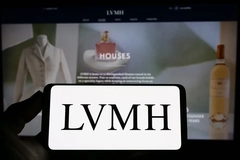
Also in the running to make a deal are EssilorLuxottica and LVMH. LVMH is a large, multinational luxury goods conglomerate that owns approximately 75 luxury brands, spanning cosmetics to champagne. It owns the Sephora brand, among other prestige beauty offerings.
The LVMH group has a history of absorbing and managing heritage luxury houses. Its structure is designed to integrate and scale brands through its global distribution, marketing, and operational capabilities.
Unlike L’Oréal, which is reportedly focused primarily on Armani’s beauty arm, LVMH operates across a range of sectors, including fashion, leather goods, fragrances, and jewelry. This broader portfolio positions LVMH to take on the entire Armani group rather than a single division, potentially making it a more structurally aligned buyer for the full fashion house.
Financially, LVMH is one of the world’s richest luxury groups. In 2024, the company reported revenues of approximately €84.7 billion (US$98.3 billion).
Earlier this year, LVMH was reportedly exploring selling off 50% of its stake in Fenty Beauty. The luxury goods giant co-owns the company with musician and entrepreneur Rihanna.
People familiar with the matter said Fenty Beauty could be valued between US$1–2 billion. The brand generated approximately US$450 million of net sales in 2024.