




Midi Health tackles hormone-driven skin aging with topical menopause line


Key takeaways
- Midi Health launched a prescription skin care line targeting hormonal skin changes from a woman’s 30s through menopause.
- Declining estrogen reduces collagen, weakens the skin barrier, and slows cell turnover, driving midlife skin issues.
- With over a million US women reaching menopause yearly, menopausal skin care presents a significant market opportunity.
US-based virtual clinic, Midi Health, has expanded its prescription skin care line built for hormonal skin changes that start in a woman’s 30s and accelerate through menopause. In the US, over a million women go through menopause each year, signifying a large market opportunity.
Midlife hormonal shifts can impact the skin, leading to dryness, thinning, adult acne, and accelerated skin damage.
To tackle these skin changes, “the fastest-growing women’s telehealth company” created a prescription-strength skin care that aims to target the root causes of midlife skin issues — such as collagen loss, slowing cell renewal, barrier dysfunction, and hyperpigmentation. The solution was formulated by menopause specialists, board-certified physicians, scientists, and pharmacists.
“Skin is a direct reflection of that hormone story, and for too long, women have been given cosmetic answers to a clinical question. Just like everything else we do at Midi, this skin care line was born from listening to our patients and acting on what they need. They were asking for solutions, and because our clinicians are already treating the hormones driving these changes, now they can treat the skin, too,” says Joanna Strober, CEO and co-founder of Midi Health.
Targeting hormonal skin changes
Skin has estrogen receptors throughout its layers, which means when estrogen levels begin to decline, the effects show up directly in the skin. This can result in reduced collagen synthesis, impaired barrier function, decreased sebum production, and slower cell turnover. Progesterone also plays a role, influencing sebaceous gland activity and skin thickness.
According to Dr. Ava Mainieri, PhD, VP of Clinical Operations at Midi Health, Midi clinicians work to treat the hormonal shifts driving these changes systemically, and the new skin care line addresses those mechanisms at the skin level.
Dr. Kathleen Jordan, chief medical officer at Midi Health, adds: “Women lose about 1% of their collagen annually throughout adulthood, and this loss accelerates dramatically during menopause.”
“These biological changes mean women have to navigate dryness, melasma, dullness, sagging, uneven texture, and fine lines. Midi’s skin care formulations were created by women’s health experts who deeply understand how shifting levels of estrogen, progesterone, and other hormones during midlife can cause skin to change.”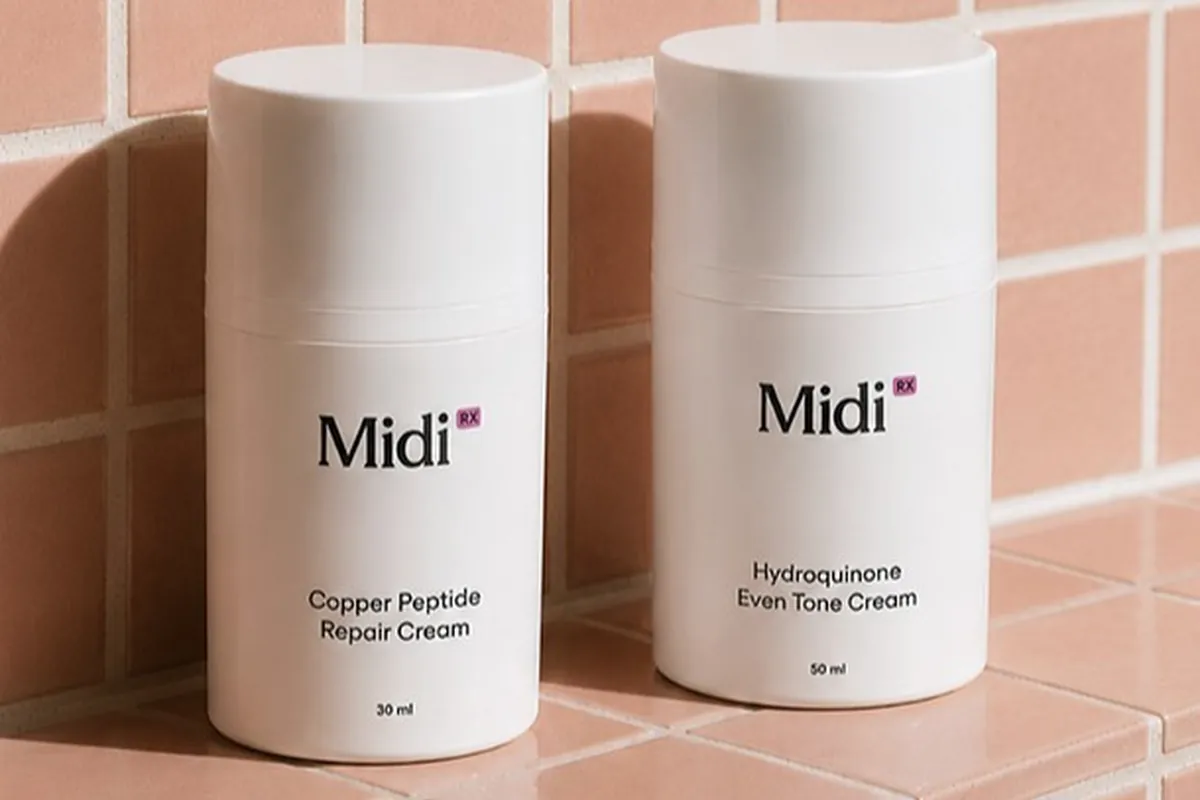 Midi’s line pairs targeted creams for hormone-driven skin concerns.
Innova Market Insights flags that 1 in 3 women aged 45–54 seek skin care products for pro-aging or healthy-aging benefits. This finding aligns with the market researcher’s top personal care trend, “Through the Ages,” highlighting the emerging space for female-centric health and wellness in every age bracket.
Innova data also indicates that 16% of US consumers show a positive attitude toward menopausal skin care on social media and online platforms.
Combining products for tailored results
Midi’s full custom skin care line includes a Copper Peptide Repair Cream, Estriol+ Eye Cream, Estriol+ Face Cream, Hydroquinone Even Tone Cream, and Tretinoin Active Renewal Cream.
While each product is said to be effective on its own, Midi clinicians curated targeted combinations to address a unique mix of hormone-driven skin changes they see most often in patients.
For restoring and renewing results, the clinicians suggest pairing Estriol+ Face Cream and Estriol+ Eye Cream in the morning with Tretinoin Active Renewal Cream at night. The combination claims to help give skin a hormone boost with hydration while supporting cellular-level restoration and renewal.
For correcting and repairing the skin, fusing Hydroquinone Even Tone Cream with the Copper Peptide Repair Cream can help target dark spots and hyperpigmentation, simultaneously working to repair the skin barrier.
And for repairing and renewing, pairing the Copper Peptide Repair Cream with Tretinoin Active Renewal Cream can offer a gentle entry point to help soften fine lines and make clinical actives more tolerable for sensitive skin.
Menopause skin care market
Midi provides accessible, insurance-covered services in all 50 US states. The telehealth company aims to fill the critical health gaps women face at every age and life stage during perimenopause and menopause.
“We’re building the definitive care platform for women’s health from the first signs of hormone change through every transition that follows,” says Strober, the company’s CEO.  Menopause skin care is becoming a defining wellness conversation in 2026.
Menopause is becoming a defining wellness conversation in 2026. Innova Market Insights reports that leading personal care brands are increasingly developing skin care products targeting menopausal women’s unique needs.
Personal Care Insights previously spoke to Jessica Drake, director of marketing and product development at Wicked Sensual Care, about how menopause care is no longer a niche and is now one of the fastest-growing forces in wellness.
However, innovation gaps still persist within the industry. We also recently sat down with Health & Her to discuss how mental, cognitive, and emotional symptoms from menopause take a larger toll on well-being than physical ones.
Based on the findings, Kate Bache, CEO and founder of Health & Her, said the personal care industry should pay greater attention to emotional health. “There is movement in the space, but more innovation is needed.”