



NYSCC Suppliers’ Day 2026: Biotech and multifunctionality surge while sun care enters new era

Key takeaways
- Biotech led the show, with actives for skin and hair repair.
- Multifunctional ingredients dominated, delivering hydration, barrier support, and sensory benefits in one.
- Sun care innovations highlighted UV filters and tools for higher SPF and better wear.
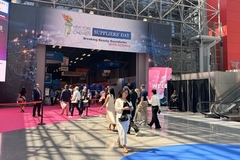
At NYSCC Suppliers’ Day 2026 in New York, three clear trends dominated supplier showcases: biotech-driven actives, multifunctional ingredients, and advances in sun care. Across the show floor, companies demonstrated how science, sustainability, and consumer needs are shaping the next generation of personal care products.
Over the course of the event, Personal Care Insights spoke to suppliers about their latest innovations. They described how biotech is unlocking new mechanisms for skin and hair repair, how multifunctional ingredients are streamlining formulations without compromising performance, and how sun care actives are evolving to meet regulatory requirements and consumer expectations. These conversations highlighted the ingenuity behind the ingredients and the strategies brands are using to translate complex science into real-world, consumer-ready products.
Biotech: Unlocking the skin’s own potential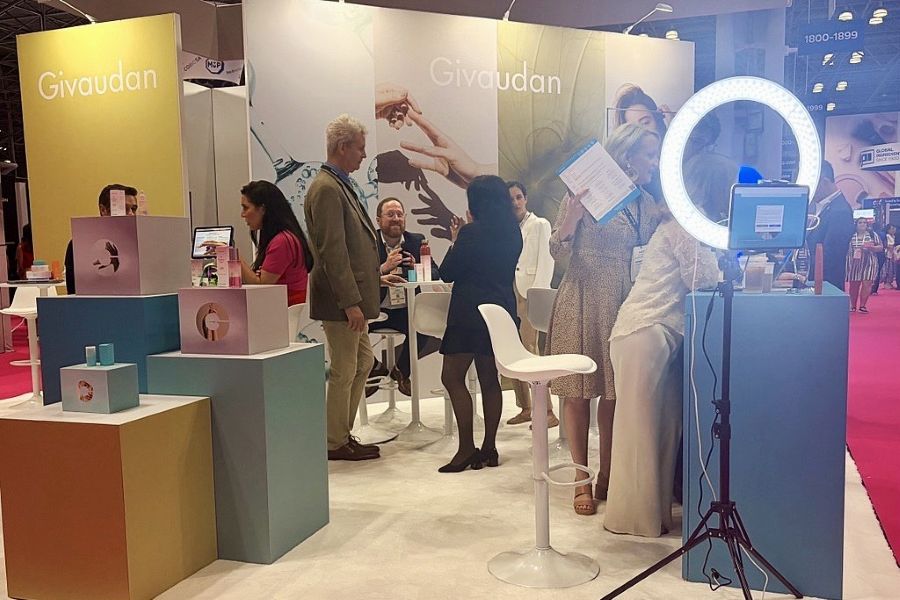
Givaudan highlights PrimalHyal 300 for hydration.
Biotech innovation was at the forefront, with suppliers emphasizing ingredients that leverage molecular design to enhance skin repair and performance.
Biocogent’s RNActivate W represented a bold example: an RNA-based active that delivers “text messages” to skin cells, reminding them to activate their own repair processes. RNActivate W, described as a “paradigm shift,” exemplifies a new frontier in biotech-driven skin care, allowing the cells themselves to drive collagen, elastin, and fibrillin regeneration.
Dr. Paul Lawrence, executive director of research and discovery at Biocogent told us “the active ingredient is basically an RNA-based text message to remind our skin cells that they’re more capable than we are.”
Givaudan also highlighted biotech with PrimalHyal 300, a medium molecular weight hyaluronic acid crafted through biotechnology. The company framed it as a “Skin Healing Accelerator,” designed to improve hydration while supporting barrier repair and microbiome health.
“All of this is responsible for helping the structure of the skin, so not only is it great for hydration, but it’s really important for repair, wound healing, and especially post-procedure care,” Kacey Brides, marketing manager for the NOAM region at Givaudan said on the show floor.
Sergio Carballo, senior scientist at IFF gave a presentation focused on how biotechnology is shaping the future of beauty.
“I structured the presentation aiming to explain that the three pillars that can move successful innovation in biotechnology are scalability, performance, and trust. If you complete these three pillars, you have a good path to a successful product.”
When asked what are the most common trade-offs scientists must manage between molecular ambition and industrial robustness in biotech design, Carballo said reality with ambition.
“Sometimes we, as scientists, want to create the best performance molecule, and that creates some issues. When we transfer this to our engineering teams, they say: ‘Well, I cannot make it happen.’”
“Since the beginning, we must think about scalability, performance, and actually create a good story to tell customers about sustainability claims, about performance claims, that facilitates the path to a successful molecule.”
BASF’s showcase also reinforced biotech as a key trend, with its Beyond Beauty: Renewed Authenticity platform emphasizing the balance of molecular ambition and industrial robustness.
Multifunctionality: Ingredients that do more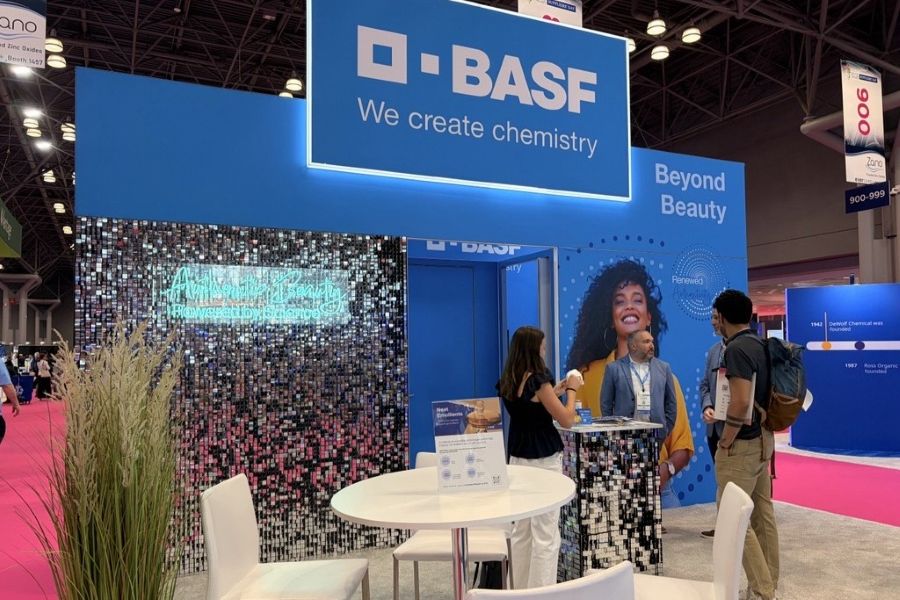
BASF presents the D'lite AI platform for formulation.
Multifunctional actives were another dominant theme, with suppliers presenting ingredients that combine performance, sensory benefits, and eco-conscious formulation. Biocogent and Givaudan framed their actives not only for efficacy but for multifunctional outcomes — hydration, barrier repair, and cellular support simultaneously.
Givaudan’s Brides said Primal Hyal 300 “differs in terms of hydration because it activates an enzyme in our skin that is responsible for not only hydration but barrier function, repair, and support.”
Biocogent’s executive director of research and discovery, Lawrence, told us that if you distill the purpose of almost every active ingredient that’s been developed, they aim to come up with materials that prevent or repair damage to the skin cells.
“I coined the phrase ‘trust your cells.’ In this case, we are trusting that our skin cells know how to heal themselves better than we do, and so the product, why it’s a paradigm shift, is the active ingredient itself is not what is repairing the skin cells,” said Lawrence.
“The active ingredient is basically an RNA-based text message to remind our skin cells that they’re more capable than we are, and to please affect these repairs, and that’s why it’s a paradigm shift in many ways.”
BASF illustrated multifunctionality through its K-Beauty Connected prototypes, which integrate adaptive collagen renewal with hair boosters and other multi-targeted solutions. These formulations reflect the growing North American demand for products that combine benefits for skin and hair in a single regimen.
The company also detailed its D’lite AI platform to Personal Care Insights. It works to accelerate formulation development, allowing real-time testing and optimization, helping formulators deliver multifunctional, consumer-ready products more efficiently.
Sun care: Filling a long-standing gap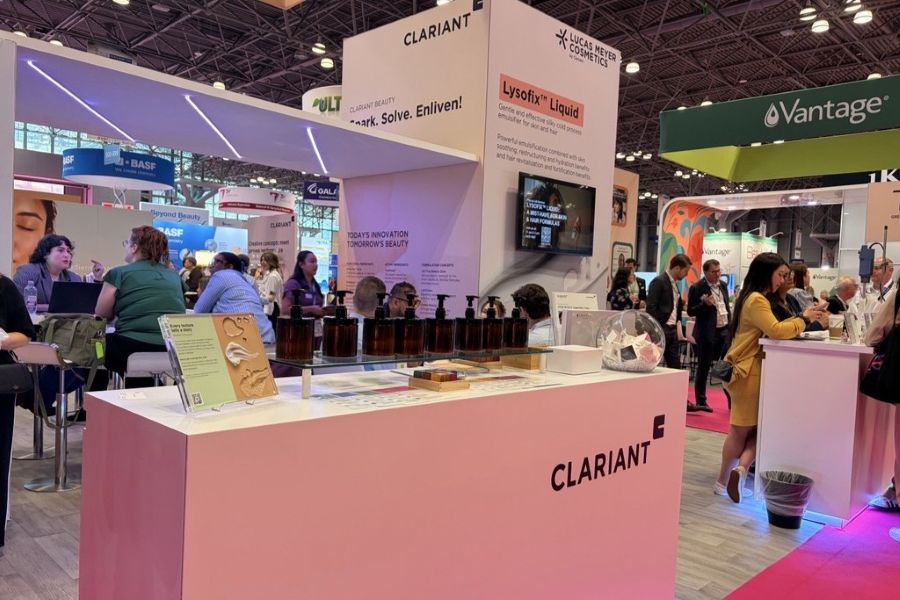
Clariant demonstrates Aristoflex Sun for SPF.
Sun care was highlighted as a category in need of innovation, particularly in the US market. Clariant presented Aristoflex Sun, a rheology modifier designed to improve SPF performance while enhancing sensory appeal. The ingredient addresses common consumer complaints about tacky or greasy textures in sun care formulations.
“I think a big challenge around developing formulations for sun care is always about the way they feel. It’s about typically that greasy, tacky feel that you would get specifically with inorganic filters and sunscreens in the US,” Christina Richardson, marketing manager, North America for Personal & Home Care at Clariant told Personal Care Insights.
“Aristoflex Sun is great, because it has that appealing texture, it’s lightweight, it’s elegant feeling, and it will help formulators make sunscreens that are appealing to wear, and ultimately encourage the population to wear their sunscreen daily, protecting skin health. It’s a really interesting ingredient to help cancel out some of those challenges.”
dsm-firmenich emphasized the anticipated FDA approval of Parsol Shield, the first added broad-spectrum UV filter in over 25 years. Vicki Barboiu, senior director for Beauty & Care NA, called it a “game changer.”
“It is on track to become the first FDA-approved UV filter in over 25 years. For US formulators, this gives much more flexibility to develop high SPF formulations that are aesthetically pleasing. Consumers can access highly stable broad spectrum UV products, which are desirable to use. In the end, this allows consumers to apply sunscreens more frequently and protect skin from photo aging,” she said.
BASF also tied into sun care with advanced UV filters like Tinosorb S, which is currently undergoing FDA review and is not approved for use in the US as a sunscreen active.
The chemicals company also highlighted tools like its Sunscreen Simulator in the D’lite platform, helping formulators balance broad-spectrum efficacy with desirable textures.
These innovations underscore how multifunctional design and biotechnology are converging in sun care to address both regulatory and consumer challenges.
What’s next in beauty
NYSCC Suppliers’ Day 2026 made it clear that biotech, multifunctionality, and sun care will continue to drive innovation for personal care in North America. Suppliers showcased how molecular design can empower cells, multifunctional ingredients can streamline formulations, and next-generation UV filters can elevate protection and aesthetics.
For North American formulators, these trends highlight the expanding toolkit for creating performance-driven, consumer-focused, and sustainable personal care products.