




Closing the mercury tap? Pakistan bill targeting toxic cosmetics advances

Key takeaways
- Pakistan advances a bill targeting unsafe beauty products.
- The move aims to strengthen oversight of cosmetics manufacturing, imports, labeling, and distribution as smuggling mounts.
- Federal ministers say the bill could curb mercury skin cream production, but its impact will depend on enforcement.
Pakistan’s Senate Standing Committee (SCC) on Science and Technology has approved the Pakistan General Cosmetics Bill of 2026. The proposed law aims to regulate the country’s cosmetics industry as concerns about illegal beauty products and their health implications rise.
The committee passed the bill with two amendments during a meeting in the country’s capital, Islamabad. The bill targets the production and import of substandard beauty products to protect consumers from harmful ingredients.
Under the bill, anyone caught manufacturing or importing unsafe cosmetics could face up to seven years in prison and a fine of up to ₹10 million, or approximately US$105,000.
The move comes amid growing concerns about dangerous chemicals in cosmetic products, particularly skin-whitening creams. Defense production minister Raza Hayat Hiraj told the SCC that some creams, positioned as skin tone lighteners, contain mercury.
Mercury is a potent toxic heavy metal that, in skin care formulations, inhibits melanin production and lightens the skin color. Exposure to the toxin has been linked to kidney damage, neurological and nervous system disorders, and psychosis, with distinct and severe threats to women and children. It is banned from use in consumer products under international treaties.
Pakistan has been identified as one of the world’s leading producers of mercury-containing creams. At the Islamabad meeting, Hiraj linked these creams to a significant number of cancer cases in the country.
Senator Kamil Ali Agha also raised concerns about the smuggling and informal trade of black-market cosmetics. He warned that products entering the country through unregulated channels typically sidestep safety standards and could expose consumers to risks.
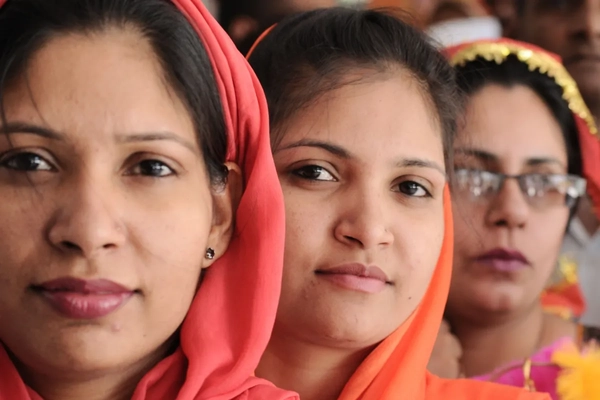
.webp) Unsafe cosmetic ingredients can pose particular health concerns for women and families, strengthening calls for tighter oversight.Hiraj estimates that approximately US$500 million worth of cosmetics are being smuggled into Pakistan. “Cosmetics manufacturers have become billionaires,” he said.
Unsafe cosmetic ingredients can pose particular health concerns for women and families, strengthening calls for tighter oversight.Hiraj estimates that approximately US$500 million worth of cosmetics are being smuggled into Pakistan. “Cosmetics manufacturers have become billionaires,” he said.
Targeting harmful beauty
Pakistan has attempted to clean up its cosmetics sector before. The government approved a similar bill in 2023, which established the Pakistan General Cosmetics Regulatory Authority (PGCRA) under the Ministry of Science and Technology.
The PGCRA was created to regulate the import, export, manufacture, storage, distribution, and sale of cosmetics, but the authority never became operational off paper. Pakistan’s federal cabinet decided to abolish it in January 2025. After its shutdown, the prime minister set up a committee to look into why the PGCRA did not work.
Officials later said having the PGCRA was creating confusion, and that closing it would make regulations clearer and public health safer.
This time around, the government is taking a different approach with the Pakistan General Cosmetics Bill of 2026. Instead of creating a standalone authority, the bill proposes a regulatory framework that involves both the Ministry of Science and Technology and the Drug Regulatory Authority of Pakistan.
During the Islamabad meeting, members stressed that it is crucial that clear roles are established and kept in check between the two collaborating government arms.
At the event, Minister for Science and Technology Khalid Hussain Magsi said that the bill would establish a dedicated authority to monitor the quality and safety of cosmetic products. The authority would also help local manufacturers meet international standards for export.
Magsi added that smuggling was a separate but related challenge, and that effective implementation of the law would be essential to curb it.
.webp) Mercury-containing skin-lightening creams are a major regulatory concern due to their serious health risks and international trade.The bill covers the quality, standard, labeling, packing, manufacturing, storage, distribution, and sale of general cosmetics. It gives regulators the power to inspect products, their registration, and probe beauty clinics that offer cosmetic injections. The bill must next pass through the remaining parliamentary stages before it becomes law.
Mercury-containing skin-lightening creams are a major regulatory concern due to their serious health risks and international trade.The bill covers the quality, standard, labeling, packing, manufacturing, storage, distribution, and sale of general cosmetics. It gives regulators the power to inspect products, their registration, and probe beauty clinics that offer cosmetic injections. The bill must next pass through the remaining parliamentary stages before it becomes law.
Cutting the flow?
Pakistan’s cosmetics industry has spent years earning a reputation it is struggling to shake. In March, a coalition of over 20 international health and environmental organizations called on the country’s Competition Commission to halt the manufacture and global trade of mercury-containing skin-whitening creams.
The creams are often made using mercury compounds, which are easier to trade internationally and more difficult to detect in formulations, but pose the same health risks.
Mercury-containing skin lightning creams are typically produced in Pakistan, China, Korea, Thailand, Bangladesh, Taiwan, and Vietnam. Due to the rise of e-commerce and online trade, the products have permeated international store shelves from New York to Brussels, with legal loopholes enabling online listers to dodge accountability.
Recently, major US retailer Walmart was found listing mercury-containing skin creams originating from Pakistan. Following a California, US, lawsuit from the Mercury Policy Project, the retailer agreed to remove the listings and proactively require third-party sellers to test their merchandise for mercury before it is offered for sale.
Michael T. Bender, international co-coordinator at the Zero Mercury Working Group, told us that the move marked a major milestone in the fight against e-commerce platforms ducking responsibility for harmful listings. However, he noted that as long as the products are produced, it is likely they will continue to be globally traded.
With Pakistan’s 2026 bill positioned to curb production, the legislation could mark the first real attempt to close the tap at its source, but its success hinges on enforcement that has failed before.