




Pakistan faces global pressure to “walk the talk” on toxic skin-whitening creams

Key takeaways
- A coalition of over 20 organizations is urging Pakistan to halt the manufacture and global trade of mercury-containing skin-whitening creams.
- Testing found skin-whitening creams violating international bans, putting the country’s manufacturing sector under renewed scrutiny.
- Advocates say weak enforcement and strong industry profits are allowing toxic products to remain in global circulation.
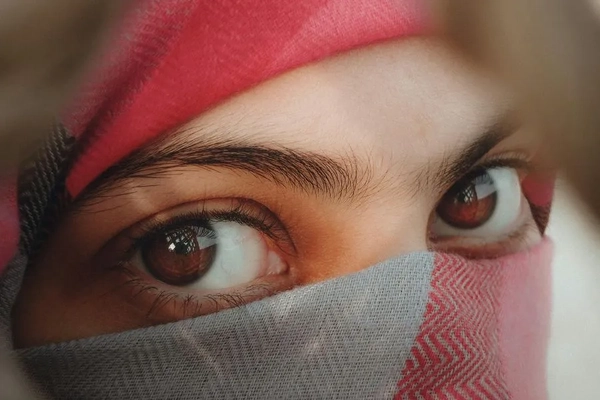
Over 20 international health and environmental organizations have called on Pakistan’s Competition Commission (CCP) to halt the manufacture and global trade of mercury-containing skin-whitening creams. The move intensifies scrutiny of the country’s cosmetics manufacturing sector, after a recent testing round found that 35 of 37 creams manufactured in Pakistan contained mercury levels thousands of times higher than the legal limit.
The coalition, which includes the Zero Mercury Working Group (ZMWG), the California Department of Public Health, and NGOs across Africa, Asia, and the Americas, has sent a letter to the CCP calling for stronger enforcement of existing bans on mercury-based formulations.
“Globally, it’s projected that around 66 million mercury-containing skin-whitening creams are produced each year, containing over 110 metric tons of mercury compounds. This estimate is based on sales from just one major Pakistani manufacturer, though several large producers operate in the country,” Michael T Bender, executive director of the Mercury Policy Project, and international co-coordinator at the ZMWG, tells Personal Care Insights.
According to the WHO, the neurotoxin causes serious health consequences, including damage to the skin, eyes, lungs, and kidneys, nervous system disorders, psychosis, neurological damage, and severe skin reactions.
“Mercury compounds, such as ammoniated mercury or mercurous chloride, are both inexpensive and highly effective at inhibiting melanin production, making them popular for creating rapid, visible skin-lightening results,” Bender explains.
Pakistan has announced multiple measures to address the country’s manufacturing of mercury-containing skin-whitening creams. These include cosmetic standards introduced, public warnings issued, and investigations launched by the CCP in 2024 and 2025. The government body also served notices to 12 cosmetic companies for greenwashing and misleading marketing.
However, despite the country’s declarative measures, test results from accredited labs in the US and EU flagged persistent violations. Thirty-five of the 37 creams tested contained mercury levels up to thousands of times higher than the previous legal limit of 1 part per million (ppm), with one product reaching 24,000 ppm.
“Starting in 2019, and then with the letters in May 2024 and then October 2025, the government keeps making similar announcements, and one wonders when the CCP is actually going to ‘walk its talk,’” Bender says.
.webp) The CCP says it is taking measures against mercury-containing skin-whitening creams due to the public health risks.Personal Care Insights reached out to the ZMWG’s contact at the CCP regarding its enforcement actions, but received no response.
The CCP says it is taking measures against mercury-containing skin-whitening creams due to the public health risks.Personal Care Insights reached out to the ZMWG’s contact at the CCP regarding its enforcement actions, but received no response.
Pushover protocols
Pakistan has introduced several measures to restrict the use of mercury in cosmetics. In 2016, the country restricted imports of mercury and its compounds, allowing their use only in certain industrial applications.
In 2017, the Pakistan Standards and Quality Control Authority (PSQCA) adopted cosmetic standards prohibiting the intentional addition of mercury to skin creams and requiring that manufacturers obtain certification before their products can enter the market.
In 2019, government officials warned that manufacturers were jeopardizing public health by selling mercury-containing creams and issued public notices urging producers to register and certify their products.
More recently, in May 2024, the CCP announced that it had launched a “nationwide probe against companies involved in making, marketing, and selling mercury-laden whitening creams.” Again, in October 2025, it made a similar announcement that it was going after 12 companies.
However, Bender says these measures have not translated into meaningful enforcement, and that “the production and worldwide distribution of mercury-added skin-whitening creams continues relatively unimpeded, with a lot of toxic skin-whitening creams still being produced and marketed from Pakistan.”
He explains that, in some cases, the continued production is due to inadequate laws and regulations, while in other cases, there may be weak enforcement, regulatory loopholes, and insufficient international cooperation.
Bender adds that the continued production of these skin-lightening creams is highly lucrative.
“Given the lack of any meaningful action to date, after several years of announcements with no follow-through, it may be due to widespread corruption where the major producers are unduly influencing government officials in high places.”
The heavy metal and its compounds are widely favored across developing countries for manufacturing skin-lightening cosmetics, despite the widespread availability of safer cosmetic ingredients.
“Mercury is often cheaper to procure than safer, modern active ingredients — although we should note that in Pakistan, skin-whitening creams offered for online sales in developed countries are charged at top dollar,” Bender says.
.webp) International organizations are urging Pakistan to halt the manufacture and global trade of the toxic products.The products are also in high demand among consumers due to deep-rooted cultural preferences amplified by large-scale marketing. “As stated by the PSQCA, one of these major producers was operating with an annual marketing budget of US$1 million,” Bender adds.
International organizations are urging Pakistan to halt the manufacture and global trade of the toxic products.The products are also in high demand among consumers due to deep-rooted cultural preferences amplified by large-scale marketing. “As stated by the PSQCA, one of these major producers was operating with an annual marketing budget of US$1 million,” Bender adds.
Enforcing action
Many consumer warnings and bans on mercury-containing skin-whitening creams have been issued, including by the EU Safety Gate, the Philippine Food and Drug Administration, and the state of New York, US.
Most recently, in the US, the State of California’s Department of Public Health issued a Consumer Alert, titled Mercury Found in These Face Creams — Stop Using Immediately. One of the products tested by the state appears to have been produced in Pakistan and contained mercury levels of 210,000 ppm, or 21%.
Moreover, the EU Safety Gate lists 110 mercury-containing skin-whitening products. As of September, 57 of these are manufactured in Pakistan.
The Minamata Convention on Mercury is a global treaty designed to phase out mercury in products like cosmetics.
The convention gathered late last year at COP-6 in Geneva, Switzerland, to strategize a collaborative crackdown on the continued trade in mercury-containing products. One conclusion involved Interpol in dismantling the e-commerce rings.
Pakistan is a party to the convention, but Bender explains that “several parties to the Minamata Convention with major skin-whitening cream manufacturing facilities have yet to adopt the necessary legislation to ban illegal production and enforce relevant trade regulations.”
According to the ZMWG, other CCP announcements unrelated to the cosmetics law indicate that the government body has been successfully collecting fines from companies that violate regulations.
“Therefore, they can indeed enforce the law, so it appears that they need the political will before moving forward,” Bender says.