




“Next phase of skin care”: Bioelements harnesses green technology in serum
The next phase of skin firming is said to be about biomimetic proteins that mimic the skin’s biological structures and functions.

Key takeaways
- Bioelements’ Firmwear serum combines biomimetic proteins and green technology to visibly lift, firm, and rejuvenate skin.
- The use of miniproteins, bakuchiol, and retinopeptides ensures skin benefits like collagen production and wrinkle reduction.
- Firmwear echoes a shift toward “bio-boosted” skin care.
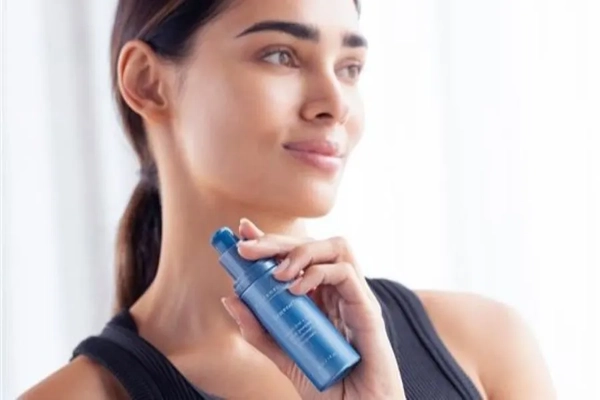
US-based skin care company Bioelements has launched Firmwear, a serum powered by a blend of bio- and green technology. The biotech firm and lift serum harness biomimetic miniprotein to visibly lift skin, refine texture, and rejuvenate, which the company claims leads to a more sculpted appearance.
Among the key ingredients in Firmwear is miniprotien. It stimulates collagen, elastin, and hyaluronic acid production to reduce the appearance of expression lines by directly influencing specific growth factor receptors, and improves skin structure and density.
The company also uses retinopeptide, a biomimetic, green technology-derived peptide that provides retinoic acid-like benefits, including collagen synthesis, accelerated cell turnover, and skin barrier strengthening.
Additionally, the Firmwear serum contains bakuchiol, an element that backs up the company’s claims for green technology-derived solutions. The natural retinol alternative is an antioxidant that diminishes fine lines and wrinkles, improves elasticity, and evens out skin tone.
Personal Care Insights speaks with Terry Schatz, CEO of Bioelements, about how Firmwear’s ingredients deliver clinical-level performance while prioritizing sustainability. We also discuss how biotechnology is reshaping anti-aging and consumers are looking for natural retinol alternatives.
Firmwear combines biomimetic proteins with green technology. How does this approach represent a new direction for skin-firming formulations?
Schatz: This approach delivers clinical-level performance with less environmental impact. Consumers today are more intentional. They want products that work without sacrificing their sustainability values. Bio and green technology enable this by combining sources with more scientific precision. By replicating nature’s most potent compounds at scale, we can deliver highly effective, environmentally responsible actives. It’s the next phase of skin care innovation and sustainability..webp) In clinical trials, 90% of users reported that their skin looked firmer, and 87% reported that fine lines looked less visible when using Firmwear.
In clinical trials, 90% of users reported that their skin looked firmer, and 87% reported that fine lines looked less visible when using Firmwear.
What role do biomimetic miniproteins play in stimulating collagen, elastin, and hyaluronic acid production compared to traditional anti-aging actives?
Schatz: Derived via green technology, this small oligopeptide forms a unique, stable 3D-folded structure, allowing it to mimic the potent, targeted actions of larger proteins and natural growth factors in the skin, while offering improved penetration compared to larger molecules. It softens expression lines caused by repetitive movement (forehead and smile lines) while improving skin sagging and strengthening the skin’s support network.
Bakuchiol is emerging as a popular natural retinol alternative. Why is it gaining traction among formulators and consumers alike?
Schatz: Bakuchiol is gaining traction because it delivers many of the visible skin benefits associated with retinol — like improved firmness and reduced fine lines and wrinkles — but with far less potential for irritation. Although it has a different molecular structure from retinol, it produces comparable effects on the skin.
From a formulation perspective, the appeal also aligns with a growing focus on skin barrier health. Every Bioelements formula begins with one question: ‘How does this benefit barrier function?’ Ingredients are evaluated for their relationship to the lipid barrier, microbiome balance, or inflammatory response. Bakuchiol fits well within this philosophy — offering performance-driven results while helping support a stronger, more resilient skin barrier.
From a formulation perspective, what challenges arise when combining biotechnology-derived actives with plant-based ingredients in a single serum?
Schatz: Combining biotechnology-derived actives with plant and nature-based ingredients is the new standard with Firmwear, and it presented its own challenges from a formulation science perspective. The primary challenge in combining biotechnology-derived actives with plant-based ingredients lies in their differing chemical stability and biological origins. To solve these challenges, we stabilized the biotech protein peptide while seamlessly emulsifying the plant-based actives. This ensures that the serum remains stable while remaining active when used on the skin and throughout its shelf life.
How does Bioelements ensure transparency and credibility when communicating efficacy?
Schatz: Bioelements only makes product claims that are supported by clinical testing, consumer perception studies, or published ingredient research. We avoid hype, marketing shortcuts, and undefined terms that create implied claims we cannot verify. Our approach aligns with Federal Trade Commission substantiation standards and the US FDA’s Modernization of Cosmetics Regulation Act, reinforcing our commitment to accuracy, transparency, and consumer trust. 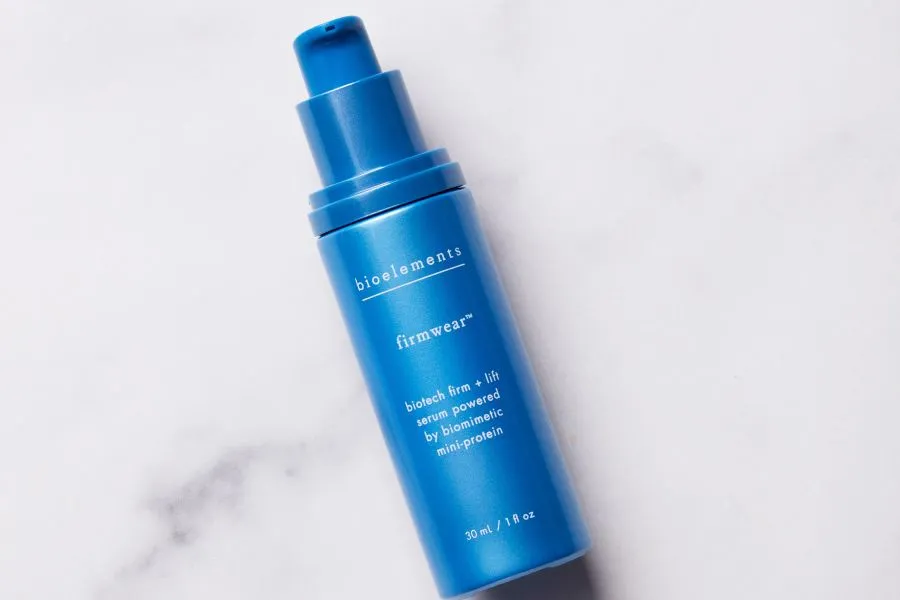 Firmwear features a biomimetic miniprotein that visibly lifts the skin.
How is biotechnology reshaping the skin-firming segment within personal care?
Schatz: Biotechnology is reshaping skin-firming innovations by allowing us to enhance nature through science. Using cellular bioengineering, we can amplify nature’s most powerful compounds, creating ingredients that are more effective, stable, sustainable, and skin-compatible than those obtained through traditional extraction.
This cleaner, renewable process reduces waste, uses less water, and helps replace over-harvested ingredients with consistent, high-performance alternatives. As a professional brand, we are choosing to move beyond the term ‘anti-aging’ in favor of an Age Activist philosophy — focusing on supporting skin strength, resilience, and vitality at every stage of life.
Are consumers shifting away from traditional retinol-based routines toward gentler alternatives?
Schatz: We’re seeing a shift in how consumers approach results-driven ingredients. Not necessarily abandoning retinol, but becoming more mindful about how it fits into an overall skin care strategy.
What our estheticians are increasingly seeing, especially in the era of social media-driven skin care routines, are new clients with compromised skin barriers. Overuse, misuse, or constantly switching between trending products can weaken the skin’s resilience over time. Bakuchiol is an ideal, barrier-first retinol alternative for these clients. Biotech-driven and gentler alternatives like Firmwear are gaining interest because they can deliver visible results that also support improved long-term barrier health.
Looking ahead, how do you see biomimetic proteins and green biotechnology shaping the next generation of skin-firming solutions?
Schatz: This next generation of firming isn’t just about hydrating the skin to make it look plump; it’s about biomimetic proteins that mimic the skin’s biological structures and functions. Green biotechnology allows us to identify and extract specific molecules from plants that perform, but without the environmental burden of over-harvesting or the irritation of chemical derivatives. As these new technologies mature, we can expect a new standard of skin care that is not only environmentally conscious but capable of initiating true repair for the skin.