



Reishi, chaga and tremella elevate mushroom-derived personal care


Key takeaways
- Mushroom-derived ingredients are increasingly being used for topical applications and other skin care formats.
- Reishi, chaga, and tremella can deliver ingredients such as humectant and beta-glucans for barrier protection and soothing.
- Greenitio uses mushroom-derived chitosan as a petrochemical substitute.
Demand for sustainable, functional, and natural ingredients is rising across the personal care industry. Customers and consumers want multifunctional ingredients, are renewably sourced, and survive consumer scrutiny of the label. For ingredient producers, mushroom-derived ingredients may check all three boxes.
Mushroom ingredients such as reishi, chaga, and tremella, have moved from the supplement aisle into serums, cleansers, and creams. Mushrooms such as tremella, also known as snow mushroom, are formulated as plant-derived humectants, a water-attracting substance used to keep things moist. Meanwhile, beta-glucans in chaga and reishi are drawn from the mushroom cell walls and can be used for soothing, anti-inflammation, and barrier support.
Data from Innova Market Insights suggests a 14% CAGR in personal care launches featuring mushroom ingredients from July 2021 to June 2026. Skin care and hair care led on volume while body care led on growth.
Personal Care Insights looks at some of the latest advancements in mushroom-derived ingredients, along with their benefits and positioning.
The reishi topical route
When it comes to topical applications, Ganoderma lucidum, commonly referred to as reishi, is the most commonly used mushroom ingredient.
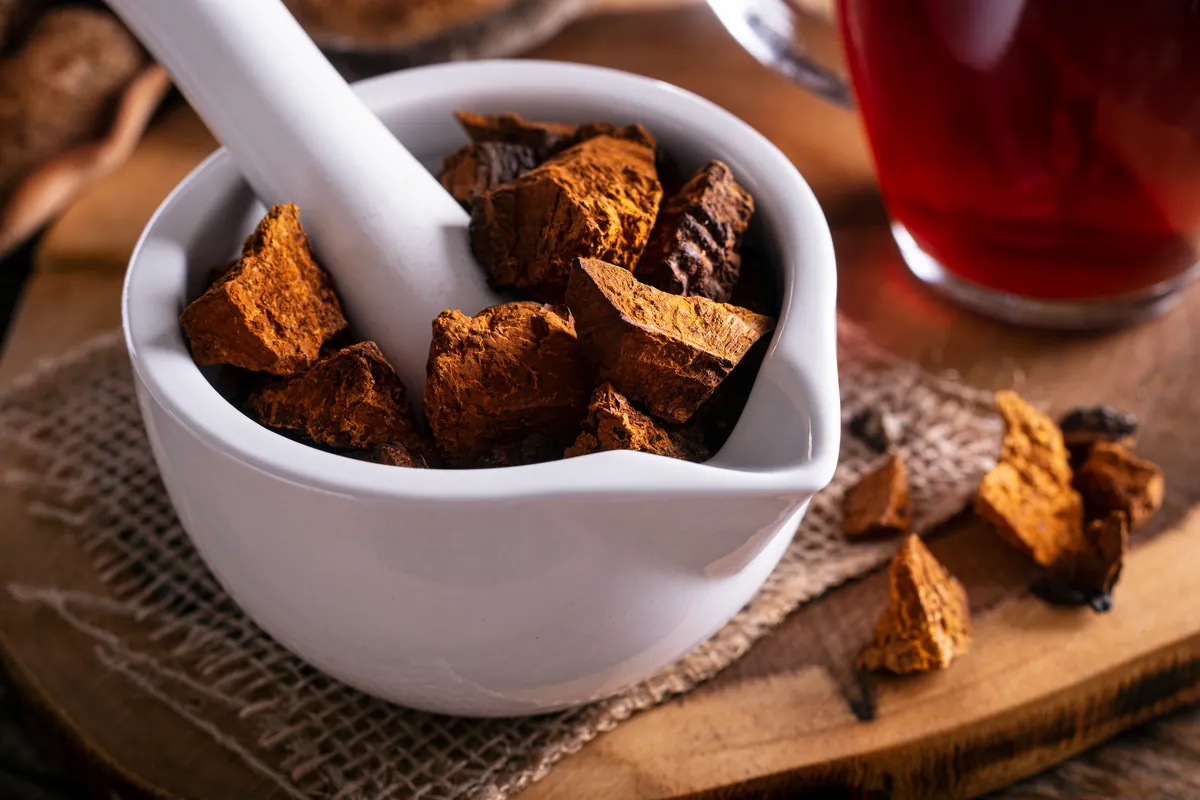 Seppic’s Chagadvance uses Finnish Lapland grown chaga for the immune-skin axis.Earlier this year, Maruzen Pharmaceuticals unveiled Ganoderma Extract (B)-BG at In-cosmetics Global 2026 in Paris, France. The company positioned the ingredient against skin roughness and sensitivity caused by mental stress. The extract is drawn from the fruiting body and supplied in butylene glycol and water.
According to the company, a milky lotion containing 2% of the extract reduced transepidermal water loss (TEWL) and the desquamation index in subjects with weakened barrier function and high stress levels. Redness and under-eye dark circles also improved.
In vitro studies indicate applications for intracellular cortisol regulation, hyaluronic acid production, prostaglandin E2 inhibition, which reduces collagen breakdown, and tyrosinase inhibition, which reduces melanin production and supports even skin tones.
Meanwhile, ImDerma Laboratories uses the same mushroom by a different route. Its ImDermalab ExoReishi is built on reishi extracellular vesicles, supplied as a water-soluble powder with trehalose at use levels of 0.4% to 2%. Trehalose, also called mushroom sugar, is a natural disaccharide sugar commonly found in high quantities in mushrooms and demonstrates high efficacy in hydration in skin care.
The vesicles carry RNAs, proteins, and polysaccharides between cells. The company reports that this has effects on fibroblast proliferation and migration. Therefore, the company says that current testing is looking into wound healing and scalp applications.
Brands currently on the market are also tapping reishi. Seed to Skin Tuscany, includes reishi in The Recovery Cream, part of The Restorative Collection for reactive and compromised skin, which the company describes as a postbiotic rich in triterpenoids and beta-glucans.
Seed to Skin reports that a 28-day study of the two-product regimen, conducted by Mérieux NutriSciences, found self-reported reductions in redness, dryness, itchiness, and burning, alongside a 1.9% fall in TEWL. The company has not published the study, and it reports that the results cover a full regimen rather than the reishi ingredient alone.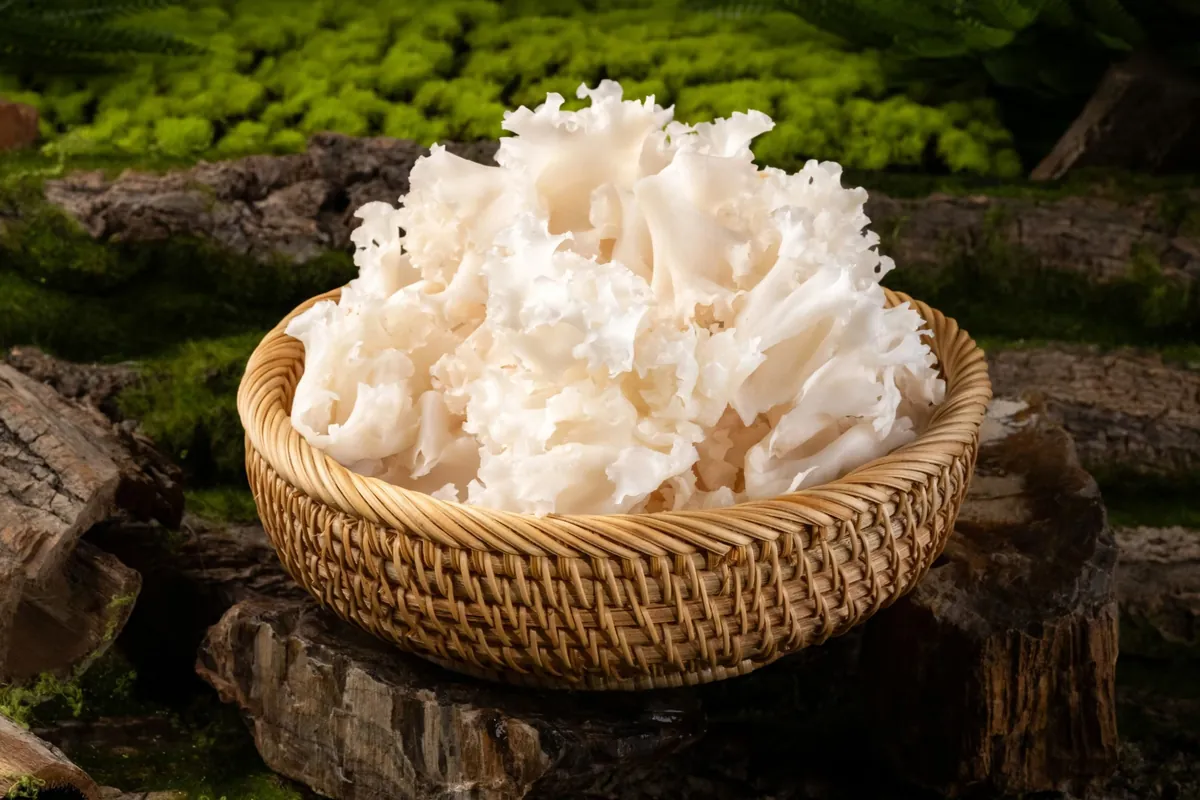 Tremella mushrooms are formulated as plant-derived humectants to keep the skin moist.
Crossing formats
Mushroom derived ingredients demonstrate versatility in their applications, and can be used in creams, lotions, sprays, masks, and ingestible supplements and spreads.
Mindi Walters Skincare built snow mushrooms into the Snow Melt Overnight Mask for the neck and chest, where founder Mindi Walters points to its water-holding capacity and small molecular size on thin, oil-poor skin.
The same species of mushroom was applied to an ingestible format by Syren Spreads, who put tremella into a spoonable chocolate spread alongside gotu kola, astragalus root, and bamboo silica, citing the mushroom’s capacity to hold up to 500 times its weight in water.
Similarly, Seppic recently unveiled Chagadvance, an extract of wild chaga harvested in Finnish Lapland, produced by a hot water method that preserves beta-glucans and polyphenols. The supplier positions the ingestible ingredient across immunity and the immune-skin axis applications.
Mushroom makeover for the basics
Approaching mushrooms’ properties from a different angle, Greenitio is leveraging the fungi to combat the prevalence of petrochemicals. The specialty chemicals company extracts chitosan from mushrooms and functionalizes the polysaccharide into bio-based thickeners, film formers, emulsifiers and stabilizers. According to Greenitio, it does this to target the petrochemical materials featured in most cosmetic products.
Didier Vermeiren, COO and head of strategy at Greenitio, told IB that cosmetic ingredients’ petrochemical origin explains the performance gap natural ingredients still face. Maruzen Pharmaceuticals pitches Ganoderma Extract (B)-BG from reishi as a support for stress-linked skin roughness and sensitivity.
“The specialty chemical industry as it exists today has been largely built on a single feedstock: petroleum,” he says.
Natural ingredients only began arriving in volume over the last two decades, according to Vermeiren. He argues the comparison is unfair on timing alone.
“You cannot expect that these nascent natural ingredients have the same performance as these specialty chemicals,” he underscores. “With natural materials, we’re pretty much at the stage where crude oil was 100, 150 years ago.”
Greenitio aims to address this performance gap through chemical modification. Vermiren explains that performance runs two to four times better than the unmodified natural input, depending on the property measured. Additionally, its green chemistry process uses no organic solvents, generates no chemical waste, and produces far less CO2 than conventional routes, he states.
He points out that a cosmetic product carries 15 to 25 ingredients on average, with water or oil making up the bulk. Meanwhile, he notes that novel actives sit on top of a base formula that has seen little evolution.
Mushrooms now run across the cosmetic and nutricosmetic formulation stack. Reishi addresses skin inflammation, tremella helps moisturize the skin, chaga crosses into ingestible beauty, and mushroom-derived chitosan can help make formulas thicker and firmer.