



SEPAWA 2026: Home care innovators target sustainability and multifunctionality

Key takeaways
- SEPAWA 2026 highlights growing demand for sustainable, multifunctional home care ingredients.
- Clariant, Univar Solutions, and Azelis are showcasing solutions that balance cleaning performance with resource efficiency and greener formulations.
- Nouryon is focusing on compliant biocidal actives as tighter EU regulations reshape disinfectant formulation choices.

Personal care players at the ongoing SEPAWA (Soap, Perfume, Cosmetic, and Detergent Specialists) Congress 2026, in Berlin, Germany (October 14–16) are highlighting multifunctional and sustainability-focused home care innovations.
Ingredient suppliers are coming together at Europe’s largest trade fair for the detergent, cosmetics, and perfumery industries to highlight their advancements in home care that cater to rising ecological demands. The innovations also emphasize multifunctionality as buyers’ desire for formulations that achieve more with fewer ingredients continues to gain momentum.
At the congress, Clariant is launching a rinse surfactant designed to advance dish and machine care simultaneously. The ingredient is developed to reduce fatty residue, delivering efficacious cleansing while avoiding filter buildup in short and eco cycles.
Ingredients + Specialties from Univar Solutions is presenting its sustainable ingredient solutions across home care and industrial cleaning. The company also highlights its “Performance with Purpose” concept to demonstrate how formulators can balance cleaning performance, responsible innovation, and changing market expectations.
Meanwhile, Azelis is presenting two complementary concepts. “The Green Bathroom” focuses on biotechnology and green chemistry, and “Designed to feel” highlights the growing emphasis on texture and sensoriality.
Tackling the evolving European regulatory landscape, Nouryon is showcasing its biocides portfolio as regulations influence disinfectant choices. The company is highlighting its range of compliant biocidal active substances that wipe away dirt and kill germs.
The plethora of eco-friendly innovations for home care demonstrated at the congress indicates a growing consumer demand for sustainability in the domestic sphere. Demand is met by eager industry response as companies rush to offer sustainability approaches from various perspectives.
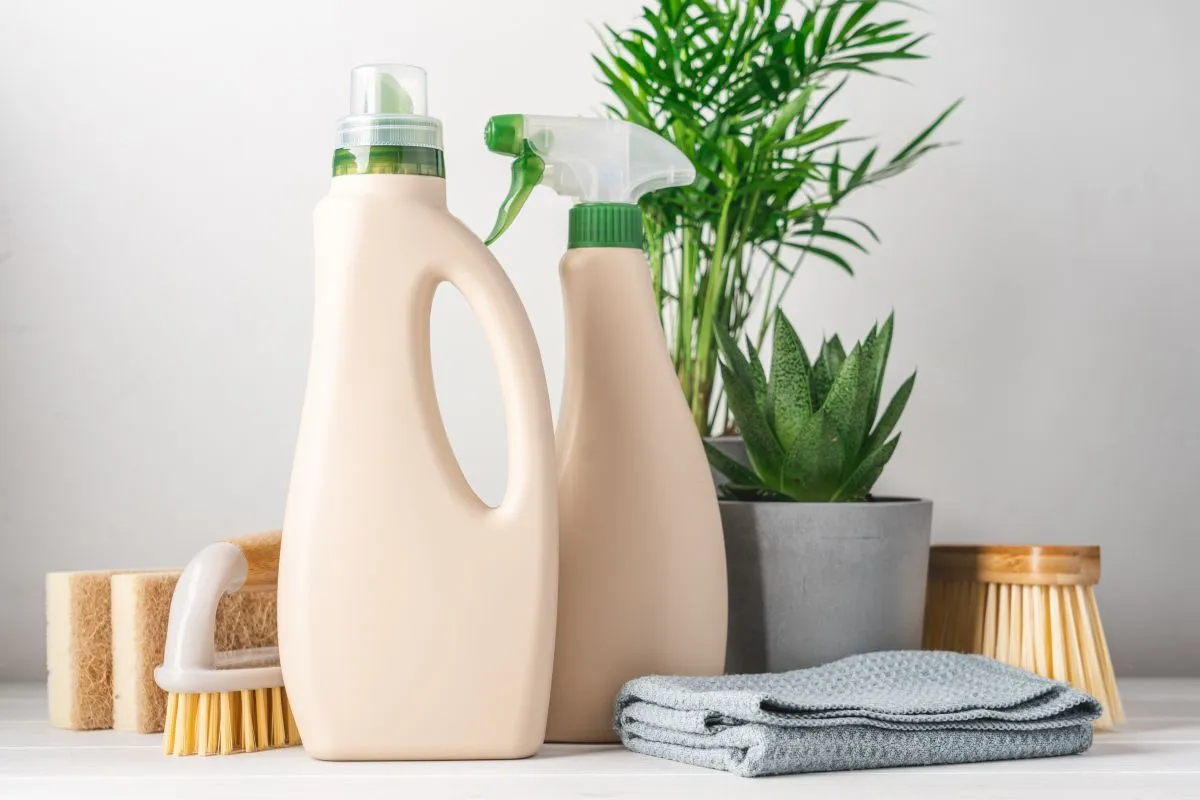
Sustainable surfactants help formulators respond to resource-efficient cleaning trends.
Sustainable surfactant solutions
Clariant’s Genapol Pure Power is said to offer consumers a sustainable dishwashing detergent option by improving cleaning efficacy in resource-efficient machine programs. The surfactant is developed for application in automatic dishwashing detergents and delivers well-established drying and shine performance on dishes.
The Swiss multinational specialty chemical company positions Genapol Pure Power as a multifunctional cleanser that combines dishwashing efficacy with advanced machine cleanliness and filter protection.
Alongside its eco-friendly benefits, the ingredient aligns with busy daily routines through its performance in shorter dishwashing cycles, “addressing the interaction between modern consumer desires and evolving household routines.”
The company underlines the dilemma consumers face as they try to adopt more climate-conscious behavior. While sustainability awareness is driving the adoption of eco programs, these cycles require more time to compensate for lower temperatures — time that, according to Clariant, busy consumers are increasingly unwilling to allocate.
Additionally, the company stresses that modern dishwashers have cut average water per cycle by over half in the past 20 years. This adds further pressure on home care products’ efficacy to compensate for low temperatures and less water.
“With Genapol Pure Power, Clariant is giving formulators a single, multifunctional ingredient for maximized formulation efficiency by combining all benefits in one innovative solution. Our new surfactant can facilitate the switch to short and eco programs by improving consumer acceptance of those programs,” says Dr. Christine Oberbillig, Clariant’s global marketing manager for Home Care and Sustainability.
“Additionally, it can enable a reduced use of machine maintenance products. Both are supporting the transition to resource-friendly dishwashing routines that consumers desire.”
The company reports that its testing found Genapol Pure Power reduces dishwasher filter weight by up to 70% compared to an established benchmark surfactant
Clariant’s ingredient targeting sustainability through superior efficacy reflects a growing surfactant momentum toward eco-friendliness. The surfactant category is seeing developments across the industry with a particular focus on sustainability claims, indicating innovation opportunities and demand for sustainable innovation in the segment.
Home care suppliers are targeting greener formulations without compromising performance.
Providing industry guidance
As Clariant tackles sustainable home care through surfactant innovations at the congress, Univar Solutions is demonstrating how its Performance with Purpose concept can bridge the gap between cleaning performance, formulation, and responsible product development.
The company echoes Clariant’s emphasis on the growing pressure to balance multiple demands related to performance and ethics at once. Univar lists effectiveness, environmental considerations, consumer preferences, and supply chain resilience as some primary stressors.
To respond to the increasingly overlapping demands, Univar’s Performance with Purpose concept helps customers meet these challenges via technical collaboration, market intelligence, and a diverse portfolio of specialty ingredients and technologies.
The concept — and the demand for it — reflects the evolution of the cleaning industry toward ethically-driven consumer choices, tightening regulatory guardrails, and the industry’s interest in responsible innovation. While the industry evolves to make more sustainability-minded and compliant decisions, guidance becomes increasingly pertinent to navigate a progressively convoluted landscape.
“The concept highlights how formulators can create products that deliver strong cleaning performance while supporting broader goals related to resource efficiency, ingredient selection, and product stewardship,” says the company.
The company also highlights its home care formulation concepts and its sustainable ingredient solutions that support evolving regulatory requirements and customer sustainability goals, including bio-based and biodegradable technologies.

Green chemistry is opening new opportunities for home care product development.
Converging concepts for consumer demands
At SEPAWA, specialty chemicals provider Azelis is showcasing two concepts through a collaboration of its Home Care & Industrial Cleaning and Personal Care segments.
“[The congress] provides an important opportunity to bring together two areas of formulation innovation that respond to changing customer and consumer expectations,” says Evy Hellinckx, CEO of Azelis EMEA.
The company’s “Green Bathroom” highlights how green chemistry and biotechnology can support a more circular approach to cleaning and is Azelis’ dedicated Home Care & Industrial Cleaning concept.
The concept includes a guided tour through a bathroom equipped to be sustainable, showing how “bio-based, renewable and circular technologies can deliver effective cleaning, hygiene and freshness while helping to reduce environmental impact.”
The tour includes home care categories across bathroom and toilet care, glass and floor cleaning, air care, disinfection, and laundry formulations.
Azelis’ Personal Care concept, “Designed to feel,” highlights the key role of texture and sensoriality in personal care product development. It also underscores “how advanced formulation approaches can create a wide range of oil-rich, transformative textures while addressing demand for more sustainable and silicone-free solutions,” says the company.
“By bringing these concepts together at SEPAWA, we can help customers explore how these trends translate into practical formulation opportunities for their own product development,” adds Hellinckx.
The company’s complementary concepts across home care and personal care indicate intersecting consumer demands and segment evolutions across the industry. While consumers demand sustainability and ethical positioning in their formulations, they also maintain their desires for sensorially pleasurable experiences. By converging the two, Azelis demonstrates room for cross-category collaboration in insights and technical capabilities in the industry.

Multifunctional ingredients are gaining momentum across the home care sector.
Navigating policy guardrails
Nouryon is approaching the increasingly sustainability-oriented home care landscape from the compliance perspective. It is offering formulators ingredients that remain competitive as regulatory guardrails on actives tighten. At the congress, the specialty chemicals company is showcasing its biocides portfolio for disinfectant cleaners.
The company underlines the changing regulatory requirements for disinfecting ingredients in cleaning products in Europe and states that its portfolio of biocidal active substances allows formulators to maintain efficacy while staying within regulations.
Nouryon describes biocidal actives as “the active ingredients in cleaning products that allow them to wipe away dirt and kill germs.” The ingredients have applications across household, industrial, and institutional cleaners.
The European Chemicals Agency states that while biocides are crucial for preventing and controlling the spread of infectious diseases across a myriad of industries, they can also pose risks to people, animals, and the environment when used.
The EU Biocidal Products Regulation requires all biocidal products to be authorized before they can be placed on the EU market and used, and their active substances must be approved at the EU level.
The company’s emphasis on the regulatory atmosphere and remaining compliant across regions reflects the logistical complications that arise with sustainability and well-being initiatives in the industry. While biocides remain a necessity for hygiene and public safety, their cascading ecological impacts require regulatory mitigation, presenting the industry with a policy-level balancing act.