




Regulating microneedling: UK parliamentary guide sets best practice amid safety concerns
The Sharp Standards Guide to Microneedling has been jointly developed by Dermalogica and BABTAC.


Key takeaways
- The Sharp Standards Guide to Microneedling provides best practice guidance in response to the popularity and safety concerns surrounding microneedling treatments.
- The rise in at-home devices has prompted calls for stricter controls, as these devices can lead to serious health risks when misused.
- BABTAC and Dermalogica say regulated training by professional bodies can help maintain high safety standards and professionalism within the aesthetics industry.
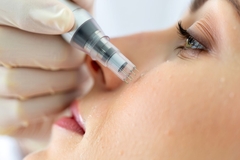
The rise in microneedling treatments has prompted leading industry bodies to introduce new standards following an increase in health warnings for the treatment. The launch of the Sharp Standards Guide to Microneedling, supported by Dermalogica and the British Association of Beauty Therapy & Cosmetology (BABTAC), marks a step in demonstrating the industry’s commitment to consumer safety in the absence of current UK legislation.
The guide was recently unveiled at the Houses of Parliament at an event hosted by Carolyn Harris MP and featured an expert panel including Candice Gardner, Lesley Blair MBE, Alice Hart-Davis, founder of The Tweakments Guide, and professional skin therapists.
BABTAC is a not-for-profit company and one of the UK’s membership organizations and insurance providers set up to raise the level of professionalism in the aesthetics, beauty, hair, and well-being industries. Meanwhile, Dermalogica trains 100,000 skin therapists per year in advanced technologies and services.
Widespread industry demand
Over 35,000 microneedling procedures were carried out in 2025 alone in Dermalogica’s stores, retailer treatment rooms, and independent Dermalogica partner companies across the UK, demonstrating the company’s demand for the treatment.
The availability of at-home microneedling devices is an increasing safety concern, as they do not require any formal qualifications to purchase online, creating risks and confusion for consumers on who could be using them.
According to BABTAC, at-home devices don’t just undermine professional standards; they can cause harm, and for that reason, “there should be stricter controls introduced.”
In the US, in October 2025, Personal Care Insights reported that the Food and Drug Administration took action against radiofrequency microneedling devices following reports from consumers experiencing burns, fat loss, disfigurement, scarring, and nerve damage from aesthetic and dermatology procedures.
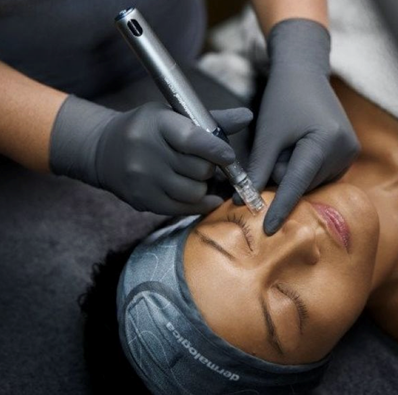 Microneedling is a treatment that uses tiny needles to increase collagen and enhance the appearance of skin, and has surged in popularity.It is assumed that in a clinical setting, treatments are regulated — however, there is a lack of legislation covering non-surgical treatments in the UK.
Addressing the safety gap?
The Sharp Standards Guide aims to address this safety gap. Lesley Blair, CEO of BABTAC, tells Personal Care Insights, that the guide is “not so much filling a gap as streamlining accessibility to current guidance already available — it has been developed to help professional therapists navigate current best practice clearly, consistently, and confidently.”
She says that “if done by an appropriately qualified, ethical, and professional practitioner, microneedling can be a very safe and effective treatment.”
However, she adds that without the correct qualifications, environment, and equipment, microneedling can lead to serious health and safety issues caused by a “lack of sterilization and cross contamination from microorganisms, as well as adverse reactions — from poor, substandard devices and incorrect techniques.”
Discussing the UK’s legislation around non-surgical procedures and how this might impact consumer safety and industry accountability, she says: “It is worth noting that there are currently plenty of outstanding practitioners along with a number of excellent standards. But without consistent legislation and standardization of qualifications governing non-surgical advanced aesthetics across the UK, there isn’t parity.”
Responsible professional therapists compete against those who don’t care to follow best practice and therefore can also undercut pricing and undermine safety standards. This can all be done without accountability and appearing as seemingly professional businesses to consumers, who are unaware of the lack of regulation, Blair explains.
Raising professionalism
BABTAC and Dermalogica share the common objective of raising levels of professionalism in the industry.
“Like Dermalogica, in the absence of legislation currently, we self-regulate our members to ensure they hold the correct qualifications to practice, and we enhance that learning with up-to-date best practice guidance. Dermalogica’s Microneedling Guide is a comprehensive resource to ensure qualified practitioners continue to pursue excellence in their treatments for consumers,” says Blair.
“There are many different groups sharing information, and not all of it is accurate. This guide is an industry-wide initiative designed to create consistent best practice, regardless of location in the UK, and to ultimately protect consumer safety.”
Candice Gardner, education manager — Learning and Content, Dermalogica UK, adds that microneedling is a treatment with a strong and well-evidenced track record, but it demands genuine competence from every practitioner who performs it.
“At Dermalogica, we believe that exceptional practice is built on knowledge, skills, and a commitment to going beyond the minimum. That is why we have invested in ensuring our own staff hold regulated qualifications at Level 4 and 5, and it is why we partnered with BABTAC to produce this guide,” explains Gardner.
“Clear, practical, and grounded in real-world experience, it gives skin care and aesthetics businesses the foundation they need to deliver microneedling responsibly and to the highest standard.”
Qualifications and regulatory frameworks
In the absence of a UK-wide standardized regulation currently, BABTAC says it self-regulates its members.
Blair explains: “To be able to be insured with us for microneedling, we require either a Level 3 government-regulated (such as Ofqual) beauty BABTAC says it encourages consumers to shift their focus from asking “Does it hurt?” to more important questions, such as “What qualifications do you hold?” therapy qualification or the Level 3 principles of cosmetic practice qualification (from an Awarding Organization), as those have been mapped to the National Occupational Standards.”
“The problem with the lack of standardization of ‘training’ means that anyone can appear to have a ‘qualification’ simply because they have a certificate which says they do. Even the terminology used isn’t regulated. So a certificate may say it’s a qualification, verified, accredited, certified, and even Level 3,4 or 5. Still, if there’s no oversight by a government-regulated awarding body, then it is not to the standard we would recommend or accept,” she says.
With the lack of standardized legislation across the UK, it is up to ethical industry bodies, such as BABTAC, to self-regulate and champion qualified, verified, and insured therapists.
BABTAC’s TIME consumer awareness campaign provides a simple yet effective framework, encouraging users to check Training, Insurance, Monitoring, and Evidence before booking any microneedling treatment.
“We are also educating consumers — through our TIME campaign — a consumer safety initiative backed by MPs, influential bodies and key figures across the industry, to ensure consumers get the best possible experience and better protect themselves,” says Blair.
“We recognize, support, and act as an advisory body to the government on full regulation of this sector; however, timeframes remain uncertain.”
According to Blair, the Sharp Standards Guide is a good example of industry bodies working together, by joining forces and pooling resources to provide this free guide industrywide.
She summarizes by saying it “helps professional therapists navigate current best practice clearly, consistently, and confidently — while reinforcing the sector’s professional credibility.”