





Vytrus Biotech spotlights plant-based PDRN for hair regeneration

Key takeaways
- Vytrus Biotech has quantified two plant-derived forms of PDRN in Capilia Longa for the first time.
- Capilia Longa is designed to reactivate the hair cycle and support hair density, growth, and follicle regeneration.
- The plant-based active offers a biotechnology-derived alternative to traditionally salmon-sourced PDRN.

Vytrus Biotech has revealed the first quantifications of Phyto-PDRN and ExoPDRN (polydeoxyribonucleotide) naturally present in its hair growth active, Capilia Longa.
By quantifying the presence of PDRN in the active, the new data fortifies the position of the industry-established ingredient for its characteristics in reactivating hair growth, density, and quality.
Capilia Longa is derived from the stem cells of Curcuma longa and utilizes the plant’s rhizomes, which grow indefinitely and have strong regenerative characteristics. It is rich in natural plant exosomes enriched with Exopeptides and provides plant growth factors to restart the activity of the dermal papilla, producing an epigenetic reset of the hair bulb, according to Vytrus.
“We had already identified and quantified PDRN in several of our plant stem cell actives for skin and hair care. What is new is that we have now found it in Capilia Longa as well. For the first time in this ingredient, we have quantified two forms of plant-derived PDRN,” Dr. Òscar Expósito, chief executive officer, chief scientific officer, and co-founder at Vytrus Biotech, tells Personal Care Insights.
“The first is Phyto-PDRN, DNA fragments that act at the cell surface. The second is ExoPDRN, PDRN naturally encapsulated within the plant exosomes of Capilia Longa, which allows a dual action at the cell surface and inside the cell.”
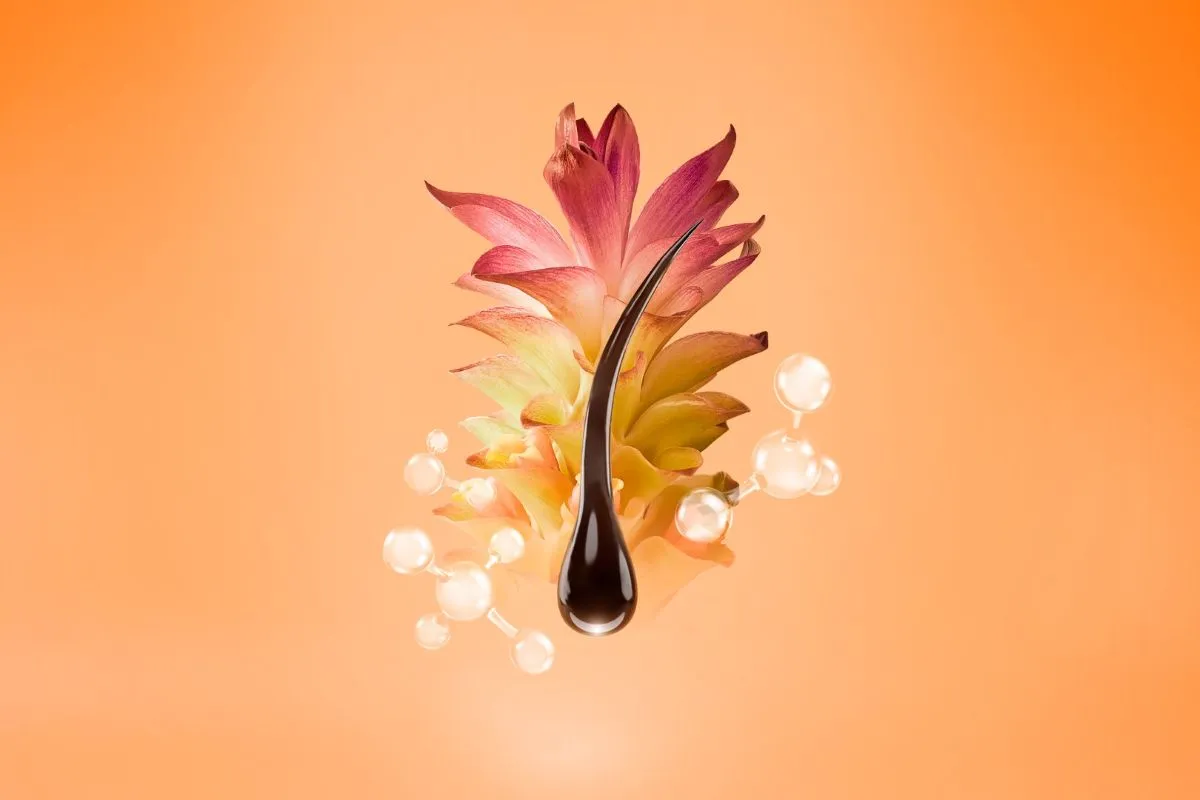
Vytrus Biotech has identified two plant-derived forms of PDRN in Capilia Longa.
Reactivating dermal papilla
Vytrus Biotech explains that in the process of hair loss, dermal papilla cells become latent, and all hair growth processes stop. Dermal papilla cells are a small, specialized cluster of mesenchymal cells located at the base of the hair follicle.
Capilia Longa reactivates the hair cycle by enabling the generation of growth factors in the dermal papilla and by regulating epigenetic markers related to hair growth cycle functions.
“These new data give us a deeper picture of the molecular cocktail behind its efficacy: natural plant peptides, plant growth factors, Phyto-PDRN, and plant exosomes loaded with peptides (Exopeptides) and with PDRN (ExoPDRN),” Expósito tells us.
He explains that the scientific literature links PDRN to hair follicle activation.
“This includes maintenance of the anagen (growth) phase, follicle regeneration, and increased blood flow to the follicle, bringing more nutrients for effective hair growth. These mechanisms are consistent with the clinical benefits we had already observed with Capilia Longa.”
The new findings are consistent with improved hair follicle activation and a healthier scalp microenvironment. A bibliographic review of the scientific literature associates PDRN with two complementary benefits in hair care, says Vytrus.
The review of PDRN use in hair care shows anti-inflammatory effects, increased collagen and extracellular matrix, and better hair follicle anchoring are observed with PDRN use in the scalp microenvironment. Together, the effects lead to less hair loss.
Capilia Longa’s characteristics are touted to be aligned with multiple cosmetic applications such as hair loss prevention and reduction formulations, hair growth and redensification products, eyelash and eyebrow growth formulations, hair nourishing and strengthening formulations, and beard products.
With the new data, Capilia Longa joins Elaya Renova, Vytrus Biotech’s fully natural active derived from wild Mediterranean olive tree plant stem cells, in bringing plant-based PDRN to hair care.
Capilia Longa combines plant PDRN, exosomes, peptides, and growth factors to support hair growth.
Biotech sustainability, efficacy, compatibility
Capilia Longa is said to enhance sustainability, efficacy, and formulation compatibility. It offers a more sustainable solution to the traditionally salmon-derived ingredient as demand for plant-based actives continues to rise.
“Our PDRN is the same type of molecule, but it is of plant origin. It is generated naturally in our plant stem cell cultures. It also does not come alone. In Capilia Longa, it is part of a synergistic cocktail of plant peptides, growth factors, and exosomes, and part of it is naturally carried inside exosomes,” says Expósito.
“On sustainability, our production relies on plant biotechnology. Unlike salmon-derived PDRN, there is no animal sourcing, and unlike traditional plant extracts, there is no need for large crop fields. Production is controlled and reproducible.”
On efficacy, Capilia Longa offers a regenerative mechanism of action and a global hair growth activation. Expósito tells us it reactivates hair growth, density, and quality, delays hair loss, and restarts the hair cycle, with density increases in hair, eyebrows, and eyelashes.
In terms of formulation compatibility, Expósito explains that Capilia Longa is dispersible in water and ethanol. “It is suitable for hair loss prevention and redensification products, as well as eyelashes, eyebrows, and beard formulations.”
Clinical evidence and methodology
Expósito walks us through the clinical evidence of Capilia Longa’s efficacy. The ingredient was evaluated in a single-blind, placebo-controlled clinical study. The panel was 40 female and male volunteers aged 18–60 with various types of alopecia, who applied a lotion with Capilia Longa once a day for a duration of 150 days.
The results showed that hair loss was reduced by 57%, density increased by 17%, and a 27% increase in the anagen/telogen ratio was observed, indicating a rebalanced hair cycle.
“A second study in 20 female volunteers showed density increases of up to more than 200% in eyelashes and up to more than 100% in eyebrows,” Expósito tells us.