



Botanical beauty evolves beyond “natural” with performance and transparency demands


Key takeaways
- Consumer expectations are shifting toward clinically validated, fast-acting, and transparent botanical beauty solutions.
- Biotech and advanced processing are transforming plant-based ingredients into standardized, high-efficacy actives.
- Botanicals are increasingly linked to vegan, sustainable, and multifunctional beauty solutions.
Botanical and flower-derived ingredients are transforming, driven by a combination of changes in consumers’ ethical, lifestyle, and performance expectations. More consumers are seeking plant-based beauty solutions that include environmentally responsible values, cruelty-free practices, and vegan formulations.
Innova Market Insights data indicates that in the past three years, there has been a 15% increase in the growth of personal care launches with botanical/herbal claims, demonstrating consumers’ interest in products with botanical ingredients.
Beauty lovers’ expectations have shifted beyond simply “natural” solutions — they now want scientifically validated, fast-acting, consistent, and highly efficacious products, without greenwashing. A solution to this is using biotech to transform botanical ingredients into standardized, high-performance actives with proven and reproducible efficacy.
Liki von Oppen-Bezalel, business development director at TriNutra, tells Personal Care Insights that the industry is displaying an increased interest in clinically supported botanical actives. Strategies that combine the heritage and folklore of natural ingredients with modern science to support skin health inside and out have gained attention. She also details that consumers are embracing simplified routines focused on multifunctional products with fewer, more purposeful, and efficacious ingredients.
Biggest botanical trends
In botanical beauty trends, TriNutra expects consumers to seek products that can help balance stress and blend inner calmness with an improved appearance. Von Oppen-Bezalel cites that since “beauty from the inside out” is widely accepted across the globe, the trend will only pick up pace.
She also predicts that products that control inflammation, or “InflammAging,” which are often directly linked to high cortisol levels, will likely be in focus. Botanical ingredients are evolving through science and innovation.
“These products can support healthy sleep, which again is directly linked to beauty. Research has suggested that high stress and chronic low-level inflammation can break down collagen and damage skin cells, leading to itchy, dry, red skin with uneven pigmentation,” says von Oppen-Bezalel.
Additionally, botanicals and their influence on mitochondrial health are forecast to trend due to their link to health and aging.
“In fact, mitochondrial functionality became one of the key hallmarks of aging. When mitochondrial function, including proper metabolism, respiration, and energy production, is not optimal, tissues and organs in our body show signs of aging, which naturally affect our appearance,” explains von Oppen-Bezalel.
TriNutra’s B’utyQuin is a proprietary, standardized, cold-pressed black seed oil that offers clinically studied benefits for use from the inside and out. Von Oppen-Bezalel says its effects on mitochondrial function, ATP production, inflammation, and oxidation set it apart from other oils and actives.
“B’utyQuin was clinically tested and showed exceptional results related to both the appearance and health of the skin, scalp, and hair.”
A recent clinical hair growth study using a 5% leave-on B’utyQuin scalp serum showed a 35% reduction in hair loss within 28 days, alongside increased hair density and improved overall scalp health. These results were linked to reduced inflammation, enhanced cellular energy, and microbiome balance, highlighting a multi-mechanistic approach rather than a single targeted pathway.
B’utyQuin has also positively influenced and balanced the skin and gut microbiome and reduced stress by lowering cortisol levels when ingested. TriNutra touts that B’utyQuin is also “the only” black seed oil to meet the USP (US Pharmacopeia) monograph and has several global patents for its composition and use.
“Overall, this premium black seed oil has been shown to have holistic benefits on metabolic health and wellness, directly linked to appearance and beauty,” says von Oppen-Bezalel.
Biotech for botanicals
Botanical ingredients are increasingly developed through biotechnology and advanced processing rather than used in raw or traditionally extracted forms. According to Innova Market Insights, Asia led in botanical/herb claim launches. At the recent PCHi (Personal Care and Homecare Ingredients) tradeshow in Hangzhou, China, many companies told Personal Care Insights about the use of biotech to transform plant-based raw materials into standardized, high-performance actives with consistent and measurable efficacy.
Daniel Robustillo, sales director at Vytrus Biotech, says that the company works “with the microbiome and plant-derived solutions to address longevity, anti-aging, and hair care, but always in a complete way, with the 360 approach — where we cover science, marketing, and innovation.”
Clarivine is a natural cosmetic active developed by Vytrus Biotech using plant biotechnology. It is derived from the stem cells of Vitis vinifera cultivated in vitro under controlled conditions. As a result, it is classified as a botanical ingredient due to its plant origin.
Unlike conventional botanical extracts obtained through physical or solvent-based methods, Clarivine is produced using plant cell culture technology. This approach enables the generation of a complex mixture of plant-derived compounds and reflects a broader shift toward biotech-enhanced botanicals designed for targeted functional benefits.
Biotechnology is increasingly used to convert plant-based feedstocks into functional cosmetic actives, shifting botanicals from traditional extracts to engineered ingredients. The trend is moving toward botanical inputs that are processed and optimized through biotech platforms rather than directly harvested and extracted.  Consumers are demanding performance-driven botanical beauty.
Anne Mu, global head of applied innovation, Active Ingredients at Evonik, tells us that biotechnology is being used to create alternatives to conventional cosmetic chemicals, showing the move to sustainable, nature-derived ingredients.
The company explains that its biotech platform relies on vegetable-based feedstocks, meaning plant-derived raw materials are used as the foundation for ingredient development. The approach enables the production of ingredients such as ceramides that are inspired by or derived from natural plant sources, rather than extracted directly in traditional ways.
Evonik utilizes localized plant feedstocks, highlighting how botanical inputs can be adapted to regional biodiversity, linking ingredient development to locally available plant resources. Mu says that its ingredients are developed “from a very advanced biotechnology platform” and are adapted to “customer needs” and local skin conditions. She positions biotechnology as a method to transform botanical raw materials into high-performance, standardized cosmetic ingredients, aligning natural origin with functional efficacy.
In parallel, Bénédicte Courel, general manager at Roquette Beauté, describes its ST 305 ingredient as “a porous starch coming from waxy corn,” highlighting its plant origin and functionality in makeup applications. The company adds that the ingredient provides “a very nice mattifying effect,” with performance linked to “sweat absorption” and “humidity absorption.”
Courel positions the ingredient as a botanical-derived material, where plant-based starches are used to deliver sensory and functional benefits in formulations, rather than relying on traditional mineral or synthetic powders.
Together, these examples illustrate a broader industry shift in which botanicals are not only sourced from plants but are increasingly engineered and optimized to deliver targeted performance in cosmetic formulations.
Vegan botanical benefits
Botanical ingredients are increasingly positioned as natural, vegan alternatives to conventional actives, replacing animal-derived materials while aligning with broader sustainability and cruelty-free claims.
Lucas Meyer Cosmetics by Clariant recently launched AlgaSurge — a microalgae-derived, highly-purified sulfated polysaccharide hydrogel — which is touted as an alternative to hyaluronic acid (HA) for skin renewal and moisture retention.
“For all our clinical studies, we have outperformed the HA group,” Julia Kang, China marketing manager at Lucas Meyer Cosmetics by Clariant, tells Personal Care Insights. She continues that the ingredient demonstrates visible benefits after one use and can be used to “help to boost skin radiance, skin hydration, skin barrier, and reduce wrinkles.”
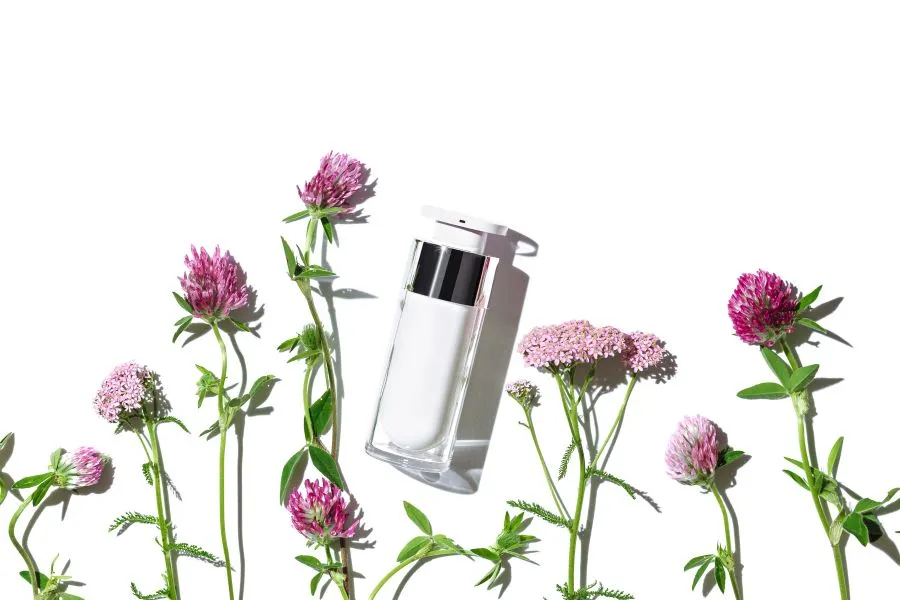 Vegan and sustainable claims are shaping botanical innovation. The company refers to AlgaSurge as a highly stable vegan PDRN alternative, addressing its traditional counterpart’s cost and sustainability concerns.
Sustainable botanical solutions
Many botanical ingredients are inherently plant-derived, but their environmental and social impact can vary significantly depending on how they are sourced, cultivated, and processed.
TriNutra’s von Oppen-Bezalel says that by maintaining full traceability and control across the entire value chain, the company ensures that its products are not only natural but also responsibly produced.
“This includes careful management of agricultural practices, minimizing environmental impact, and supporting local farming communities. In this way, we move beyond the assumption that natural equals sustainable and instead deliver ingredients that are both scientifically validated and ethically sourced.”
TriNutra has three pillars of sustainability: economic growth, environmental protection, and social progress and equity.
“Sustainability and traceability have always been key pillars of our black seed oil production processes. We ensure full understanding and control of the supply chain by understanding the farm’s history, the varieties of black seed oil produced, cultivation, harvesting conditions, seed storage, and processing procedures, all completed in one location for full understanding and control,” says von Oppen-Bezalel.
Brands are increasingly open about their supply chains and sustainability efforts and are using the information as part of their marketing strategies. For example, TriNutra has developed a breeding program for Nigella sativa to produce B’utyQuin.
“Because of this, we only work with local farmers, which gives us full traceability from cultivation to the finished product and, in turn, supports the local economy in a region that suffers from economic, climatic, and political disadvantages,” explains von Oppen-Bezalel.
“Furthermore, we regularly test the soil for contamination, and samples from each batch are tested to ensure their quality, potency, and free fatty acid content (which eliminates potential rancidity). Once verified, our black seed oil is produced using a proprietary cold-press method that is completely free of solvents, gentle on the extract, and helps preserve the oil’s inherent composition and benefits while minimizing potential environmental damage.”