


Iridescent promotional banner from Kao Chemicals Europe featuring “Pearled Perfection,” advertising Danox Pearl GS with soft pastel swirls and a “Learn more” button
Home
Videos
Carrageenans pegged ...

Carrageenans pegged as “eco-friendly” alternative for gelling and solid beauty formulations

03 Dec 2021 | Cargill Beauty 

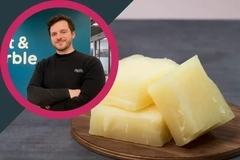
Smita Fulzele, applications lab leader for North and South America at Cargill Beauty, gives insight into carrageenans’ potential in beauty product formulations. Carrageenans are eco-friendly as they are naturally derived from red seaweed, which can be whole processed, helping raise energy efficiency while formulating different products. They are also readily biodegradable compared to synthetic polysaccharides, widely used in personal care ingredients.

This is Nicole K from Personal Care Insights.

I'm joined today by Smita Folzeli, applications lab leader for North and South America at Cargill Beauty.

Today we will discuss the company's caraginan ingredients, which are used in gelling applications and solid formulations.

Let's get into it.

What are the 3 cars in the company's portfolio and which personal care areas is each suitable for?

So within Cargill's beauty portfolio, currently, we have three different types of carrageenan.

We have the Satya gum VPC 430, which is a lambda fraction of the carrageenan.

We have satya gel BPC 508P, which is a premium grade iota carrageenan, and then we have the Satya gel BPC 614, which is a newly launched kappa-Carrageenan.

Within these Caraginans, the beauty is, you can always use only one inky name, even if you use all three types of fractions in the formulations.

Each of this fraction, you can look at it from a different texture point of view, where with lambda carrageenan, it can be used in skincare and haircare applications, but mostly with low viscosity formulations like face serums, toners, micellar water, smooth gels, and other haircare applications as.

The iota carrageenan, it can be used in medium viscosity like creams, lotions, different types of face mask application as.

And the kappa carrageenan, a newly launched product, it's a very versatile ingredient which can again be used in skincare, haircare, as as, rinse off formulations like soaps, as.

Carrageenan's an eco-friendly alternative for gelling applications and solid formulations.

And in what ways are these eco-friendly?

Absolutely.

Caraginans are eco-friendly alternatives, not just for the functionality of jelling, as I highlighted in soap formulations or gel-like formulations or solid formulations, but at the same time, you can create a variety of different types of textures with it.

And that's the uniqueness of, the carrageenan.

As I said, you can Have one inky name, but you can use a different combination of lambda, iota, and kappa carrageenan to create a wide variety of, textures, be it a fluid gel-like texture, a jelly-like structure, more of a high jelly solid, formulation, or it can also be used to make brittle gels kind of formulations.

It is eco-friendly, as I mentioned, , because it is obtained from the red seaweed from the ocean, comes out from the ocean, goes back in the ocean.

One key point to note is, these carrageenans show good synergy with salt.

So when added with salt, you can get a nice viscosity profile you're looking for in your formulation, and at the same time, it reduces the cost and use, of the carrageenans as.

So giving you really cost efficiency while designing formulations as.

The carrageenan's portfolio are nature derived, so they are 100% natural origin, as per the ISO 16128.

Also, the iota and lambda fractions of these carrageenan can be cold processed.

So, it helps you with energy efficiency and low cost of energy while formulating your different products.

And in addition, and more importantly, all these three carrageenans are readily biodegradable as per OE OECD 301.

Now, this is a great advantage, over a lot of different synthetic polyacrylates or acrylates that are widely used in the personal care industry.

And eventually, those up in landfill and, contributes to, pollution.

On the other hand, carrageenan then serves as a good alternative for, environmentally friendly, eco-friendly, ingredient, which is also, sustainable.

And how do you plan to overcome the bad reputation that Carrageinan has had in the past?

And looking ahead, could you share the future potential that it can have in the personal care industry?

Absolutely.

I feel like social media as much has given us a platform to express our views.

It has also led to some misinformation, about a few different things.

Carrageenan is no exception.

Now, a molecule called polygyin is actually a form of a degraded version of carrageenan.

And polygyin was known to have some healthcare impacts which are not very desirable.

So, that molecule is not, at least in the US, permitted as a food additive.

But because polygenon was obtained from a degraded version of carrageenan, people somehow use those the, terms, inter interchangeably, and which was inaccurate.

So, polygon and carrageenan are completely different molecules.

Having said that, I believe, Cargill's carrageenans have a very big potential to contribute to the personal care industry, more, not just as a replacement for a synthetic alternative, for urology modification.

As as different parameters, but at the same time, carrageenans provide a nature-derived, cleaner, biodegradable, sustainable, and environmentally, environmentally friendly solutions that they can use in their formulations to bring eventually to the consumers.

More videos

Image