



China’s beauty paradox: Exports catch up to K-beauty despite domestic slowdown

Key takeaways
- China’s online beauty sales fell 6% in September, while cosmetics exports surged.
- China has overtaken South Korea in color cosmetics exports.
- Proya is expanding into US retail and European R&D to strengthen its global presence.
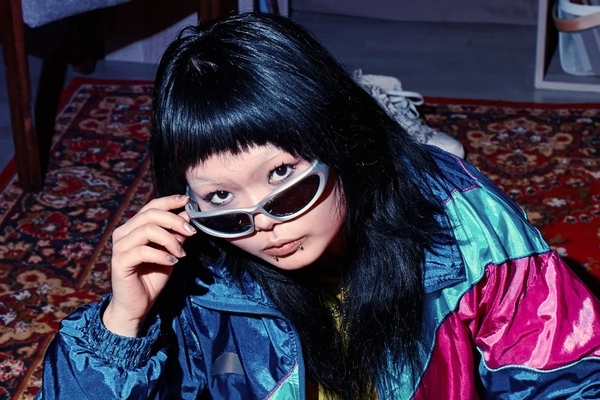
China’s domestic online beauty sales are falling as C-beauty companies are ramping up export efforts and moving into international retail channels. The gap suggests a deliberate pivot from C-beauty toward overseas growth, targeting the categories and regions that K-beauty has spent the past decade winning over.
According to Jefferies’ China online beauty tracker, the country recorded a 6% year-on-year cosmetics sales decline in September 2026. Skin care fell 6.1%, while color cosmetics went down 5.2%.
However, at the same time, data from the Korea International Trade Association (KITA) shows China climbing from seventh place to fifth in global cosmetics exports. The trade body says China’s color cosmetics exports amount to nearly three times that of Korea’s.
C-beauty company Proya, meanwhile, has opened a European Innovation Center Laboratory in France and has announced it will begin selling across 400 Ulta Beauty stores in the US next month.
“This Europe Innovation Center Laboratory connects the European and Chinese ecosystems to draw on combined strengths and create new innovation capabilities,” says Hou Juncheng, founder and chairman of Proya Cosmetics.
The center is not the first bridge between Chinese and European beauty. French ingredient suppliers have been actively pursuing partnerships with Chinese cosmetics brands, and many Chinese perfumers train in France. The country’s Cosmetic Valley, meanwhile, has set up a Shanghai-based fragrance and cosmetics embassy to encourage collaboration between the two markets..webp) Chinese beauty brands are expanding overseas, targeting markets where K-beauty has established a strong presence.
With color cosmetics exports already outpacing Korea’s and a growing foothold in US and European retail, C-beauty appears to be borrowing the playbook that got K-beauty onto global shelves.
Contracting figures
The September figures from Jefferies’ tracker show many multinational beauty giants experiencing declining figures in China. L’Oréal fell 5%, Estée Lauder 8%, Procter & Gamble 20%, Shiseido 24%, and LVMH 26%.
Beiersdorf and Galderma were the only multinationals to grow, supported by their Nivea and Cetaphil brands. At the brand level, dermatological skin care like CeraVe and Cetaphil grew (35% and 58%, respectively), while Bobbi Brown fell 31%. Among domestic players, Mao Geping grew 26%, and Proya grew 1%.
As demand becomes increasingly selective, and derma-brands gain ground, Jefferies’ findings show skin care and color cosmetics accounting for over 80% of China’s beauty market. Both categories initially gave rise to K-beauty.
According to KITA, China’s cosmetic exports reached ₩8.14 trillion (US$6.1 billion) from January to July 2026, up 24% from ₩6.55 trillion (US$4.9 billion) a year earlier. The figures lifted China to fifth in global export rankings, behind France in the lead and South Korea in second place.
In color cosmetics, China has already overtaken Korea. Exports of lip and eye makeup, powders, and nail products totaled ₩1.88 trillion (US$1.41 billion) from January to July, about 2.9 times Korea’s ₩644.7 billion (US$484 million).
From January to July 2026, China’s lip makeup exports were 1.7 times Korea’s, and its eye makeup exports were 3.5 times. China’s exports grew 17% to 33% across all four color cosmetics categories (lip, eye, powders, and nail products), while Korea’s lip makeup and nail product exports fell 15% and 15.6%, respectively. .webp) Proya is expanding its international presence with a new research laboratory in France.
Building international base
According to The Asia Business Daily, Kecia Steelman, CEO of Ulta Beauty, raised C-beauty during the company’s 2026 Q2 fiscal earnings call. She is quoted as saying, “[We are launching] Proya, the number one skin care brand in China. So it’s not just about K-Beauty anymore.”
Proya’s US launch will be the first time a Chinese premium skin care brand joins Ulta’s online and physical networks at the same time. The rollout is planned for November this year, and with it, Proya says it is “moving beyond mere product export to brand globalization.”
To expand, the company says, “brands must not only enter overseas markets but also earn a permanent place in consumers’ daily skin care regimens and secure a voice within elite global beauty narratives.”
Securing that voice, Proya has inaugurated its Europe Innovation Center Laboratory in France, with a 450 square meter site containing 76 pieces of equipment and seven dedicated researchers. The lab will focus on research and innovation in skin longevity, biology, biotechnology, and sustainable ingredients.
The lab will collaborate with the Hangzhou Longwu center in China, which handles formulation, ingredients, safety, and efficacy, and the Shanghai center, which works on hair care and the scalp microbiome.
Proya’s international push comes after its namesake brand, which accounts for around 70% of group revenue, posted a 7% sales decline in H1 2026. The drop was the company’s first after years of uninterrupted growth since its 2017 Shanghai listing. Jefferies says the brand returned to 1% growth in September, but the overseas expansion appears partly aimed at offsetting soft momentum.