


C-beauty growth splits domestic brand strategies home and abroad

Key takeaways
- With a strengthening Chinese beauty market, C-beauty brands are taking on different strategies to capture growth.
- Proya is turning to the US as domestic sales weaken, while Mao Geping posted strong growth in China.
- L’Oréal and Estée Lauder are also gaining momentum in China.

China’s beauty market is forecast to grow 6% annually through 2028, according to a report by consulting firm McKinsey, but recent earnings from two of the country’s largest domestic players tell different stories about who is capturing that growth.
Proya, touted as China’s biggest beauty company, is struggling at home with an H1 2026 7% sales decline for its namesake brand, which it is now pivoting to the US market through an Ulta Beauty launch.
Meanwhile, Mao Geping Cosmetics, a C-beauty prestige brand, has posted 26% revenue growth for H1 2026. It followed up on the strong performance by announcing a HK$500 million (US$63.75 million) share buyback program, signaling confidence in its domestic position.
These juxtaposing financials point toward a fragmented beauty sector in China, where some local brands are performing according to targets while others are betting on international markets for growth.
For Proya, the US expansion could represent a bid to offset stalling domestic sales. However, Bloomberg reporting suggests the company may be getting ahead of itself by not first building brand recognition among US consumers.
Mao Geping, by contrast, is doubling down at home, using its earnings boost to reassure investors of its long-term value.
“The repurchase of H Shares … demonstrates the confidence of both the company and its management team in the future development prospects of the company’s business,” says Mao Geping.
Against this backdrop, Western giants like L’Oréal and Estée Lauder are flaunting recovering business in China.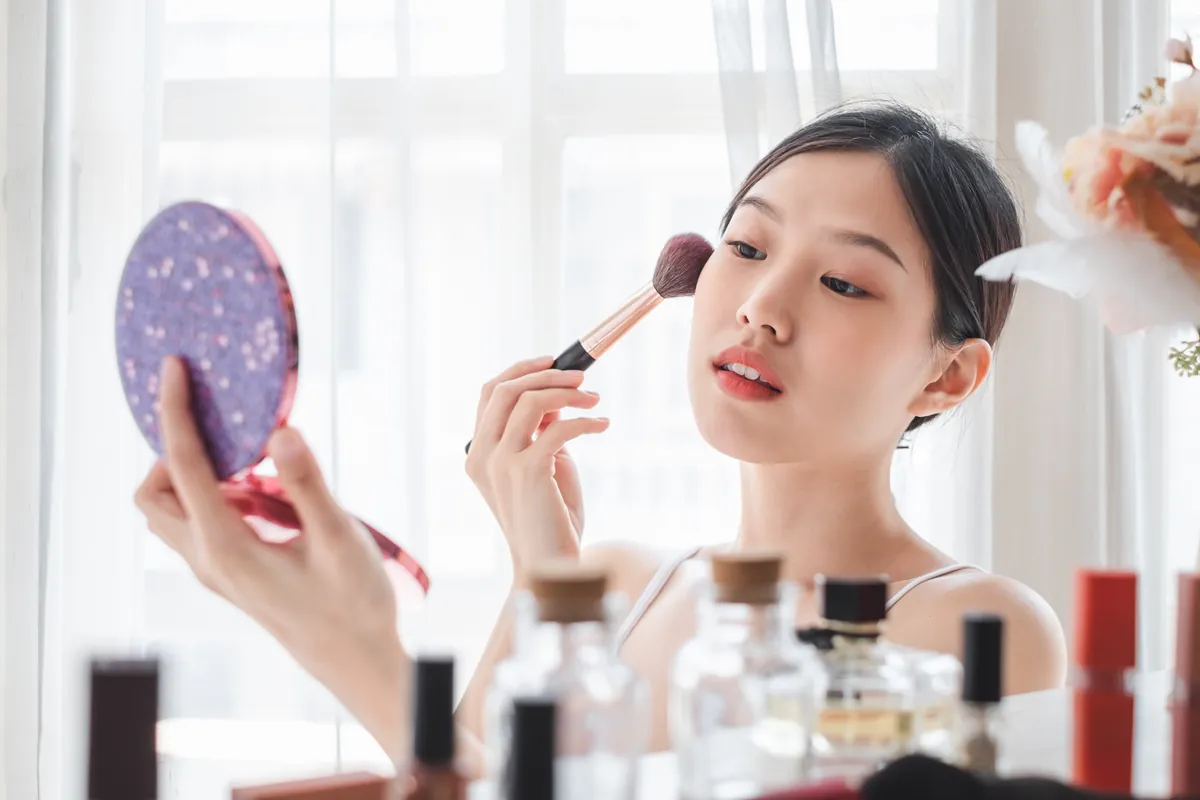 China’s beauty market is producing different growth trajectories for its leading domestic brands.
Missing fame to the name?
Proya announced that it is pushing into the US market through a retail partnership with Ulta Beauty, which will bring its products to store shelves in November 2026. According to a Bloomberg analysis, the company is right to look overseas as its domestic sales stall, but it has not yet built enough brand recognition among US consumers to ensure success.
While Proya is considered a household name in China, starting from scratch in one of the world’s biggest beauty markets requires local awareness.
Consumers increasingly lean on product reviews, word-of-mouth recommendations, and brand trust to help them make purchase decisions. Social media, too, has emerged as a powerful tool for brands to build an audience, and increasingly, research has shown that consumer content typically outranks branded content.
For example, South Korean entertainment and its influence in Western media and pop culture were one of the key elements that made K-beauty popular in international markets. Big J-beauty players, like Takasago, have made moves mimicking K-beauty’s popularity push to build international recognition.
C-beauty’s Proya targeting the Ulta aisle before social media feeds may jeopardize its ability to generate the type of consumer excitement that drives sales.
The company’s financial performance in China may be adding urgency to its overseas expansion.
The Proya brand, which accounts for around 70% of the group’s revenue, fell 7% in H1 after years of uninterrupted growth since the company’s 2017 Shanghai listing.
Domestic resilience
While some C-beauty brands buffer to offset domestic sales falls, others are strengthening local footholds. Alongside its 26% revenue growth for H1, Mao Geping also reported earnings of ¥805.45 million (US$119.8 million), up 20% from ¥669.77 million (US$99.7 million) for H1 last year. Earnings per share increased from ¥1.37 to ¥1.64 (US$0.20 to US$0.24).
The company trades on the Hong Kong stock exchange. Its repurchases, as part of the shares buyback program, will be conducted on the open market under a mandate granted by its shareholders in April 2026.
The scheme allows for the repurchase of up to 3% of total issued shares, with the bought-back shares either canceled or held as treasury shares.  Proya is looking to US retail for growth as sales of its core brand weaken in China.
Mao Geping’s program signals confidence in its sustained foothold in the domestic prestige market. This confidence is mirrored in Western beauty giants’ financial reporting for China.
For the first half of 2026, L’Oréal grew at nearly three times the rate of the broader Chinese beauty market.
Its Luxe division was the largest contributor to the company’s 4.6% sales growth for the North Asia region, boosting L’Oréal to hit a record H1 total global revenue of €23.77 billion (US$27.5 billion).
Estée Lauder also reported that China acted as a major growth engine for the company in its latest financial earnings. The company yielded a 9% organic sales increase for mainland China, with reported sales up 12%, and boasted prestige beauty market-share gains in the country.
For Mao Geping and Western giants, the Chinese consumer will likely remain a top-of-mind priority — a strategy Proya appears to temporarily set aside as it rushes for US shelf space.