


Derma beauty and hair care power L’Oréal to record half-year operating margin


Key takeaways
- L’Oréal posts a record first-half operating margin of 21.3% on €23.77 billion in sales.
- Dermatological Beauty and Professional Products grew about double the rate of L’Oréal Luxe.
- Hair care and GLP-1 companion skin care emerge as part of the group’s growth engines.
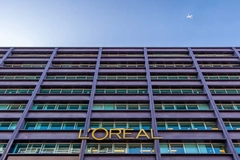
L’Oréal has published its 2026 half-year results, where hair care was revealed as a front-runner and its two most clinically oriented divisions — Professional Products and Dermatological Beauty — grew over double the rate of its luxury arm.
The beauty giant’s first-half sales reached €23.77 billion (US$27.25 billion) and a record first-half operating margin of 21.3%. Reporting sales were up 6.8% like-for-like (LFL), 6.5% on an adjusted LFL basis, and 5.8% as reported, for the six months to June 30. The adjusted figure strips out the impact of phasing in the company’s IT system in the current and comparable periods.
Operating profit rose 6.8% to €5.06 billion (US$5.8 billion), lifting the operating margin 20 basis points to 21.3%. Gross margin improved 10 basis points to 74.8%. Net profit excluding non-recurring items reached €3.96 billion (US$4.54 billion), up 4.7%.
The margin expansion was funded by a reallocation of spending. Advertising and promotional expenses rose 70 basis points to 32.6% of sales, while selling, general, and administrative expenses fell by the same 70 basis points to 18%. Research and innovation spending remained stable at 2.9% of sales.
Currency movements were a 2.8% drag on reported sales, while changes to the scope of consolidation added 1.8%. Operating cash flow came to €3.12 billion (US$3.58 billion), against €2.74 billion (US$3.14 billion) a year earlier. Net debt stood at €12.66 billion (US$14.52 billion) at the end of June.
Where the growth is and isn’t
The fastest growth came from L’Oréal’s two most clinically oriented divisions: Dermatological Beauty and Professional Products. Dermatological Beauty, which the company says has now accelerated for a third consecutive quarter, grew 10.6% on an adjusted LFL basis, while Professional Products grew 11.6%.
Professional Products added 90 basis points to reach 23.3%. Dermatological Beauty added 20 basis points to 28.4%, the highest of any division.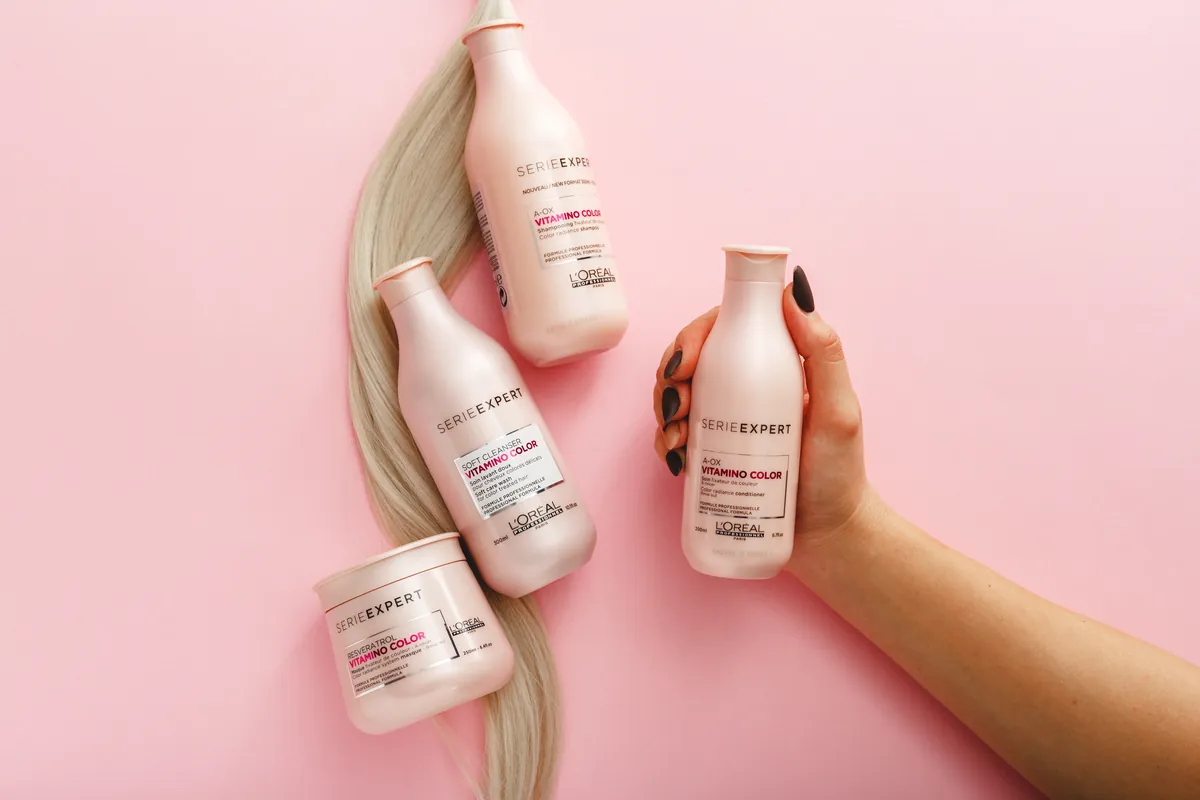 Kérastase, Redken, and L’Oréal Professional anchored the division’s strongest half.
Hair care was the standout category across the group. L’Oréal attributes the Professional Products performance to the ongoing premiumization of hair care, alongside its omnichannel strategy and salon services. It names launches including Kérastase Gloss Absolu Crème, Redken Acidic Grow Full, and L’Oréal Professionnel Keratin Alpha Sleek.
In the derma beauty division, the company’s brand Vichy’s growth was driven by the “continued success of the Dercos hair care ranges across all geographies.”
The company says hair color was a tougher market, but was addressed through innovations such as Redken Shades ALK and a relaunch of L’Oréal Professionnel DiaLight. The integration of Color Wow, acquired for the styling category, is underway.
Meanwhile, Consumer Products grew by 4.3% and added 20 basis points to 22.7%. In the category, hair care grew in double digits on L’Oréal Paris Elvive Collagen Lifter and Garnier Fructis Diamond Sleek.
Against this, L’Oréal Luxe grew 5.1%. Luxe was also the only division to lose profitability in the half, slipping to 22.1% of sales from 22.3% a year earlier.
Within Luxe, longevity moved from marketing language to an explicit portfolio frame.
The company describes the launch of Lancôme Absolue Longevity MD as capitalizing on the longevity trend. It also cites accelerating skin care momentum from Helena Rubinstein’s Replasty franchise and continued growth at recently acquired British brand Medik8.
Derma beauty names GLP-1
In the Dermatological Beauty division, La Roche-Posay, CeraVe, and SkinCeuticals all grew in double-digits. L’Oréal reports that SkinCeuticals was boosted by the strong performance in North Asia and the success of the AGE Interrupter Ultra Serum, clinically tested to meet GLP-1 patients’ needs.
The rise of GLP-1 use has caused the beauty industry to pay attention to and treat its side effects on the skin.
Dermatologists report facial volume loss, laxity, dryness, and hair thinning in patients on the drugs — changes popularly labeled “Ozempic face” — creating a formulation target that barely existed a few years ago.
Also in the Dermatological Beauty category, L’Oréal’s La Roche-Posay was powered by the continued strength of key pillars like Cicaplast, coupled with successful launches like Hyalu B5 Suractivated and UV Air Fluid. The reacceleration of CeraVe was confirmed, boosted by its core ranges and successful innovations.
Fragrance growth holds
Fragrance advanced in double digits, with L’Oréal Luxe consolidating its position as the global number one in the category. Growth was led by Prada Paradigme, the Emporio Armani rollout, Valentino Born in Roma, and the Yves Saint Laurent franchise Libre, which L’Oréal says is now the world’s leading women’s fragrance.
Also tapping into fragrance, the NYX brand extended beyond color into body care and scent with its Fat Oil Body Collection.  L’Oréal says Yves Saint Laurent Libre is now the world’s leading women’s fragrance.
In makeup, growth came from L’Oréal Paris Extensionist Mascara and Maybelline New York Serum Lipstick, with strong performances from 3CE and NYX Professional Makeup.
Emerging markets outpace
SAPMENA–SSA (South Asia Pacific, Middle East, North Africa – Sub-Saharan Africa) led regional growth at 13.8% adjusted LFL. This was followed by North America at 6.7%, Europe at 6.1%, Latin America at 5.2%, and North Asia at 4.6%.
In China, L’Oréal says it outperformed the market nearly threefold, with Luxe the largest contributor. Additionally, e-commerce now accounts for more than half of the group’s sales across North Asia.
“L’Oréal maintained its strong momentum and expanded its outperformance of the global beauty market. Growth — broad-based across all categories, divisions, and regions — was fuelled by two main engines: the seamless execution of our innovation strategy and our market-beating growth in e-commerce, the industry’s most dynamic channel,” says Nicolas Hieronimus, CEO of L’Oréal.
Gulf consumption was affected since the start of the Middle East conflict, the company notes, though Saudi Arabia proved resilient. Sub-Saharan Africa grew in high single digits, with South Africa in double digits and ahead of its market.
Outperforming the market
L’Oréal confirmed its 50-year exclusive worldwide license with Kering for Gucci beauty and fragrance, which takes effect on July 1, 2027, subject to regulatory approvals. The two companies will manage the transition until that date.
“Our historical brands are growing strongly, and our portfolio keeps getting stronger thanks to recent additions, including Kering Beauté,” says Hieronimus. 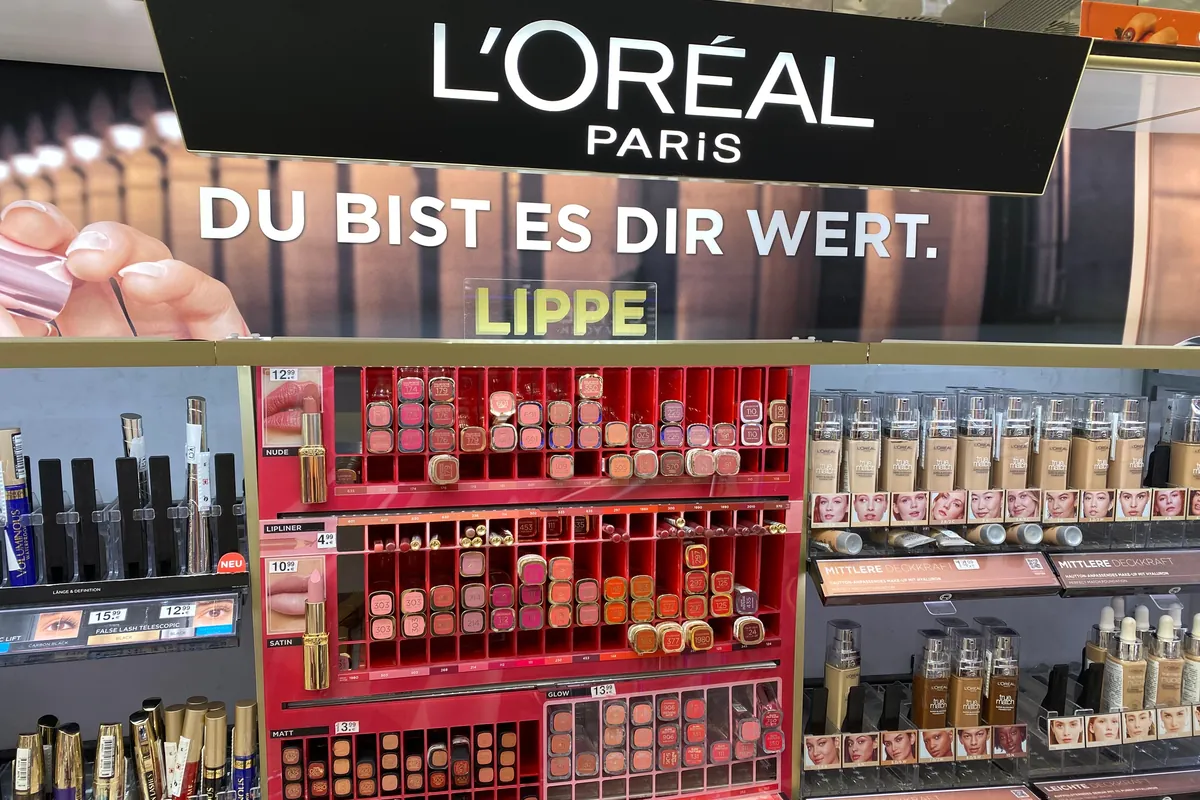 La Roche-Posay, CeraVe, and SkinCeuticals all grew in double digits.
The group also previously signed an agreement to acquire a majority stake in Innovist, an Indian personal care player. The transaction is expected to be completed in the coming months.
Separately, L’Oréal announced a collaboration with OpenAI covering AI-powered consumer journeys and agentic commerce, alongside AI applications across research, science, and marketing.
“Our innovation engine is firing on all cylinders — and AI will help it maintain its pace. Our teams on the ground keep leveraging fast-shifting distribution patterns — conquering online with digital excellence while creating exceptional brand experiences offline,” continues Hieronimus.
L’Oréal’s CEO says the company expects demand for beauty to remain strong into the second half. “We believe that we are uniquely well equipped to continue outperforming the market and, despite the current context, achieve another year of growth in sales and profit.”