
Beauty brands turn to AI for personalization and production


Key takeaways
- L’Oréal is using AI to connect beauty discovery, research, and marketing.
- Unilever is scaling digital twins to improve production efficiency and reduce faulty production.
- Amorepacific and ELC are applying AI to personalize skin care and fragrance discovery.
AI is permeating innovation across global industries, regardless of sector or scale. Beauty players are responding by grasping for footing, integrating AI in various ways to stay in the relentless tech race.
In recent AI developments, L’Oréal has announced a partnership with OpenAI for “Transformation in Beauty with AI.” The partnership spans consumer reach, innovation, and marketing.
Meanwhile, Unilever has joined forces with Accenture to scale “digital twins.” These are virtual replicas of physical objects, processes, or systems that use real time data of the environment. They reflect how an asset is operating to troubleshoot and optimize outcomes.
In addition to the structural scale of the AI strides that L’Oréal and Unilever are undertaking, other beauty players are integrating AI in smaller scopes.
Amorepacific has launched an AI-powered Facial Aging Map to visualize wrinkle and hyperpigmentation changes. The Estée Lauder Companies (ELC) and Jo Malone London have released an AI-powered fragrance discovery model on Pinterest.
L’Oréal and OpenAI: From production to discovery
The partnership between L’Oréal and OpenAI will see the international beauty conglomerate and the ChatGPT creator collaborate on the creation and consumption levels of its value chain.
Based on two pillars, the partnership focuses on AI-powered consumer interactions and AI-powered business operations that target research, science, and marketing.
As part of AI-powered consumer journeys, Maybelline New York will offer Makeup Virtual Try-On via ChatGPT, powered by L’Oréal’s ModiFace technology. The move aims to increase product discovery, supported by AI-powered conversations.
Lancôme and Kérastase will also work to amplify product discovery within ChatGPT in the US with “enhanced signals.” SkinCeuticals, CeraVe, and Garnier will be part of OpenAI’s pilot for AI-native advertising, in which they will aim to meet consumers at the point of intent and commerce.
AI is reshaping beauty from discovery to production.
On its second pillar, L’Oréal is zeroing in on what it calls métiers, or “callings” in English, on the research and science, and marketing levels. Under research and science, L’Oréal is tapping GPT-Rosalind, OpenAI’s life sciences reasoning model, to map the skin microbiome. In doing so, it hopes to hone and accelerate its development of skin care, with a focus on subsidiary La Roche-Posay.
On the marketing scale, the move emboldens L’Oréal’s use of generative AI in marketing by making use of its in-house GenAI content platform, CreAItech.
“At L’Oréal, we believe we can be more demanding of AI to augment our beauty consumers, our metiers such as marketing and research, and our employees,” says Asmita Dubey, chief digital and marketing officer at L’Oréal. “Our collaboration with OpenAI structurally supports this ambition to bring new solutions within the beauty vertical.”
Unilever & Accenture: Fine-tuning production
Unilever’s partnership with Accenture aims to expand its use of AI-powered “digital twins” across its manufacturing network, with the rollout of over 40 new “digital twins” expected over the next 18 months. The move works to optimize workflow and provide a scalable blueprint for global expansion.
The packaged goods company reports that, thus far, “digital twins” have already cut waste by 20% and boosted capacity by 10% at its Raeford factory in the US.
“Having invested early in AI, Unilever is setting the standard for pairing advanced tools with smart process design and disciplined execution on the shop floor,” says Nicole van Det, CEO, Accenture the Netherlands and Nordics. “Together, we’re setting the benchmark for how industrial AI creates measurable value in the consumer goods sector.”
The technology is said to accelerate issue identification and scenario simulation across manufacturing teams and help them make more effective decisions throughout the production cycle.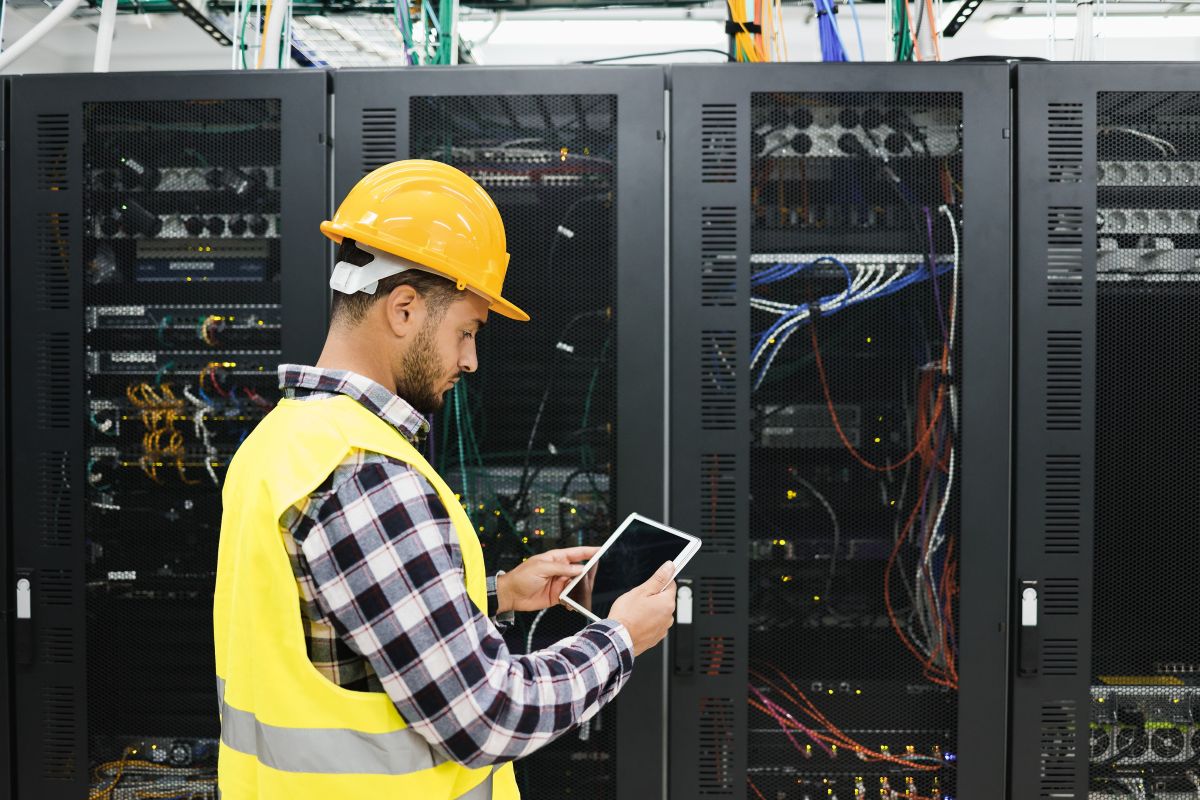
L’Oréal and Unilever are scaling AI across beauty operations.
Unilever says that in its Personal Care segment, “digital twins” have allowed for manufacturing efficiency and a reduction in waste since the introduction of the technology.
“The ‘digital twin’ supporting the production of Dove, Degree, and Axe at the Raeford plant in North Carolina, in the US, for example, was able to predict 95% of process flow restrictions in deodorant stick manufacturing, leading to a 20% reduction in waste and a 10% uplift in capacity,” says Unilever.
The technology is said to reduce waste by accurately predicting quality defects in its products.
Amorepacific’s face mapping
Utilizing AI-powered skin imaging analysis technology, Amorepacific has unveiled its research that maps facial aging patterns.
“This map visually charts the precise onset and progression paths of facial aging based on Korean facial datasets. Using AI, researchers aligned facial images against a uniform baseline, extracted regional wrinkle and hyperpigmentation data, and synthesized these layers into a single, standardized facial composite, thereby enabling a sophisticated visual analysis of aging patterns across different age groups,” says the company.
Tapping AI, the technology uses the “Standardized-Face Composite Overlay” technique to identify and map the spatial characteristics of facial features and aging. The analysis revealed that wrinkles and hyperpigmentation manifest on distinct paths across the face. While wrinkles are initially most apparent around the eye area and move to more dynamic areas, hyperpigmentation is first seen on the cheeks and under-eye areas before spreading to the rest of the face.

Beauty brands are using AI to personalize consumer experiences.
Additionally, the data gathered from the research revealed regional aging skin patterns, opening potential doors for specified and personalized skin care informed by region-based aging characteristics.
“Moving forward, these predictive models of skin transformation will serve as a critical pillar for realizing Amorepacific’s ‘Holistic Longevity Solution’ vision,” says Byung-Fhy Brian Suh, chief technology officer at Amorepacific R&I Center.
ELC’s Scent Scanner
ELC and Jo Malone London have launched Scent Scanner, an AI-powered fragrance discovery experience on Pinterest that analyzes users’ aesthetic preferences into Jo Malone London fragrance suggestions. The experience is available in the US and France.
“For years, personalization in beauty meant asking people what they wanted. The bigger opportunity is to understand what they already love — and to meet them where their taste already lives,” says Aude Gandon, chief digital and marketing officer at ELC.
“Scent Scanner demonstrates how we can combine the power of creativity and commerce to make fragrance discovery more relevant and engaging. By partnering with Pinterest, Jo Malone London is bringing Beauty Reimagined to life by creating a new model for emotionally driven commerce and meaningful consumer connection.”
With the user’s consent, the experience scans imagery, color palettes, textures, destinations, and rituals to inform its suggestions.
“With Scent Scanner, we can build someone a fragrance pairing drawn from what already inspires them, so the Jo Malone London scents they discover feel chosen for them — and unmistakably their own,” says Jo Dancey, global brand president, Jo Malone London and Lifestyle Fragrance at ELC.