
C-beauty’s global rise gains momentum with Mao Geping and L Catterton partnership

Key takeaways
- Mao Geping has partnered with L Catterton to support its international prestige beauty expansion.
- Industry discussions at a beauty forum in Shanghai highlight C-beauty’s growing focus on global brand building.
- China’s cosmetics industry is entering a new phase of international growth amid heightened international attention.
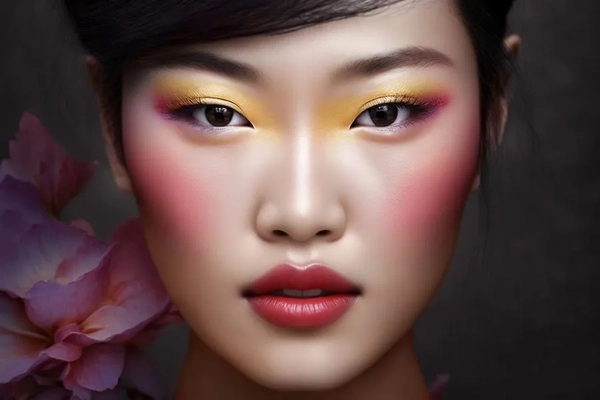
Premium C-beauty brand Mao Geping Cosmetics has partnered with LVMH-backed equity firm L Catterton to accelerate the brand’s expansion into international prestige beauty markets. Rather than being a direct capital injection, the partners will use the strategic agreement to drive global retail expansion, investments, acquisitions, talent recruitment, governance, and long-term brand optimization.
Hailed a “win-win situation” in official reports, Mao Geping holds that the cooperation between the two companies will make the most of their respective resources, strengths, and professional advantages.
The partnership announcement comes a day after Mao Geping disclosed that its founder and executive directors plan to sell a small portion of their holdings.
Management cited personal financial reasons and beauty industry investments as their main incentives, though domestic news coverage suggests the holdings sale signals doubts about their confidence in the company.
Mao Geping’s shares rose after the announcement of the strategic partnership. Separately, the company’s stock also rose after it disclosed the executive share sale plan.
These developments are unfolding as China’s cosmetics sector eyes globalization. Yesterday in Shanghai, representatives from academia, beauty groups, and emerging brands gathered for the Brand Vision: Global Beauty Communication Influence Forum.
The event shed light on C-beauty’s ambition to strengthen brand identity, improve international communication, and compete more effectively in global markets. A white paper comparing the brand-building and communication strategies of Chinese cosmetics companies to those in the US was also released at the forum.
The comparative study informs future expansion strategies for C-beauty brands by drawing inspiration from Western business schemes.
.webp) Mao Geping blends traditional aesthetics with high-end cosmetics.Against this backdrop, Mao Geping’s partnership with L Catterton offers a glimpse into how C-beauty brands are applying global playbooks to support international expansion.
Mao Geping blends traditional aesthetics with high-end cosmetics.Against this backdrop, Mao Geping’s partnership with L Catterton offers a glimpse into how C-beauty brands are applying global playbooks to support international expansion.
Big league boost
Mao Geping’s cooperation framework agreement with L Catterton supports its push into overseas prestige beauty markets. The agreement does not involve an immediate equity investment.
The move is expected to yield “complementary advantages, mutual benefits, a win-win situation, and common development, which is in the interests of the company and its shareholders as a whole,” Mao Geping’s announcement reads.
L Catterton will use its global network to support Mao Geping’s expansion into overseas high-end retail channels. The two companies also plan to establish a joint global premium beauty investment fund. Furthermore, they will cooperate on capital structure, talent, and governance.
L Catterton manages around US$39 billion in assets. It was formed in 2016 through a partnership between Catterton, LVMH, and Groupe Arnault — the family holding company of LVMH’s founder Bernard Arnault.
Since its founding, L Catterton has completed over 300 investments in global consumer brands, with its beauty portfolio boasting names like Kiko Milano, The Honest Company, Nutrafol, Merit, Oddity, and Sugar Cosmetics.
Its latest addition, Mao Geping Cosmetics, became the first domestic beauty company listed on the Hong Kong Stock Exchange in December 2024. Strong investor confidence helped its stock price double within three months.
The cosmetics company reported robust financial momentum through 2025, with its H1 revenue rising 31.3% year-over-year to approximately US$369.4 million.
.webp) Industry leaders gathered in Shanghai to discuss brand building and global strategies for China’s cosmetics sector.According to Chinese investment firm Dong Fang Cai Fu, Mao Geping held a 1.8% share of China’s premium beauty market as of last June. The figure placed it just behind established luxury players like Chanel, which had a 2% share at the time.
Industry leaders gathered in Shanghai to discuss brand building and global strategies for China’s cosmetics sector.According to Chinese investment firm Dong Fang Cai Fu, Mao Geping held a 1.8% share of China’s premium beauty market as of last June. The figure placed it just behind established luxury players like Chanel, which had a 2% share at the time.
Divesting shares
Mao Geping disclosed that its founder and five executive directors plan to sell up to 17.2 million shares over a six-month period. The planned sale represents 3.51% of the company’s total issued shares and, based on recent share prices, could raise approximately US$184.7 million.
Mao Geping says the planned sale will not change any control of the company or disrupt daily operations.
“The aforementioned shareholders of the company intend to reduce their shareholdings due to personal financial needs. The proceeds from the reduction will be used for, but not limited to, investments in the beauty industry supply chain and improve their personal living conditions,” Mao Geping says.
The company’s shares rose following the disclosure, but some domestic media questioned what the timing signals about management confidence.
Playing the long game
Speakers at the Shanghai forum emphasized yesterday that brand building and cross-cultural communication are essential to the competitiveness of C-beauty brands seeking to expand globally.
Mao Lipeng, the deputy director of the Daning Functional Zone Management Committee, observed that China’s cosmetics sector is undergoing a shift from “marketing-driven” growth to “technology- and experience-driven” development.
The committee is a local government body in Shanghai responsible for industrial planning and economic development. Its attendance emphasized that C-beauty brands must focus on identifying long-term capabilities that support sustainable global expansion, rather than short-term market tactics.
.webp) Mao Geping’s partnership with L Catterton reflects C-beauty’s growing push into global prestige markets.The white paper comparing Chinese and US cosmetics strategies shares the same goal. It highlights investment in scientific research, ESG initiatives, and culturally driven branding as approaches with potential.
Mao Geping’s partnership with L Catterton reflects C-beauty’s growing push into global prestige markets.The white paper comparing Chinese and US cosmetics strategies shares the same goal. It highlights investment in scientific research, ESG initiatives, and culturally driven branding as approaches with potential.
Shanghai’s shift
C-beauty brands have gained global visibility in recent years. The Trump administration renewed its threat to ban TikTok last year due to concerns around data privacy and national security, which slingshot millions of US consumers onto Chinese platforms like Xiaohongshu.
The dynamic helped expand Western exposure to Chinese beauty culture, and eventually fueled an international demand for some C-brands who are now basking in sold-out viral stock.
While Chinese cosmetics were permeating borders, international brands reported finding it increasingly difficult to do business in the country due to rigid rules and a strong domestic demand for local products.
Players including Coty, Estée Lauder, Kao Corporation, Amorepacific, Kenvue, Edgewell, and L’Oréal all reported declining sales in the country in the past few years.
However, L’Oréal announced in its October 2025 financial report that China was showing recovery for the first time in two years. By that November, the French beauty giant had taken minority stakes in two domestic cosmetics brands, Lan and Chando.
“We firmly believe investing in China is investing in the future,” said Vincent Boinay, CEO of L’Oréal China.
The same month, the Chinese government announced revisions to its cosmetics rules aimed at expediting approvals, enhancing safety standards, and increasing market accessibility for foreign brands. The revisions aim to strengthen China’s position as a global cosmetics leader.
“According to statistics from the China Fragrance and Cosmetics Association, the transaction volume of China’s cosmetics market exceeded ¥1 trillion (US$140.7 billion) in 2024, making it the world’s largest consumer market,” the government branch said.