



Tide unveils eco-friendly laundry tiles ten years after Tide Pods


Key takeaways
- Tide’s new fiber-based detergent tile dissolves instantly in hot or cold water, simplifying the laundry process.
- The product features recyclable packaging, no plastic wrapping, and aims to reduce energy emissions by promoting cold water washing.
- Tide Evo integrates surfactants, enzymes, and polymers for stain-fighting and fabric protection, with no fillers or unnecessary ingredients.
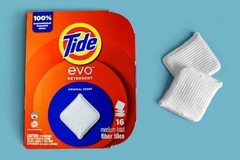
Over a decade after releasing Tide Pods, Tide has launched Tide Evo, a “first-of-its-kind” fiber-based dry detergent tile, as part of its newest laundry product line. The fabric-like product dissolves instantly in cold or hot water and was developed to streamline consumers’ laundry routines.
In pursuit of simplifying the laundry process, the Procter & Gamble subsidiary has removed everything but the essential cleaning activities. Tide evo removed water and fillers to deliver a 100% concentrated tile with six cleaning layers. The tiles are also pre-dosed, eliminating the need to measure washing products per load.
The product was developed over 10 years with the aid of 15 PhD-level chemists and engineers. The R&D process focused on eliminating any additional ingredients, such as fillers, that other detergent formats, like powders, liquids, or sheet detergents, rely on as carriers or to dissolve in water.
Using a proprietary technique, cleaning ingredients are spun into tens of thousands of fibers, amounting to over 15 miles of fiber. The tiles are made of six layers of concentrated fibers that leverage technologies like scrubbers, pre-treaters, brighteners, and fresheners.
The company attributes the tile’s efficacy to the combined effects of its ingredients. Surfactants and enzymes fight stains. Polymers help prevent soiled water from discoloring fabrics during washing. Malodor-neutralizing technologies help prevent bodily residue from building odor. Builders aid in softening hard water and provide high pH or alkalinity to optimize the cleaning environment.
The tiles are sold with no additional plastic wrapping and come in recyclable paper packaging, with the tiles arranged in rows. The packaging includes a tactile symbol and a NaviLens code to enhance accessibility for visually impaired consumers.
The product’s cold-water activation supports Tide’s mission to turn three-quarters of laundry loads in North America to cold water by 2030, reducing energy emissions.
Aiming for a rounded sensory experience, the tiles were tested for consumer delight, focusing on scent, feel, and usability while also prioritizing the tactile sensorial experience with its cloth-like, pliable fiber structure.
Notably, the product’s coloring and design are distinctly unappetizing, following the 2018 trend in which teens on the internet were eating Tide Pods due to their candy-like appearance. The Tide Pod Challenge trend had significant medical consequences on its participants, creating a liability issue for the company.