

C-beauty expands globally with help from Korea and France


Key takeaways
- China’s cosmetics trade exceeded US$24.8 billion in 2025, making it one of the world’s largest cosmetics consumer markets.
- South Korea imported a record US$71.76 million worth of Chinese cosmetics in 2025, and its K-beauty ODMs are helping fuel the expansion.
- French cosmetics, losing demand to Asian cosmetics, could use C-beauty’s expansion as a strategic growth lever.
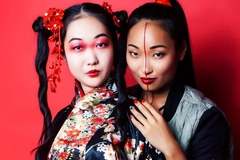
Chinese cosmetics are rapidly gaining traction internationally, with trade figures vouching for the growth. But unlike K-beauty’s competitive rise to global power, C-beauty appears to be reshaping industry alliances and challenging what cosmetic hierarchy looks like.
According to China’s General Administration of Customs (GAC), the country’s cosmetic imports and exports exceeded ¥170 billion (US$24.8 billion) in 2025. The same year, China became the world’s largest cosmetics consumer market, with 57.4% of this market consisting of domestic C-beauty brands.
The Korean Customs Service further announced that imports of Chinese cosmetics into South Korea reached US$71.76 million last year — a record underpinned by 84% growth from the year before.
However, as C-beauty gains a foothold in international cosmetics markets, its expansion is increasingly supported by South Korean manufacturing partnerships and rising collaboration with French fragrance, ingredient, and formulation suppliers.
Tip-toeing into K-beauty territory
Chinese beauty brands are beginning to gain visibility inside South Korea. Industry observers note that C-beauty is differentiating itself from K-beauty through distinct cultural storytelling and aesthetic-driven branding.
.webp) Domestic C-beauty brands make up 57.4% of China’s cosmetic consumer market.Chinese color cosmetic brand Flower Knows, for example, is known for its elaborate packaging, Rococo-inspired visuals, bold patterns, and pearlescent finishes, contrasting the minimalistic and scientific feel that helped K-beauty claim its viral throne.
Domestic C-beauty brands make up 57.4% of China’s cosmetic consumer market.Chinese color cosmetic brand Flower Knows, for example, is known for its elaborate packaging, Rococo-inspired visuals, bold patterns, and pearlescent finishes, contrasting the minimalistic and scientific feel that helped K-beauty claim its viral throne.
Late last year, Flower Knows held a two-week pop-up event in South Korea’s capital, Seoul, which attracted 27,000 visitors and sold out multiple product lines. Following the event, Korean retail and fashion platform Musina welcomed the makeup brand onto its listings, making it the first Chinese beauty brand carried by the platform.
Flower Knows reportedly topped Musinsa’s eye makeup category on the first day of launch, and the retailer revealed plans to onboard more C-beauty labels in the future.
Chinese beauty products have also entered Shinsegae’s Chicor retail chain due to growing demand from younger consumers. Chinese brands, including Judydoll, Florasis, and Perfect Diary, have seen their visibility increase in South Korea.
Judydoll, for example, launched a dedicated Korean Instagram account and is reportedly seeking an official listing on Coupang, a technology and e-commerce company nicknamed the “Amazon of South Korea.”
Tapping Korean manufacturing
Chinese beauty brands are increasingly working with South Korean contract manufacturers to improve their product quality and narrow the gap with K-beauty competitors.
.webp) Chinese beauty products are seeing growing demand from younger consumers in South Korea.According to local reporting, Flower Knows works with K-beauty ODM (original design manufacturer) Kolmar Korea and Cosmax, alongside its own producers.
Chinese beauty products are seeing growing demand from younger consumers in South Korea.According to local reporting, Flower Knows works with K-beauty ODM (original design manufacturer) Kolmar Korea and Cosmax, alongside its own producers.
Industry analysts suggest that Korean ODMs operating in China are set to benefit from C-beauty’s international expansion, and forecast revenue growth of 13% and 15% for Cosmax’s Shanghai and Guangzhou units, respectively, this year.
However, despite C-beauty’s rise, K-beauty still maintains a much larger global export footprint. The US became South Korea’s largest cosmetics export market in 2025 after demoting China to runner-up.
South Korea exported approximately US$3 billion worth of cosmetics to China in 2022, but the figure fell to US$1.6 billion in 2025. Moreover, in Q1 2026, K-beauty exports to China declined by 9.6% year-on-year to US$470 million. Even after the decline, South Korea’s cosmetic exports to China remained roughly 23 times larger than Chinese beauty imports into South Korea.
Personal Care Insights previously spoke with Innova Market Insights’ project lead for Beauty Personal Care & Household division, who told us that post-pandemic K-beauty still benefits largely from strong global consumer demand tied to Korean pop culture and entertainment. The continued demand suggests that C-beauty would need a comparable level of cultural fandom to challenge K-beauty globally.
Wide-eyed France
K-beauty’s rise increasingly comes at the cost of other legacy cosmetic exporters, such as France.
.webp) French companies can benefit from C-beauty’s expansion wave, industry organizations say.After declining export figures in the US last year for the first time since the 2008 financial crisis, lowering prices to absorb tariff costs, and still losing US demand to K-beauty imports, French exporters are also facing mounting competition from Asian beauty imports at home. The country’s beauty imports rose around 6% in 2025, driven largely by online purchases from China and South Korea.
French companies can benefit from C-beauty’s expansion wave, industry organizations say.After declining export figures in the US last year for the first time since the 2008 financial crisis, lowering prices to absorb tariff costs, and still losing US demand to K-beauty imports, French exporters are also facing mounting competition from Asian beauty imports at home. The country’s beauty imports rose around 6% in 2025, driven largely by online purchases from China and South Korea.
Instead of fighting the Asian beauty wave, however, France appears to be welcoming China’s expanding C-beauty ecosystem as a growth lever.
Cosmetic Valley, France’s leading global network and official coordinator of the country’s perfume and cosmetics industry, has announced plans to strengthen the French cosmetics industry’s presence in China through its France Fragrance & Cosmetics Embassy (FFCE) China, in Shanghai.
The FFCE initiative helps establish new Franco-Chinese partnerships and encourages collaboration between the two markets.
“FFCE China reflects Cosmetic Valley’s commitment to strengthening synergies between the French and Chinese ecosystems, promoting expertise sharing, and encouraging mutual learning between stakeholders,” the organization says.
According to industry reports, many Chinese perfumers receive their training in France, and French suppliers of premium fragrance ingredients are actively searching for partnerships with Chinese perfume brands.
C-beauty’s blend of cultural identity, Korean manufacturing, and French expertise suggests its expansion is being driven as much by collaboration as competition, creating a new playbook the global cosmetics industry may be watching closely in the years ahead.