



Report flags beauty “optimizers” as lucrative market opportunity


Key takeaways
- BCG and WWD reveal consumer insights in their Consumers Are Shaping a New Age of Optimization in Beauty report.
- “Optimizers” are combining traditional beauty, aesthetic procedures, and wellness solutions for personalized results.
- Weight loss medications are leading to increased demand for skin care solutions to address side effects like sagging and loss of elasticity.
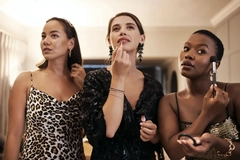
Boston Consulting Group (BCG) and Women’s Wear Daily (WWD) have reported that consumers are combining various beauty methods to optimize skin results. This burgeoning approach to beauty may become vastly lucrative in the coming years.
Based on a survey of 5,000 US beauty consumers in April 2026, BCG and WWD have released a report titled: Consumers Are Shaping a New Age of Optimization in Beauty. The report reveals how brands and retailers can keep up with evolving demands by considering the “optimizer” consumer.
“Optimizers” use multiple complementary approaches to meet their beauty needs. This profile of shoppers is reported to represent 6% of US adults, approximately 15 million people, who spent an average of US$3,000 in the past year across various beauty categories. These categories, which are mixed and matched for personalization, are traditional beauty, aesthetic procedures, and performance and longevity.
The report states that if the “optimizer” consumer segment doubles, it may generate over US$30 billion in revenue across the broader personal care industry.
“Skin care, makeup, and hair care still anchor beauty routines, but consumers are increasingly layering aesthetic procedures, wellness, and longevity-driven solutions into the mix,” says Jenny B. Fine, editor in chief, Beauty Inc and executive editor, Beauty at WWD. “Today’s beauty consumer is highly informed, deeply results-oriented, and more willing than ever to move fluidly across categories in pursuit of optimization, efficacy, and long-term well-being.”
The report also finds that a vast majority of consumers (80%) see beauty as a way to feel better physically and mentally, on top of aesthetic goals. Furthermore, many are using AI for beauty research, with 75% using AI to research beauty, and one in four consumers relying on AI as their primary source for personal care products.
Solving “Ozempic face”
GLP-1 weight loss drugs, like Ozempic, have been influencing the beauty segment in various ways, with novel problems like “Ozempic face” or “Ozempic vulva” necessitating novel solutions.
Approximately 30% of “optimizers” reported using GLP-1 drugs in the past 12 months. Half of those who reported experiencing skin quality side effects — such as lowered facial volume, dryness, and breakouts — look for answers in luxury or medical-grade skin care.
Personal Care Insights previously spoke to Joshua Britton, PhD, founder and CEO of Debut, about the rise of weight loss drugs and their effects on skin care. GLP-1 drugs are influencing beauty trends and skin care needs.
“Rapid weight loss caused by widespread adoption of GLP-1 medications outpaces the skin’s ability to adapt, leading to skin laxity, sagging, and loss of elasticity in the face and body,” said Britton.
“This isn’t a gradual, age-related change, but rather an unexpected side effect of these weight loss medications. As a result, skin laxity has become a growing concern across the population, accelerating demand for solutions that help restore dermal structural support.”
According to Britton, the prevalence of GLP-1 use makes support for weight-loss-related skin and body effects a key consideration for brands.
BCG and WWD report that the side effect of GLP-1 use has actively driven both aesthetic and traditional beauty segments, with almost 80% of those who reported sagging or loose skin hiking up their use of fillers, injectables, skin tightening, contouring, or laser treatments.
Innovation driving tradition
In the “optimizer” consumer segment, 70% reported that aesthetic procedures are a regular part of their routines. However, the shift to these newer procedures is not replacing traditional beauty. In fact, the report finds that the common use of these procedures is driving more engagement in traditional beauty categories.
Seventy percent of “optimizers” are investing in premium or medical-grade skin care, and 50% are adding steps to their daily routines to elevate the outcomes of clinical procedures.
“Optimizers” are also adding beauty-from-within to their repertoire of holistic personal care. They were found to be four times more likely than beauty consumers who stick to one stream of solutions to use supplements for longevity and anti-aging, and twice as likely to use supplements for beauty.  Consumers are combining beauty methods for personalized results.
The insight is aligned with growing demand and subsequent supplement product launches in the personal care industry. Last month, the In-cosmetics Global trade show debuted an Inner Beauty Zone, attesting to the fact that beauty-from-within is gaining momentum as a segment in beauty.
AI beauty information
The report finds that in the span of a month, 75% of “optimizers” used AI to research suggestions in beauty, wellness, or longevity segments, and 25% of them reported AI as their primary source of information.
The rate of male “optimizers” who use AI to build personalized beauty routines was 40%. This figure is almost three times that of women who used AI for the same purpose.
These figures have not gone unnoticed by the industry, with more and more brands turning to AI throughout their operations.
Coty recently partnered with Pencil, a generative AI marketing platform, to position AI-produced content at the center of its Consumer Beauty division. For AI-powered R&D, Brenntag signed a global distribution agreement with Shinehigh for its AI-powered R&D platform in beauty and personal care.
While AI is seemingly adopted by companies at a breakneck pace, experts also warn against losing consumer trust due to false promises or unattainable goals. Wellness solutions are becoming an essential part of beauty optimization.
In a recent interview with Personal Care Insights, Ceren Canal Aruoba, managing director of consulting firm BRG, warned that, when AI-generated visuals suggest outcomes that consumers may not reasonably attain, potential legal concerns around deception, misleading advertising, and unsupported consumer takeaways can arise.
As AI booms, social media is still driving discovery to an extent. However, it is losing its previous grip on consumer trust. Forty percent of “optimizers” are still exposed to new products via influencers, yet only one in twenty reports that they trust social media as a source.
Word-of-mouth via friends and family is reported as the most common source of discovery. Meanwhile, medical professionals harbor the most consumer trust. Clinically-proven and scientifically-backed products are favored by approximately 75% of consumers.