

Clarins unveils AI-powered makeup shade matching tool

Key takeaways
- Clarins has launched an AI-powered foundation shade-matching tool that uses smartphone spectroscopy to deliver foundation matches in-store.
- The technology achieves a reported 96% match rate and supports personalized makeup recommendations beyond foundation.
- The launch reflects a wider beauty industry shift toward AI-driven innovation while claiming to maintain human expertise.
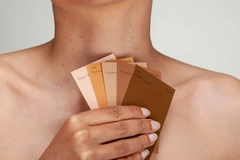
Clarins has launched an AI-powered “most precise ever” foundation shade-matching technology, offered in-store to expand its personalized beauty portfolio. Clarins Shade Finder AI is the “first in the industry” to measure skin tone and undertone using a smartphone. The tool is also the cosmetics giant’s first AI-driven makeup suggestion platform.
Touted as the “most accurate shade matching experience available today,” the AI tool was developed in collaboration with Silicon Valley tech start-up IlluminateAI.
The AI uses spectroscopy — the science of light — and a smartphone camera to read the color signature of skin tone in under a minute. The technology takes multiple images as it changes the phone screen’s colors and processes how the light interacts with the skin through reflection. In doing so, the algorithm can identify skin tone, undertone, and colorimetry — the concentration of colors based on light absorption.
“The technology quantifies pigmentation and undertones with a level of precision that was previously impossible in-store with a smartphone. It’s 10 years of makeup expertise, now accessible through a simple face scan,” says Konrad Jarausch, founder and CEO of IlluminateAI.
The company reports that the technology provides a 96% match rate compared to professional makeup artists.
The technology also allows in-house Clarins beauty advisors to make personalized makeup routine recommendations based on the analysis’s findings.
The AI Shade Finder was developed in collaboration with Clarins’ Innovation Lab, makeup artists, beauty advisors, IlluminateAI scientists, and clients. The cosmetics company says it had a successful round of live testing at UK and French boutiques, with strong conversion rates and average basket sizes.
“Beauty Advisors told us it transformed their relationship with clients with an added emotional layer, and customers loved how simple and intuitive the experience felt,” says Katalin Berenyi, Clarins brand general manager.
AI all around
Clarins’ development of its new technology comes as the global beauty industry shifts further toward embedded AI. The skyrocketing industry and AI entanglements have raised concerns regarding job security, as workers fear the new technology will overtake their need.
Clarins emphasized the AI tool’s superior efficiency over human beauty advisors. However, the company stressed that the Shade Finder is meant to supplement existing advisors and makeup artists.
Berenyi calls the Shade Finder a “truly precise AI tool to complement our Beauty Advisors’ and makeup artists’ professional advice.”
The personal care industry has experienced an influx of AI-powered launches in recent months.
This month, Kolmar Holdings launched Loud Labs, its AI platform that promises to cut R&D time from months to minutes, consequently cutting down hundreds of working hours.
Coty entered into a partnership with OpenAI for internal use to improve productivity and precision across its teams. Much like Clarins’ sentiment that AI complements their beauty advisor’s expertise, Coty emphasized that the OpenAI collaboration kept human knowledge central.
Meanwhile, AI-powered growth platform Zenoti reported generating over US$1 billion in incremental value for its customer base of 30,000 beauty and wellness businesses.