


Indonesia backs cosmetics SMEs as beauty exports rise 13.7%


Key takeaways
- Indonesia’s cosmetics exports rose 13.7% to US$473.8 million in 2025, supported by government efforts to help SMEs reach international markets.
- SMEs account for over 87% of Indonesia’s 1,655 cosmetics businesses, while dsm-firmenich and Givaudan are expanding local fragrance development capabilities.
- Growth is bringing tighter oversight, with mandatory halal certification approaching, and BPOM having seized over two million units of unregistered cosmetics.
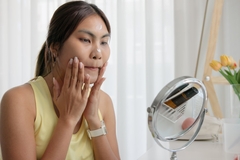
Indonesia’s Ministry of Industry is strengthening support for small and medium-sized cosmetics manufacturers (SMEs) as it seeks to improve their competitiveness and expand access to international markets.
Industry Minister Agus Gumiwang Kartasasmita says recent export gains demonstrate the growing competitiveness of Indonesian cosmetics in quality, safety, and innovation.
Cosmetic products made in Indonesia are increasingly trusted in the global market because of their “good quality, safety, and proven benefits for consumers,” Kartasasmita said in a Ministry of Industry statement published on September 16.
He highlighted the cosmetics industry’s potential to strengthen domestic production, support product development, and build local brands capable of competing internationally.
Exports rise as SME base expands
Indonesia’s cosmetics exports reached US$473.8 million in 2025, rising 13.7% from US$416.8 million in 2024, according to the ministry.
“This growth in export performance is proof that industry players continue to develop and improve their quality as well as market reach,” Kartasasmita said. “This potential must be leveraged by the domestic cosmetics industry, including small and medium enterprises.”
According to data from the Food and Drug Monitoring Agency (BPOM), data cited by the ministry show that Indonesia had 1,655 cosmetics businesses in July 2026, over 87% of which were classified as SMEs. Over 370,000 cosmetics products had been registered with the regulator by August.
The ministry points to Followme Indonesia as an example of an SME moving into international markets. The Tangerang-based perfume and hair gel manufacturer recently exported products worth approximately US$40,436 to Papua New Guinea.
Followme Indonesia has received government support through manufacturing certification, machinery restructuring, trade exhibitions, and export-development programs. The company has also participated in a partnership program with fragrance ingredient supplier Indesso Aroma.
“Successful local industry development in the cosmetics sector can be seen in the growth of a local perfume brand whose products have managed to reach export markets,” said Reni Yanita, director general of Small, Medium and Miscellaneous Industries, a government unit within the Ministry of Industry.
“Papua New Guinea is one of the promising neighboring export markets to continue developing, in line with the growing opportunities for Indonesian products to penetrate that region,” she added.
Global fragrance companies expand in Indonesia
Aligned with the country’s globalization investments, international fragrance companies are increasing their capabilities in Indonesia. dsm-firmenich has opened a Jakarta center featuring fragrance creation and application laboratories, sensory facilities, and air care testing capabilities.
Givaudan opened its 10 Capital creative center in Jakarta earlier this year. The facility allows its Consumer Products and Fine Fragrance teams to work with local entrepreneurs and brands on product development.
Together, the investments signal confidence in Indonesia’s growth prospects and reinforce its role in serving the wider Southeast Asian fragrance and beauty market.
Growth brings greater compliance demands
Indonesia’s beauty market expansion is unfolding alongside tighter regulatory oversight.
Cosmetics distributed in the country must hold halal certification by October 17, 2026. Earlier this year, Indonesia’s food and drug agency also seized more than two million units of unregistered cosmetics spanning 956 product lines in Indonesia. Most had been imported from China without approval and sold through e-commerce channels.