

K-fragrance export records signal new chapter of Korean beauty growth

Key takeaways
- K-fragrance is emerging as the next growth wave of K-beauty, backed by record export data.
- South Korea achieved a fragrance trade surplus with the US for the first time in 28 years.
- Global demand for fragrance and automation investments is set to accelerate K-fragrance expansion.
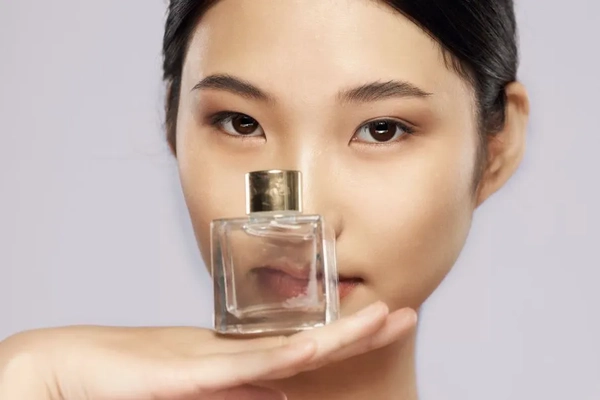
K-beauty’s global momentum is showing signs of expansion beyond its current skin care focus, with fragrance emerging as the next major growth category.
Export data from the Korea International Trade Association shows South Korea’s fragrance exports reached a record US$6.52 million in January 2026. The figure marks the highest monthly figure since records began in 1988, pointing to the rise of “K-fragrance” as a new export driver.
February marked a second consecutive month above the US$6 million threshold, having recorded US$6.24 million in fragrance exports. The sustained growth suggests that demand is not a short-term spike but part of a broader upward trend.
As K-fragrance expands, the US has become a key contributor to the category’s growth. In January, South Korea had a fragrance trade surplus with the US for the first time in 28 years. Its exports reached US$1.84 million compared to US imports of US$1.27 million. The surplus continued through February.
While fragrance piggybacks off the broader success of K-beauty’s now global popularity, the South Korean government’s data shows the country’s cosmetics continue to post strong export growth.
Beyond fragrance, K-beauty continues to beat its own export records. South Korean beauty exports rose 19% year-on-year in Q1 2026, reaching US$3.1 billion.
“The K-beauty industry’s cosmetics exports are maintaining strong growth this year and have become one of the country’s leading export drivers,” the South Korean Finance Ministry said.
Doubling down on fragrance
The Korea International Trade Association export data reinforces the strategy behind the cosmetics industry’s fragrance-first focus lately. Multiple beauty giants have taken on initiatives to boost their fragrance portfolios or categorical activity, identifying fragrance as in high demand.
Last month, Estée Lauder and Puig entered talks about a potential merger. The deal, although not finalized, could create a luxury beauty group valued at around US$40 billion and strengthen both companies’ position in the fragrance category.
Analysts suggested that the move aimed to give Estée Lauder higher ground to compete with L’Oréal, which last year acquired Kering’s beauty arm for €4 billion (US$4.66 billion). The acquisition awarded L’Oréal 50-year exclusive licenses to develop and distribute fragrance lines for Gucci, Bottega Veneta, and Balenciaga.
.webp) South Korea achieved a fragrance trade surplus with the US for the first time in 28 years.Coty has crowned the ongoing demand for fragrance, in spite of geopolitical instability, as the new “lipstick effect.” The company says consumers are cutting back on big purchases while increasing small indulgences, such as perfumes.
South Korea achieved a fragrance trade surplus with the US for the first time in 28 years.Coty has crowned the ongoing demand for fragrance, in spite of geopolitical instability, as the new “lipstick effect.” The company says consumers are cutting back on big purchases while increasing small indulgences, such as perfumes.
“Across our markets, it’s clear that beauty, particularly fragrance, remains highly resilient because it plays both an emotional and functional role in consumers’ lives,” Amaury de Vallois, Coty’s executive VP for the Anglosphere, previously told us.
K-fragrance appears to be tapping into the same emotional pull. Companies such as Kolmar Korea are creating scents inspired by places, like the South Korean capital Seoul. The company blends local ingredients with storytelling to offer a sense of escapism, and, following Cosmoprof Asia in Hong Kong last November, Kolmar reported its fragrances are generating global interest.
“Foreign companies showed great interest in the fact that we recreated Korean scents,” a Kolmar Korea official said.
Boosting output
With heightened demand for fragrances, companies have started optimizing and bolstering their manufacturing processes. L’Oréal, for example, poured €60 million (US$69.13 million) into its luxury fragrance production site in France to double its production capacity.
Kolmar Korea, too, has announced measures to boost its fragrance output.
“As interest in fragrances has grown, we established the ‘Sensory Lounge’ in December last year to maximize research and development efficiency for fragrances. It has received positive responses as clients and fragrance researchers can experience scents together and improve products in real time,” an official said.
In Singapore, International Flavors and Fragrances (IFF) turned to automation to accelerate and enhance precision in fragrance sampling. The company introduced its Colibri robot, a smart-dosing machine that can create fragrance sample batches on demand within minutes and produce 200 sample batches in eight hours.
“[The installation of this new automation system] strengthens our ability to support demand in the region with enhanced speed, quality, and precision,” said Ramon Brentan, VP and regional general manager of Scent in Greater Asia, at IFF.
With K-beauty companies already fully engaged in South Korea’s push for AI-powered factories, smart automation could play a pivotal role in scaling K-fragrance in the years ahead.