




Too Good To Go enters personal care to tackle surplus beauty and tightening budgets
Key takeaways
- Too Good To Go has expanded its surplus marketplace into personal care.
- The initiative helps beauty brands reduce waste, recover revenue, and manage excess inventory.
- Consumers can access discounted personal care products while reducing their environmental impact.

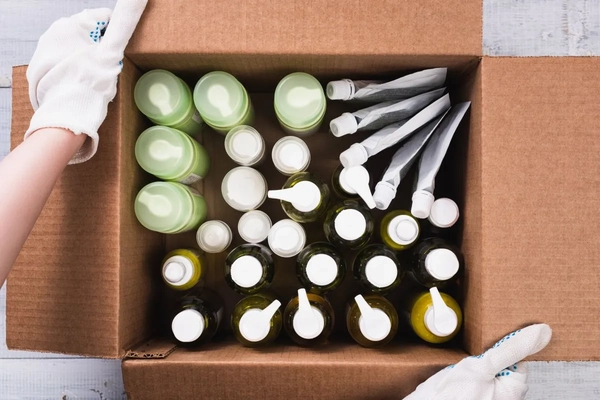
Too Good To Go has expanded its surplus product marketplace model to include personal care. The expansion includes skin care, hair care, oral care, beauty products, pet care, and cleaning and laundry products.
The Denmark-based app was originally created to combat food waste by selling surprise bags of surplus food at a steep discount. The service’s move into personal care applies the same model to beauty surplus generated from expiry dates, retail cycles, packaging updates, or shifts in demand.
The app is built around reducing environmental waste and recovering and extending value for both consumers and brands.
The company explains that packaging updates, range changes that leave discontinued shades behind, or the end of a season can make products feel irrelevant to consumers.
According to Too Good To Go, forecasts aren’t always entirely accurate, leaving retailers with overstock. “That surplus can tie up working capital and valuable shelf and storage space, even when the product itself remains useful and high quality.”
The app helps consumers find the to-be-discarded products, combating waste while allowing brands to generate revenue from what would have become excess inventory. The product mix varies by market. In France, for example, consumers may find products from brands such as Nivea, Neutrogena, Dove, Oral-B, Always, and Head & Shoulders.
“In today’s society, we have built incredibly efficient processes for producing and selling things at scale, creating abundance, but we have not built the same efficiency into making sure what is left over gets used,” says Mette Lykke, CEO of Too Good To Go.
The service enters personal care when consumers are more conscious of their expenditures due to budget constraints.
Mitigating waste across industries
Too Good To Go emphasizes that the manufacturing and distribution of every product requires resources such as water, energy, raw materials, labor, and logistics before it reaches a shelf.
“When a usable product becomes waste, that investment has already been made — including an environmental cost paid by the planet — without the product delivering its intended value,” says the company.
The company outlines that water accounts for more than two-thirds of cosmetic formulations on average. It says that while the products and supply chains may differ, a product does not lose its value because its normal route to sale disappears.
Meanwhile, consumers are becoming increasingly mindful of value in their everyday purchasing decisions. Too Good To Go cites data that inflation is the second-most-cited global economic concern.
Offering surplus products at affordable prices can help consumers stretch their budgets while reducing waste, delivering both economic and environmental benefits.
“Too Good To Go started with food because we saw how absurd it was that something so valuable could become waste. Ten years later, it is clear that the same principle applies beyond food. Our vision is a world with no waste, and expanding the Marketplace lets us act on that vision across more of the products people use every day,” says Lykke.
Beauty moves to cut waste
Earlier this month, another waste-mitigating initiative emerged in the beauty space as Vessel made its public debut after operating behind the scenes. The start-up offers the infrastructure to donate excess beauty inventory to avoid landfills and incineration — the typical route the industry takes.
At the time of its launch, Vessel said it had facilitated more than US$83 million worth of product donations from brands such as Groupe L’Occitane subsidiary Sol de Janeiro and the Estée Lauder Companies’ Smashbox.
Vessel estimates that beauty brands waste approximately US$163 billion in excess inventory annually. Brands also often pay to have the excess inventory destroyed, “because historically destruction has been cheaper, simpler, and safer than giving products away.”
The initiative guarantees that, through the operating model, donation is made cheaper than destruction.