




Triune founder on moving nutricosmetics beyond collagen with targeted ingestibles

Key takeaways
- Triune Nutricosmetics has launched three skin-specific supplements for blemish-prone, sensitive, and aging skin.
- Founder Esther Ebori says US beauty supplements underuse ingredients already established in Europe, Asia, and Australia.
- The company suggests that users should commit to 90 days of daily use, as brands work to win consumer trust on price and efficacy.

Triune Nutricosmetics is addressing common skin care concerns from the inside out with the launch of three ingestible skin care supplements.
The US brand has released Clari-T for oily, blemish-prone skin; Sensitivi-T for sensitive, redness-prone skin; and Luminosi-T for hydration and healthy skin aging.
The company was founded on the basis of why and how oral treatments work when topical skin care doesn’t. Founder and CEO of Triune, Esther Ebori believes the answer is in targeted ingestible skin care supplements designed to complement topical routines and support skin health from within.
With clinically studied ingredients and targeted formulas for specific skin types, Ebori says Triune Nutricosmetics’ supplements “make it easy to make skin nutrition an everyday part of your beauty routine.”
Ebori tells Personal Care Insights that “after years of acne that topical products and laser treatments failed to resolve,” she noticed that the treatments that worked for her — and many others — were oral, such as birth control, isotretinoin, and spironolactone, which are hormone medications that are known to treat acne in adults.
“What were they addressing that topical approaches weren’t? And, more importantly, what was actually triggering my acne?” For Ebori, those questions changed the way she approached skin care.
“I remember feeling frustrated about trying so hard to find a solution without really understanding why nothing seemed to work,” she says. “It affected my self-esteem and the way I felt about myself.”
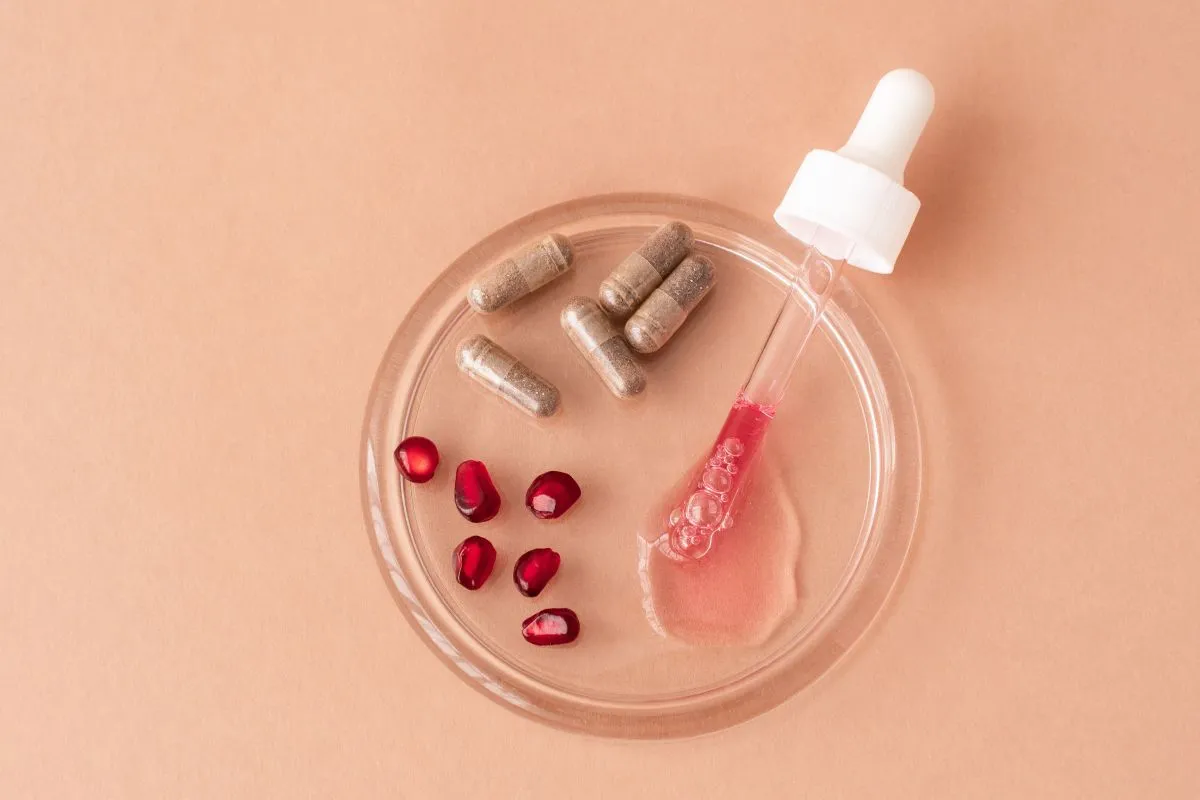
Triune Nutricosmetics’ three supplements target blemish-prone, sensitive, and aging skin with clinically studied ingredients.
Category stuck on collagen?
Ebori says the US ingestible beauty market has “lagged behind in science.” While markets such as Europe, Asia, and Australia already use a range of innovative, clinically studied ingredients, US launches still revolve heavily around familiar staples like collagen, she notes.
Gelagen unveils collagen, peptide & vitamin beauty gummy for skin health
“One of the biggest gaps I saw was the disconnect between advances in ingredient science and the ingredients brands actually choose to incorporate into their formulations,” she tells us.
For Triune Nutricosmetics, rather than a single “beauty” supplement, each formula combines five actives selected for one particular concern.
Clari-T pairs ashwagandha, to support the body’s stress response, with vitamin D3 and zinc, nutrients that research has linked to blemish-prone skin.
Sensitivi-T features Sepibliss, a coriander seed oil studied for soothing reactive skin, and SynbÆctive ProBeautyShield, a probiotic complex studied for hydration and barrier function via the gut-skin axis.
From topical to ingestible: Seppic talks science-driven beauty solutions
Luminosi-T combines Polypodium leucotomos, studied for supporting the skin’s natural defenses against UV, with hyaluronic acid, and Sepitone, a fermented wild bilberry extract.
Seppic says study finds additional anti-aging benefits of complexion booster Sepitone
Ebori says that sometimes, biotin is an ingredient that illustrates why general formulas fall short. As someone with acne-prone skin, she says she avoids it due to concerns it may aggravate breakouts, while acknowledging that this evidence remains limited.
“I chose to develop three target formulas because we don’t all have the same skin type, the same skin concerns, or the same skin goals. And I don’t believe a generalized beauty supplement can meaningfully address every skin need.”
“An ingredient included in a formula for one perceived beauty benefit may not necessarily be appropriate or beneficial for everyone,” she states.

Every Triune formula is built around five carefully selected active ingredients, each chosen for a specific purpose.
Dose over ingredient lists
Ebori tells us that skin nutrition should be intentional. She explains that part of this intentionality is finding the correct dosing for formulations.
“It’s not about including as many ingredients as possible, but about selecting the right ingredients, at meaningful doses, for a clearly defined purpose.”
Ebori says that each active is included at the amount evaluated in human clinical studies. “Too little may not deliver the intended benefits, but more doesn’t necessarily mean better either.”
Triune Nutricosmetics utilizes randomized, double-blind, placebo-controlled human studies. This evidence sits at the ingredient level rather than the finished formulas. The company’s own testing has every production lot checked by an independent laboratory for ingredient identity, content, microbial contamination, and heavy metals.
The patience problem
For Ebori, the biggest hurdle in nutricosmetics is often time. She says that Triune supplements should be taken for “at least 90 days, two capsules a day, of daily usage before assessing results.”
“We live in a society where we want to see results almost immediately, and the beauty industry has certainly adapted to that expectation,” explains Ebori. “Nutricosmetics require a different mindset, one built around consistency, patience, and long-term skin support.”

Founder and CEO Esther Ebori says she grew the brand through her own issues with skin and acne.
Seppic triples Ceramosides production capacity as nutricosmetics grow
Price perception is another barrier to reaching the mainstream beauty consumer. Ebori points out that consumers readily spend US$76 or more on a serum, often without clinical data on the finished product, yet “the same price on a supplement can feel expensive.”
She attributes that gap to how effectively the skin care industry has explained its ingredients, and says supplement brands now need to do the same.
Trust also remains an issue, Ebori flags, adding that “many consumers wrongly assume supplements are unregulated.”
Aging well, not looking younger
Looking ahead, Ebori says she sees the strongest opportunity in longevity and proactive care, particularly among younger consumers. “It’s no longer just about looking younger, it’s about aging well.”
For the category to earn a lasting place in US routines, she believes that brands will need to move beyond familiar ingredients, ditch proprietary blends, disclose doses, and set realistic expectations.
Ebori positions supplements as a complement to topicals, not as a replacement. “Topical skin care cannot directly address stress or the gut microbiome, both of which may play a role in skin health,” she says.
“Our skin is an organ, and its health is influenced by far more than what we apply to its surface. Supplements alone are not the answer to every skin concern. In fact, I’ve always advocated for combining nutricosmetics with an effective topical skin care routine because I believe they serve different but complementary purposes.”
What Ebori finds valuable about combining the two is the opportunity to address skin concerns “more comprehensively,” with the potential to achieve better results than by relying on topical skin care alone. She believes this is because certain nutricosmetic ingredients can support internal factors that topical products cannot address.
“What I also love about nutricosmetics is that their benefits can go beyond the skin. Vitamin D and zinc, for example, support immune function, while L-theanine can help promote relaxation, improve sleep quality, and support attention,” she explains.
Ebori concludes that “this is the beauty of nutricosmetics; we’re not treating the skin as something separate from the rest of the body. We’re recognizing that caring for our skin can also be part of caring for our overall well-being.”