



AI drives beauty innovation but experts flag bias and trust risks

Key takeaways
- AI is transforming beauty innovation, from ingredient discovery and R&D to personalized skin care and consumer engagement.
- Industry experts warn that AI-generated beauty imagery can reinforce unrealistic standards and weaken consumer trust.
- The future of beauty tech will combine AI, biotechnology, diagnostics, and environmental data to create more adaptive solutions.
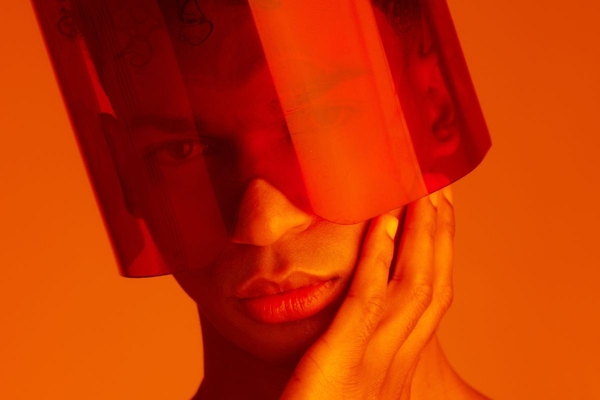
Modern technological advancements are rapidly changing the beauty industry landscape throughout the entire production cycle. While technology is permeating beauty developments in science-driven innovation and personalization, the growing use of AI is also revealing weaknesses.
Brands are increasingly integrating tech into every level of their operations, with AI standing at the center of these developments. However, alongside its practical uses, industry representatives warn against AI’s pitfalls and project that the industry’s appetite for the tech will plateau.
Croda and Vantage Beauty tell Personal Care Insights that brands that enhance human understanding and create more effective, adaptable, and responsible beauty experiences will remain competitive in the rapidly changing tech environment.
“Technology is fundamentally changing how we formulate, how we reach consumers, and how we understand their needs… The opportunity is not to choose between technology and human insight, but to combine them,” says Kimia Koushesh, technical marketing director EMEA & APAC at Vantage Beauty.
Hishda Mohamed, senior marketing lead of Insights and Innovation at Croda Beauty Actives, adds: “The future of beauty will probably not be driven by one miracle ingredient or one sophisticated device. It will increasingly be about combining different technologies intelligently that can evolve precisely with changing consumer needs.”
What AI provides
Croda’s Mohamed tells us that AI’s transformative potential should lie in scientific discovery and dynamic personalization.
 Technology is enabling more personalized skin care solutions based on individual needs and environments.
“From an R&D perspective, AI can help understand complex biological systems, identify new targets, and accelerate the discovery or selection of active ingredients designed to modulate specific pathways,” she says.
“Combined with omics, computational biology, and predictive modeling, it can help move cosmetic innovation toward a more precise and mechanism-driven approach.”
Mohamed tells us that from a consumer-facing perspective, the biggest change for beauty and AI will come from its ability to make routines and personalization more dynamic.
“Skin and hair are not static. Their needs change with age, hormones, stress, sleep, seasonality, climate, UV exposure, pollution, indoor conditions, and lifestyle. AI-powered diagnostics could increasingly integrate these different variables and adjust recommendations continuously rather than using the same products every day or assigning someone to a fixed category such as ‘dry skin’ or ‘oily skin.’”
According to Mohamed, fine-tuned personalization is particularly relevant for climate-adaptive beauty. She tells us that future routines could respond to real-time environmental changes. Additionally, ingredients and technologies may also become more responsive to local physiological conditions, weather, pollution, or changes in the microbiome.
“Rather than AI responding to ‘Which product should I use?’ The question, therefore, shifts to ‘What does my skin or hair need today under these different environmental conditions and what is the most appropriate combination of interventions to design the routine of the day?’”
Gen Z in beauty and whitespace for tech
Vantages’ Koushesh says that the current beauty-tech landscape is saturated with AI. The company expects a rebalancing in the industry with Gen Z consumers increasingly demanding more minimalist routines featuring fewer products of higher quality, with multifunctionality and sustainability as non-negotiables.
 Experts say responsible AI adoption will be key to the future of beauty innovation.“Many companies are claiming their products are based on AI, in much the same way the industry saw an overpopulation of fast fashion before consumers began questioning its sustainability and gravitated toward quality over quantity,” she says.
According to Koushesh, Gen Z also has less disposable income, which means the industry needs to be intentional about designing for the young generation and their diminished purchase power.
Vantage sees the biggest opportunity in beauty tech at the intersection of sensoriality, naturality, and personalization.
At InCosmetics Global 2026, Vantage introduced five ingredients and a suite of launch-ready formulations spanning scalp health, well-aging skin care, upcycled emollients, and natural-origin preservation systems. The company says the innovations were designed to translate into tailored, emotionally resonant consumer experiences.
“That is where we see the whitespace: not technology for its own sake, but tech-enabled ingredients and formulations that solve problems and connect with people,” says Koushesh.
Croda’s Mohamed says that sophisticated active ingredients, diagnostic technologies, AI platforms, beauty devices, digital modeling, and environmental data are the drivers of growth in the beauty industry.
She tells us that while these innovations are often considered independently of one another, the biggest opportunities lie in connecting them. She explains that skin aging, sensitivity, pigmentation, barrier function, or hair health are not controlled by one mechanism:
“They result from interactions between multiple biological pathways, individual physiology, behavior, and environmental exposure.”
Tech-induced systemization
AI-powered tools are accelerating cosmetic research and active ingredient discovery. Mohamed tells us that technology is transforming beauty from a product-centric industry into a more “systemic” and biologically informed industry.
“A major part of this evolution concerns cosmetic ingredients themselves. Increasingly, high-performance cosmetic actives are designed to address specific biological mechanisms, pathways, or cellular processes involved in skin and hair function,” she says.
Mohamed explains that technology in beauty can enhance this approach through a series of processes. For example, biotech can identify relevant biological targets and screen molecules more efficiently. It can also help understand precise mechanisms of action, optimize delivery, and evaluate how ingredients perform under different formulations and conditions.
On the cellular level, technology is also advancing diagnostics into the mainstream. Mohamed tells us that AI is allowing beauty researchers to understand what is happening in the skin or hair, with AI interpreting those signals.
“Consumers also increasingly combine active ingredients which can provide biochemical signals and devices which can deliver complementary physical stimulation,” she says.
“This opens the door to what I would call systemic beauty: moving away from isolated interventions or technologies toward integrated systems in which ingredients, formulations, devices, diagnostics, and environmental information work together to improve skin and hair longevity.”
Biased beauty AI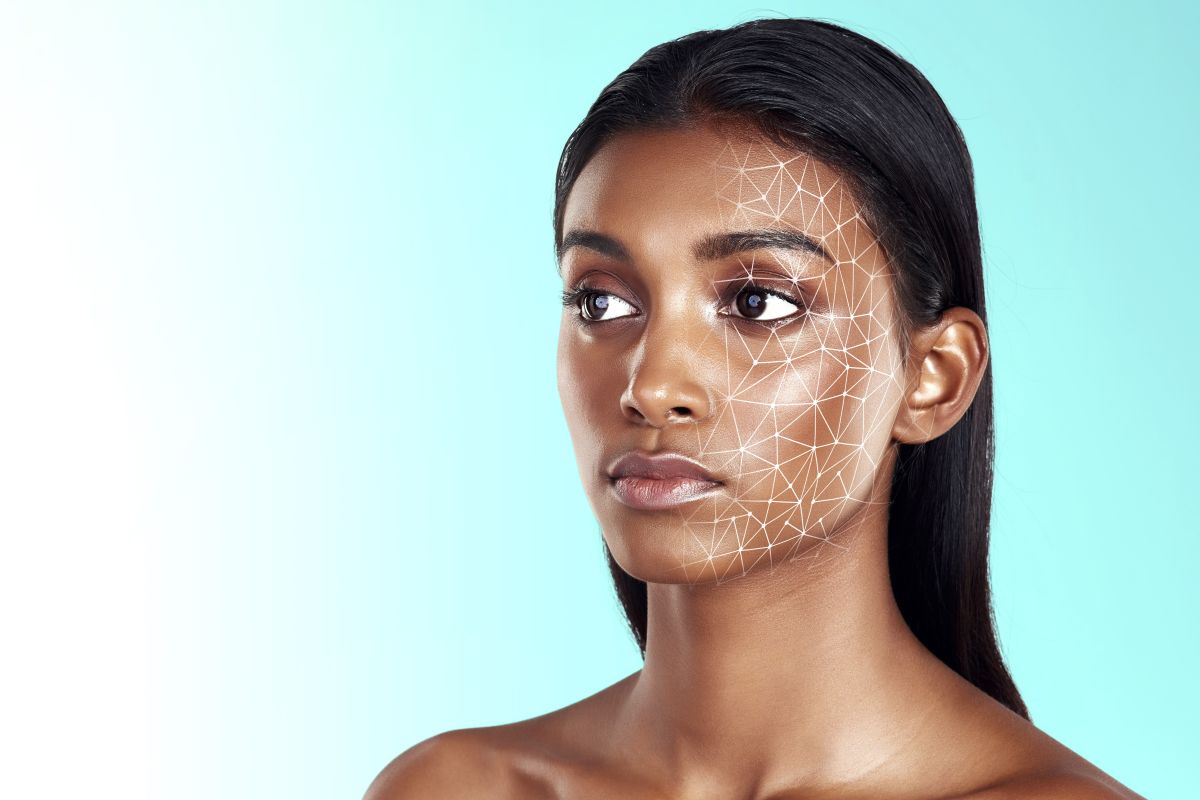
Industry representatives are flagging concerns around bias and consumer trust with AI use.
As AI seeps further into the marrow of beauty business approaches, industry experts warn of its shortcomings and room for error within its biases.
Vantage Beauty’s Koushesh says AI is seeing applications in the personal care industry in areas like ingredient screening, process optimization, and consumer engagement. She says that while AI is contributing to things like sales generation and process optimization, “we also need to be honest about the risks.”
“AI-generated beauty imagery currently reinforces unrealistic and Eurocentric beauty standards — for instance, in the real world, roughly 2–3% of people are blonde, yet generative AI produces a blonde model 37% of the time. Similarly, while 80% of the global population has brown eyes, generative AI depicts brown eyes only 30% of the time.”
She says that this discrepancy between real-world demographics and AI representation is important to Vantage Beauty because beauty is personal, and it should reflect the full spectrum of who its consumers are.
“Beyond representation, when consumers cannot assess product efficacy from an artificial image, the use of AI-generated models erodes trust.”
She tells us that the AI-generated imagery in personal care is seldom representative of real people or demographics, skewing beauty standards in racialized and unattainable ways.
“The future of AI in beauty should be focused on genuine personalization and operational efficiency — not on creating an idealized, homogenized image of who beauty is for.”