



Engineering cosmetic credibility: How biotech is maturing marine beauty

Key takeaways
- Cultivation biotechnologies are expanding the boundaries of what marine ecosystems can offer the cosmetics industry.
- Clinical validation and low-dose efficacy are redefining how ocean bioactives compete in mainstream formulations.
- Traceability, regenerative sourcing, and full-formulation transparency are prerequisites to maintaining credibility, not differentiators.
Ocean-derived beauty is moving from niche positioning and into the mainstream, where biotechnological advancements and clinical validation are key to the category’s claim to fame.
As consumers increasingly demand that cosmetics meet their sustainability standards, ingredient suppliers are innovating advanced platforms to cultivate marine ingredients rather than harvest them at scale. Consumers are also no longer satisfied with blue imagery, and are pressuring brands to back product claims with measurable data.
Personal Care Insights speaks with experts from Seppic, TopGum, and Oceanium about the forces accelerating the integration of ocean-derived beauty into mainstream cosmetics innovation, spanning ingestible and topical formats.
Jennifer Toomey, TopGum’s head of New Product Development in North America, says that while consumers’ sustainability push originally catalyzed the marine beauty category, the current shift is driven by discovery.
“The ocean represents one of the least-explored biological territories on Earth, especially compared to land-based sources that have been researched, cultivated, and commercialized for decades. This relative ‘white space’ is incredibly compelling for beauty and wellness innovation,” she tells us.
“What’s driving the shift now is a combination of scientific curiosity and technological capability. Advances in extraction, stabilization, and delivery technologies are finally allowing us to access, protect, and formulate these sensitive marine actives in effective formats.”
Beyond the technology that enables innovation, Karen Scofield Seal, CEO at Oceanium, says that brands are no longer willing to compromise on evidence, just as consumers are no longer willing to purchase without it.
“Clinically validated marine actives are helping shift ocean-derived ingredients from niche positioning into high-performance, everyday skin care,” Scofield Seal tells us.
Ultimately, according to Claire Liu, market and digital manager at Seppic, marine environments offer a unique biological narrative, and ingredient suppliers must translate that inspiration into high-efficacy ingredients.
“The market is moving toward a model where the poetry of the ocean meets the rigor of clinical proof,” she says.
Biotech unlocks potential
The ocean boasts a diverse ecosystem that extends from its depths to the coastlines. Shores and beaches are home to halophytic plants, which offer cosmetic ingredient suppliers an array of innovation potential if the right processing technology is available.
“These maritime plants have developed unique properties precisely because they must adapt to the harsh conditions of the ocean — salt, spray, and intense UV,” says Liu..webp) Coastal and marine organisms have adapted to extreme conditions, inspiring new formulations.
Coastal and marine organisms have adapted to extreme conditions, inspiring new formulations.
Seppic has two specialized blue biotech platforms it uses to transform the benefits of halophytic plants into cosmetic ingredients. Its “world-first” blue biotechnology platform, Celebrity, allows the company to cultivate rare or scarce macroalgae in photobioreactors. Liu highlights Seppic’s Ephemer as an example of an ingredient created through the platform.
“By isolating and cultivating gametophytes (an ephemeral stage of the algae), we obtain an ingredient with an antioxidant power 10 times higher and more stable than a classic seaweed extract, providing access to a rare biomass that is impossible to harvest traditionally,” she explains.
The other platform, Celtosome, is a green biotechnology that has developed ingredients, such as a wrinkle filler and one that breaks the “inflamm’ dryness” cycle, from halophytic plants.
“Our biotechnological tools (Celtosome and Celebrity) will allow us to explore previously inaccessible pathways to offer more complete answers to complex skin concerns, such as inflammaging or environmental stress,” Liu adds.
She holds that the next decade of ocean-derived beauty innovation will be defined by the exploration of new biomasses and the discovery of novel phytochemical compositions.
“The future lies in this scientific exploration: using the ocean as a reservoir of molecular structures to design the next generation of nature-inspired actives that respect biodiversity.”
Science-backed credibility
Ocean-derived beauty products rely heavily on sustainability storytelling, but according to Liu, substantiated product performance is becoming increasingly important in consumers’ purchasing decisions.
“Today’s consumers want to connect with the soul of an ingredient, its origin, and the resilience of marine life, but they refuse to compromise on science-backed results,” she says.
Andrew Ross, board member at Oceanium and advisor to Venture Capital and Private Equity, echoes this consumer preference: “Consumers are really sophisticated and demanding. They want ingredients that deliver clinically-proven results, feel great on their skin, and are sustainable for the planet.”
Ross explains that marine bioactives are uniquely positioned to meet this consumer demand, particularly in sensitive and stressed-skin applications, and highlights the company’s Ocean Actives C+ ingredient as an innovation bridging these concerns.
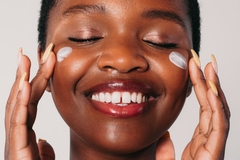
“We’re seeing that it’s possible to combine natural sourcing with measurable improvements in redness, barrier strength, and skin recovery at very low inclusion levels, which is exactly where the market is heading,” he says. .webp) Clinically validated marine ingredients are moving into performance-driven skin care.
Clinically validated marine ingredients are moving into performance-driven skin care.
Beyond topical skin care, advances in formulation and delivery technologies further enable the personal care industry to integrate marine actives into formats such as TopGum’s gummies. In such formats, measurable, science-backed beauty benefits must be translated in a way that consumers can trust.
“Over the next decade, marine bioactives will increasingly be evaluated not just for their origin, but for science-backed efficacy, traceability, and measurable outcomes,” adds Oceanium’s Scofield Seal.
Sustainability scrutiny
With rising interest in marine bioactives comes an increased scrutiny over how those ingredients are sourced, processed, and verified.
“Much like sustainable agriculture on land, the future of marine innovation depends on controlled cultivation methods that protect biodiversity and avoid depleting natural habitats,” says TopGum’s Toomey.
She explains that the ocean is an exceptionally delicate system, and if marine resources are not used wisely and thoughtfully, the industries that rely on its biodiversity risk damaging ecosystems that cannot be easily recovered.
“That’s why suppliers must prioritize marine farming, traceability, and responsible production practices, ensuring that innovation does not come at the expense of environmental integrity,” Toomey explains.
At Seppic, Liu says that the company follows an eco-design approach for its traditional seaweed extracts. “We prioritize responsible sourcing and ethical harvesting practices at our Brittany, France, site to support the regeneration of natural resources.”
Liu highlights that Seppic’s biotechnology platforms further advance its marine conservation efforts. “By taking only a tiny sample from nature once, we establish a sustainable production line that requires no further harvesting. This significantly reduces pressure on the natural biomass of the seabed, placing respect for resources at the heart of our strategy.”
Beyond implementing sustainable sourcing practices, Oceanium argues that companies must clearly communicate and substantiate those efforts to consumers to avoid perceptions of greenwashing.
“When marketing sustainability claims to consumers, ingredient suppliers and brands have a heightened responsibility to be transparent and credible about the sustainability of their products,” Scofield Seal says.
“Consumers increasingly expect not only high-performance ingredients but also evidence that these ingredients protect marine ecosystems, support coastal communities, and align with broader environmental goals,” they add.
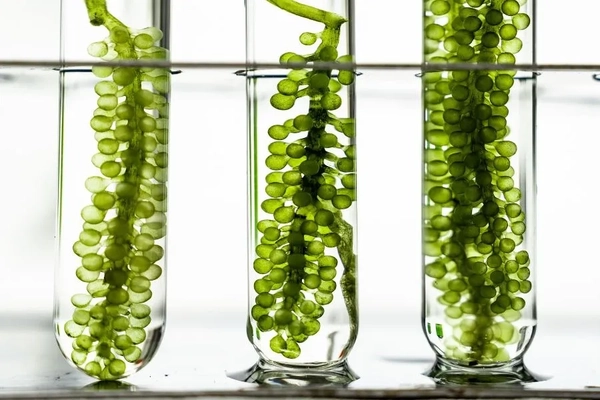
According to Scofield Seal, it is one thing to offer a sustainable bioactive ingredient, but another for brands to ensure the ingredient is included in truly sustainable formulations, such as vegan or cruelty-free products, minimal use of non-sustainable additives, and eco-conscious packaging..webp) Controlled cultivation is reducing reliance on large-scale marine harvesting.
Controlled cultivation is reducing reliance on large-scale marine harvesting.
“If the product contains non-sustainable elements, sustainability claims risk being perceived as greenwashing.”
Oceanium’s business model claims to deliver traceable, sustainably farmed seaweed ingredients that contribute to six of the UN Sustainable Development Goals, including biodiversity, coastal livelihoods, and gender equality.
Similarly, Seppic frames ocean-derived innovation as inseparable from long-term stewardship of marine resources.
“We believe that the future of high-performance beauty lies in this synergy: using advanced science to harness the intelligence of the ocean while strictly respecting the resources that inspire us,” Liu concludes.