

Cosmax unveils AI scent prediction tool to advance K-fragrance competitiveness

Key takeaways
- Cosmax develops an AI fragrance prediction model trained on 8,600 molecular fragrance datasets to forecast scents based on their molecular structure.
- The technology identifies unusual or problematic odors early in production, shortening development timelines.
- The research published in Communications Chemistry marks the first time a Korean company has published a company-backed study in the journal.
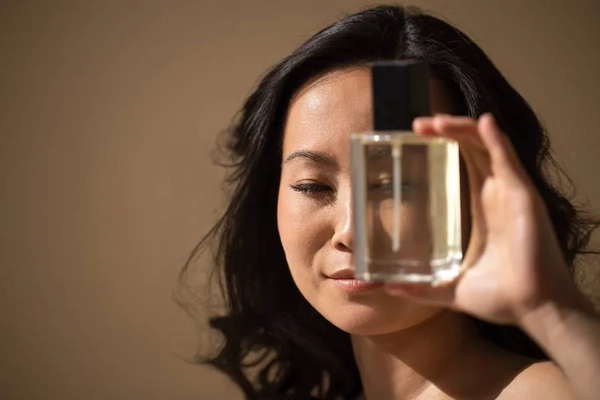
Cosmax has developed an AI scent prediction algorithm model based on the molecular structure of fragrances. The machine learning model is based on datasets from over 8,600 molecular fragrances to predict the scent of cosmetic raw materials and enhance the olfactory quality of cosmetics.
Cosmax claims that the technology can overcome the existing limitations of current methods, such as detecting unusual odors that may be present and otherwise undetected in the early stages of product development.
“The AI fragrance prediction model is a technology that was completed solely through Cosmax’s internal research capabilities, and is the culmination of the fusion of fragrance chemistry and data science,” says Cosmax (translated from Korean).
“It will be an important milestone in strengthening the competitiveness of K-fragrance and innovating the global cosmetics industry.”
Based on thousands of fragrances
Cosmax states that data on the odors of cosmetic ingredients is limited, and most are categorized as characteristic odors.
The new technology identifies and corrects problematic ingredients. Since fragrances have unique scents, the variety of raw materials may result in unexpected odors in the final products.
The technology uses its database to learn molecular fingerprints, enabling it to predict fragrances based solely on molecular structures.
It is intended to speed up the time to market, as traditional methods of identifying odors rely on human intuition, which is a time-consuming process.
The findings of the study were published in Communications Chemistry, marking the first time a Korean company’s independent fragrance research has been published in the sister journal of Nature.
The company notes that the findings extend beyond cosmetic applications and are expected to be beneficial for various commercial uses, including food and other chemical industries.
Personal Care Insights previously spoke with South Korean company Trendier AI about AI’s potential for cosmetics development. Kei Chun, CEO and co-founder, said beauty companies can cut their marketing research and production time by tenfold, innovate new ingredients, and speed up consumer feedback.
Also in fragrance technology, Givaudan recently unveiled a discovery in scent receptor research by decoding how consumers’ noses recognize and detect some of nature’s scents. Company scientists developed a methodology that enhances scent receptor sensitivity by 100-fold through modifications to the receptor’s tail ends.
Kao Corporation also recently unveiled a similar technology, its ScentVista 400. It analyzes olfactory receptor responses to smell. The company described its Sensory Science Research Laboratory as the “first in the world to successfully express on the surface of cultured cells almost all of the approximately 400 types of human olfactory receptors.”