



European beauty CEOs urge regulatory clarity as rules threaten regional reign


Key takeaways
- European beauty leaders warn that complex regulations are diverting R&D spending toward reformulation instead of innovation.
- EU rules such as the UWWTD and PPWR are raising concerns about costs and competitiveness.
- Meanwhile, K-beauty brands are expanding in Europe through e-commerce growth and new investments.
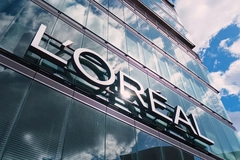
European beauty leaders have warned that regulations, costs, and global competition are making it harder for the region’s cosmetics industry to stay competitive.
At the Value of Beauty Annual Summit in Brussels, Belgium, CEOs from cosmetic giants, including L’Oréal and Beiersdorf, have called on EU policymakers to create clearer, more predictable regulations.
The experts highlight concerns about the Urban Wastewater Treatment Directive (UWWTD) and the Packaging and Packaging Waste Regulation (PPWR), which are forcing cosmetic companies to reshape their investment decisions.
“The beauty industry is already a global leader when it comes to sustainable innovation, yet we are currently being forced to spend up to 70% of our R&D budgets on reformulation and compliance. Every euro lost to regulatory complexity is a euro Europe can’t afford to waste,” says Nicolas Hieronimus, CEO at L’Oréal Groupe.
The warnings come as global competition intensifies, particularly from rapidly expanding K-beauty brands that are gaining momentum in Europe.
In France, domestic beauty imports rose 6%, driven largely by online purchases from Asia. Meanwhile, K-beauty brand d’Alba Global reported a 302% increase in European sales for last year, which was higher than growth in Japan (210%) and North America (155%).
With K-beauty’s government-backed promotion in Europe, an increasingly robust e-commerce foothold, and manufacturing investments, questions are emerging about whether the region’s regulatory environment is weakening its ability to compete in the global cosmetics market, and at home.
Pushing regulatory reform
The Value of Beauty Alliance is a group of 16 beauty executives. It was established to unite the European beauty supply chain, from manufacturers to fragrance houses, and influence EU policies.
According to the alliance, the European beauty and personal care industry generates nearly €30 billion (US$34.5 billion) in exports and supports 3.2 million jobs. However, industry leaders say growing regulatory complexity is pushing companies to splurge on reformulation and compliance instead of developing new products.
One area of regulation the group aims to draw attention to is the UWWTD. As it is currently written, the rule will require cosmetics and pharmaceutical sectors to fund at least 80% of the costs for upgrading urban wastewater treatment facilities across Europe, starting December 31, 2028.
The directive claims to apply the Polluter Pays principle, but the cosmetics industry argues that the data informing the 80% figure overestimates its contribution to water pollution by at least 15 times, hailing it a “blatant miscalculation.”
Trade association Cosmetics Europe says the scheme jeopardizes Europe’s competitiveness and its attractiveness to foreign investment.
.webp) EU rules such as the UWWTD and PPWR are raising concerns about costs and competitiveness.Companies also urge adjustments to the PPWR. The mandatory EU regulation requires all packaging to be recyclable by 2030, and sets strict targets to reduce waste, ban specific single-use plastics, and control the recycled content levels of packs.
EU rules such as the UWWTD and PPWR are raising concerns about costs and competitiveness.Companies also urge adjustments to the PPWR. The mandatory EU regulation requires all packaging to be recyclable by 2030, and sets strict targets to reduce waste, ban specific single-use plastics, and control the recycled content levels of packs.
“The PPWR should reflect the specific safety, hygiene, and design requirements of cosmetic and personal care products,” the alliance says.
The group calls for a “more pragmatic and up-to-date framework, so that companies can focus on delivering sustainability and innovation, rather than diverting those resources to navigating overly complex and unworkable rules.”
Global rivals move in
While Europe’s regulatory practicality is challenged by domestic players, Korean cosmetic exporters are capitalizing on the market’s growth.
Much of this growth appears to be driven by online marketplaces, particularly Amazon’s European platform. D’Alba reported strong rankings during Amazon’s Spring Deal promotion, placing its offerings among the top beauty items in Germany, Italy, and Spain.
Notably, Italy is emerging as a launchpad for Korean beauty’s push into Europe, having seen government-backed promotional events and production investments converging.
The Seoul Metropolitan Government recently launched an event in Milan to help build brand awareness and cultural interest. Meanwhile, K-beauty contract manufacturer Cosmax acquired a 51% stake in Italian firm Keminova, giving it its first European production base.
Against this backdrop, France’s 6% increase in beauty imports, largely driven by online purchases of Asian cosmetics, highlights shifting competition in the European beauty market.
“Without clear, predictable regulation, responsible investment becomes a shot in the dark. Brussels must restore the predictability required to safeguard our global leadership,” says Vincent Warnery, CEO at Beiersdorf and member of the Value of Beauty Alliance.
“Everything is on the table to unlock our industry’s potential,” he concludes.