



EU and UK regulators fine fragrance giants over anticompetitive conduct
Key takeaways
- The EC and CMA fine Givaudan, Firmenich, and IFF over a fragrance supply collusion.
- Regulators found that all three companies shared sensitive information about Unilever, while Givaudan and IFF were deemed to have coordinated more widely.
- Givaudan’s fragrance chief steps down as investigations continue in other markets.

The UK Competition and Markets Authority (CMA) and the European Commission (EC) have fined Firmenich, Givaudan, and International Flavors & Fragrances (IFF) a combined £85 million (US$111.4 million) and €471.9 million (US$ 517.9 million), respectively, for breaking competition law. All three companies have agreed settlements with both regulators.
The EC says the companies have acknowledged their participation in an “international cartel” in the fragrance sector. The regulators found that they exchanged information about pricing and dealings with Unilever — reportedly the biggest purchaser of consumer fragrances globally. Givaudan and IFF were also discovered to have shared private information regarding their overall consumer and fine fragrances business.
According to the EC, “the cartel” covered the entire European Economic Area (EEA) and lasted over four years.
Givaudan and IFF have attributed the conduct to a small number of past employees. Givaudan says the conduct was “isolated to two individuals,” both of whom will leave their positions by the end of the year.
An IFF spokesperson tells Personal Care Insights that the company accepts responsibility for the improper conduct involving “certain individuals, none of whom remain with the company.” It calls the behavior “contrary to [its] policies and values.”
Meanwhile, dsm-firmenich did not point to individuals. It says the CMA and EC found that Firmenich’s involvement was limited to information exchange concerning one customer in its consumer fragrance business (Unilever). The accusations against the company did not involve price fixing, and predated the merger with DSM.
The EC says senior employees at the three companies were aware of their subordinates’ contacts with competitors, and that from November 2021, senior staff at Givaudan and IFF were directly involved in the broader information exchange on consumer and fine fragrances.
What the CMA found
During its investigation, the CMA carried out unannounced inspections on the companies’ premises.
Through WhatsApp messages, telephone calls, and other communications, it discovered the companies shared sensitive information and discussed proposed price changes and how to respond to commercial negotiations. Some of the discussions took place at in-person “beer and curry” meetings in London, UK. Regulators fine three of the world’s largest fragrance suppliers.
The CMA found that Firmenich, Givaudan, and IFF coordinated their pricing and commercial strategies when dealing with Unilever. All the companies had reportedly agreed not to recruit employees from each other’s teams working on Unilever’s account. According to the CMA, this reduced the risk of disruption in their teams and reinforced coordination.
Givaudan and IFF were also found to have exchanged “competitively sensitive” information and coordinated their pricing strategies more widely across their fragrance businesses.
The UK CMA has now fined Givaudan £39.96 million (US$52.4 million), IFF £24.57 million (US$32.2 million), and Firmenich £20.64 million (US$27.1 million).
Juliette Enser, executive director of competition enforcement at the CMA, says: “These were major international suppliers discussing information that should have remained confidential. Today’s fines should be a clear warning for all businesses: competitors must compete, not coordinate behind closed doors.”
What the EC found
The commission also carried out surprise inspections on the three largest global fragrance producers. The infringement started for the companies in March 2019 and ended in March 2023.
According to the EC, the companies all exchanged information about many aspects of their day-to-day business with Unilever. These exchanges included pricing-related information — such as price increases, price negotiation tactics, and a possible energy surcharge.
The commission also reports that they signaled to each other how to handle Unilever’s requests for more transparency on fragrance composition and ingredient costs.
In line with the CMA, the EC found that Givaudan and IFF shared information about their wider consumer fragrance and fine fragrance businesses. This included price increase targets and the status of negotiations.
“By sharing this kind of information, Firmenich, Givaudan, and IFF reduced uncertainty about each other’s future conduct in the fragrances market and replaced genuine competition with coordination,” says the EC.
The three companies applied for leniency and settled the case. The fines were reduced for all due to their cooperation. The EC fined Givaudan €252.363 million (US$276.9 million), IFF €81.915 million (US$89.9 million), and Firmenich €137.689 million (US$151.1 million).  The case covers fragrances used in everyday personal care products.
One “cartel,” two rulings
The CMA worked with the EC as part of the investigation. The CMA found separate infringements under UK law: two each for Givaudan and IFF, and one for Firmenich. The EC instead classed the conduct as a single, continuous infringement of EU competition law across the EEA.
The EC and CMA say “cartels” like the one formed by the international fragrance producers may lead to higher prices and reduced choice for consumers. However, since the EC classed the companies’ breach as “by object,” meaning the conduct is considered harmful in itself, it did not need to prove it actually raised prices.
Since the three companies acknowledged their liability and participation in the infringement, the commission applied a standard reduction of 10% to the fines, in line with its 2008 Settlement Notice.
Companies respond
In light of the regulators’ antitrust investigations, Maurizio Volpi, president of Fragrance & Beauty at Givaudan, will step down from his position by the end of 2026. A second unnamed senior individual also decided to step down from his position by the end of the year.
“While the conduct was isolated to two individuals, the behavior identified by the regulators was unacceptable and does not reflect the values or standards we expect at Givaudan,” says Christian Stammkoetter, CEO of Givaudan. “We have always maintained the highest standards of ethics, compliance, and integrity, and have further strengthened our compliance program across the organization.”
“These settlements neither change our strategy and business fundamentals nor our confidence and commitment to deliver our ambitions for 2030. We remain focused on delivering sustainable growth and creating value for all our stakeholders.”
Effective January 1, 2027, Felix Mayr-Harting will be appointed president of Fragrance & Beauty at Givaudan.
Meanwhile, an IFF spokesperson tells us that since the investigations began, it has strengthened its antitrust compliance program, including enhanced training, monitoring, and controls.
“Integrity defines how the company does business… We hold our employees, and the partners and vendors we work with, accountable for acting lawfully and ethically, and we will continue to work constructively with authorities in every market where we operate,” they say.
“With the investigations by the EC and CMA now resolved, we move forward with full focus on serving our customers, advancing innovation and delivering long-term growth.” 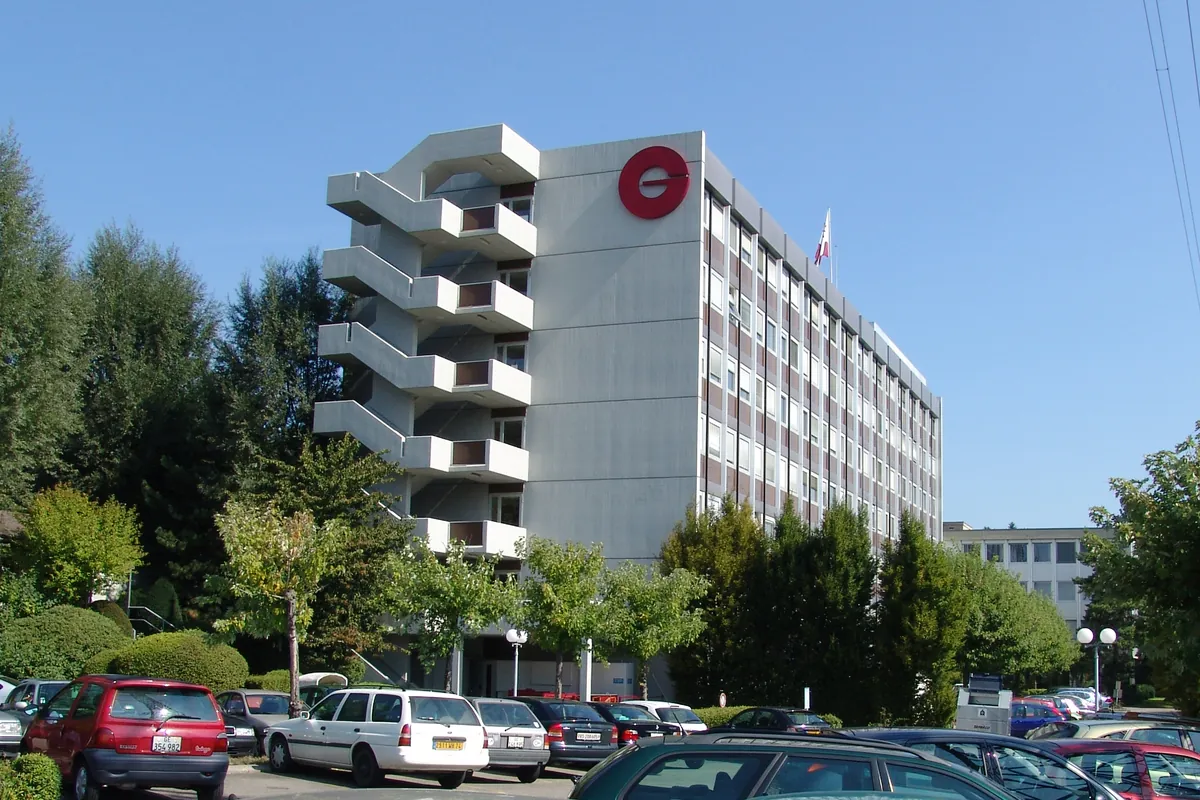 Givaudan has received the largest fines in both the EU and the UK.
dsm-firmenich has reiterated its commitment to continuing a culture of compliance throughout its organization and operating in a responsible and ethical manner in the “highly competitive industry” in which it operates.
Probes continue in other markets
Investigations into the fined fragrance suppliers continue in other markets.
Givaudan’s Stammkoetter named Switzerland, Brazil, India, and Mexico among the jurisdictions where cases remain open. However, the company expects the EU and UK settlements to cover the largest part of its obligations.
Switzerland’s Competition Commission named Givaudan, Firmenich, IFF, and Symrise when it opened its own probe in 2023.
The EC also searched the offices of the fourth supplier, Symrise, in March 2023. Symrise argued the search was not justified and took the EC to court, but the EU General Court ruled against it in April 2025. The CMA dropped its own investigation into Symrise in May 2025 based on “administrative priority.”
In India, the Competition Commission is running two probes into Firmenich, Givaudan, and IFF. One concerns a possible no-poach arrangement, and the other is an alleged collusion in the Indian fragrance industry.
In Mexico, the competition authority suspended its fragrance antitrust investigation in July 2025 while it was being replaced by a new body, the National Antitrust Commission.