
Finding the beauty in banana: Fresha talks “foodification” in skin care

Key takeaways
- Bananas are emerging as the next big ingredient in “foodified” skin care, offering visual impact, playful aesthetic, and a holistic, indulgent experience.
- Social media buzz and celebrity adoption are rapidly driving mainstream awareness and adoption.
- Food-inspired ingredients help brands stand out in a crowded market, offering novelty and consumer engagement.
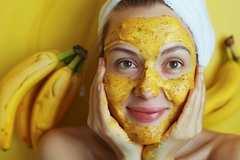
The world of beauty is increasingly embracing food-inspired ingredients, with the humble banana poised to follow in the footsteps of matcha, oat, and honey. As the trend of “edible” beauty grows, bananas are carving out their moment across personal care beauty trends, thanks to their visual appeal, sensory experience, and wellness benefits.
Beauty trends are highly influenced by a variety of factors, from wellness and celebrity culture to social media and, of course, food.
Food and beauty converge
Last summer, the beauty industry was coated with food-inspired product launches. Brands leveraged the flavor and sensory qualities food evokes to recreate the same favorable tastes and textures in their cosmetic products.
When something is already widely used in food, it’s more likely to be explored for cosmetic efficacy too. This crossover is proving to be a fertile space for innovation, not just a passing trend. Companies are also exploring possibilities around gourmet cosmetics, such as Rare Beauty, founded by pop star Selena Gomez and seasoning brand Tajín, which partnered last August to launch a limited-edition lip and cheek color cosmetic set with Tajín-inspired hues.
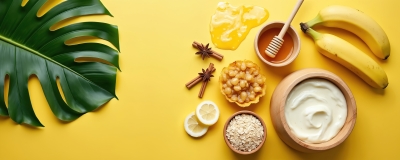 Between visual appeal, sensory experience, and wellness benefits, the humble banana is tipped to become the next key player in the next wave of “foodification” in skin care.Last month, Personal Care Insights reported that stevia, a widely used natural sweetener in food and beverage applications, is now finding a new role in personal care. The move to lip care applications, driven by Howtian, a supplier of natural ingredients, is being fueled by an industry-wide demand for plant-derived clean label sensory solutions.
This shift further supports the convergence of food and beauty, which is creating new opportunities for cross-industry collaborations and holistic solutions in personal care.
Banana for a beauty positioning
Hailey Bieber’s Rhode beauty brand recently unveiled a caramelized banana peptide lip treatment, along with banana peel peptide eye prep patches, and brands including Glossier and Prada are now exploring banana-inspired products. Online searches for “banana skin care” have also risen 22% in recent months, signaling a growing consumer fascination.
We speak with Annabelle Taurua, a beauty expert at Fresha, a London-based online platform that provides booking and management software for beauty and wellness services.
She shares her insights on the growing interest in bananas across cosmetics and personal care applications, highlighting how the fruit is becoming the next key player in the ongoing wave of “foodification” in skin care, and why the relationship between food and skin care has never been closer.
How are food trends currently influencing skin care ingredient choices?
Taurua: The relationship between food and skin care has never been closer, and ingredients like matcha and, more recently, banana are a perfect illustration of why. Both built significant cultural momentum outside of skin care first, becoming popular in cafes at both the local level and world-renowned franchises such as Starbucks, and have also grown in popularity on social media lifestyle content.
Skin care brands are smart to capitalize on these ingredient trends because consumers are already familiar with them. If they’ve worked well in cafes, why not on the beauty counter?
Moreover, there’s an increased consumer demand for what we call ‘edible’ beauty: products that feel more holistic and natural in their creation, rather than filled with ingredients unfamiliar to a mass audience. In 2026, brands are under more pressure than ever to make beauty feel more accessible and less clinical, and food-based ingredients are perfect for this, which is where bananas come in.
Why are consumers drawn to banana ingredients? Is it for sensory appeal, wellness benefits, or indulgence?
Taurua: Banana’s yellow color palette offers a playful and bold appeal. Like our coffees, teas, and treats, whether they’re takeout or not, skin care products today are driven by their aesthetics and shareability. And in an era where shareability drives discovery, that visual impact matters enormously. A product that looks as good as it performs is always going to have an advantage, and bananas deliver on these fronts.
How is social media and influencer buzz accelerating this trend adoption?
Taurua: Food-inspired skin care is a fun trend, and once brands jump on these trends, they tend to be picked up fairly quickly by influencers, celebrities, and makeup artists, followed by the mass market. A great example of this is Hailey Bieber’s brand, Rhode, which has been an early adopter of the emerging trend, recently launching its caramelized banana lip treatment and banana peel peptide eye prep patches, modeled by her husband, Justin Bieber.
An example of bananas in skin care going viral is the ‘banana botox’ trend, which sees people rubbing banana skins across thei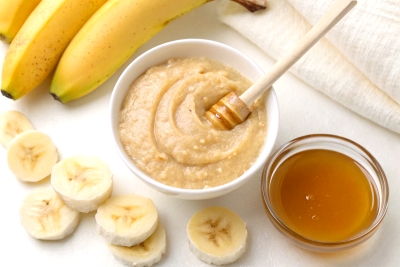 Bananas are familiar and have a strong sensory appeal. This versatility is key when formulating products such as lip and hair care, where both flavor and scent play a big role. r face. It may sound unusual, but we often see the popularity of food-related skin care, from avocado face masks to manuka honey-infused products. This is often because foods contain antioxidants and have natural healing properties, which make a change from harsh ingredients. We’ve seen a real shift in priorities when it comes to seeking natural skin care.
Ingredients that gain traction in mainstream food culture often find a second life in beauty, and matcha is also a perfect example of this. While it is a deeply rooted cultural staple in Japan, matcha has become a global cultural moment in recent years, popularized in wellness circles for its strong antioxidants and viral green shade. Before long, it was featured in cafes, coffee shops, and gained popularity on platforms like TikTok and Instagram, becoming synonymous with wellness and curated morning routines. Naturally, brands capitalized on this, and we saw the rise of matcha beauty, with serums, face masks, and more hitting the market.
How are brands using food-inspired ingredients for storytelling and differentiation?
Taurua: Food-inspired ingredients in skin care create intrigue and give products the ‘wow’ factor, and we all know trend-forward beauty shoppers are always looking for the next big thing, and banana’s vibrant yellow color helps it stand out in what you could say is a very crowded market. There’s a sense of discovery attached to food-inspired ingredients that something more mainstream can’t replicate.
How can we expect this trend to evolve?
Taurua: In terms of an overall trend cycle, banana is still in the early to mid phase, but everything is being set up for it to follow in matcha’s footsteps over the next 12 months as the beauty world favors more playful ingredients and combinations.