



Bridging food & beauty: Howtian’s stevia platform expands to lip care
The company says lip care is just “one entry point for a broader range of applications.”

Key takeaways
- Stevia is finding a second life as a multifunctional ingredient, with applications now expanding beyond food and beverage into lip care.
- Howtian introduced its SoPure platform, extending stevia-derived ingredients into cosmetic formulations as sensory modifiers.
- Stevia-derived extracts help reduce bitterness and improve taste transfer in lipsticks, balms, and glosses.
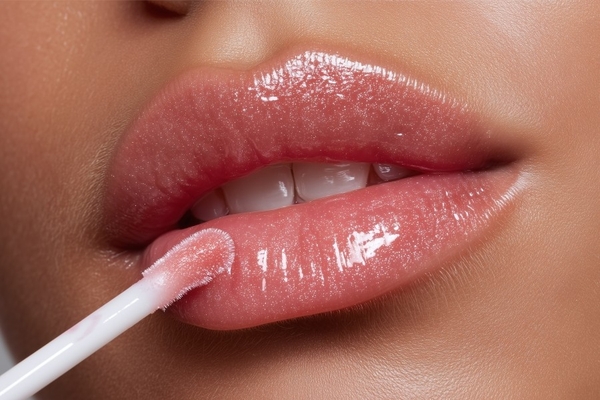
Stevia, a widely used natural sweetener in food and beverage applications, is now finding a new role in personal care. The move to lip care applications, driven by Howtian, a supplier of natural ingredients, based in Shandong province, China, is being fueled by an industry-wide demand for plant-derived clean label sensory solutions.
This shift is also highlighting the convergence of food and beauty, which is creating new opportunities for cross-industry collaborations and holistic solutions in personal care.
Howtian previously introduced SoPure Dentivia for oral care, which improves freshness and masks off-notes in toothpastes and mouthwashes. The company is now extending its SoPure platform into lip care applications, enabling improved taste transfer, bitterness masking, and supporting clean label positioning in lipsticks, lip balms, glosses, and other lip products.
The launch comes as the personal care industry continues shifting toward plant-derived ingredients and cleaner formulations.
For formulators, however, replacing synthetic components with natural alternatives without compromising performance remains a technical challenge — particularly in lip care products, where taste, comfort, and overall sensory balance are critical to the consumer experience.
Speaking to Personal Care Insights, Summer Song, technical director at Howtian, says: “Our work with stevia has increasingly shown that its value extends far beyond sweetness. In lip care applications, stevia offers a unique combination of mild, natural sweetness and the ability to mask off-notes from oils, waxes, and active ingredients. This directly enhances the sensory experience during application, delivering a more pleasant and comfortable taste upon transfer to the lips, while also being gentle with no mucosal irritation.”
Stevia also brings added functional benefits, flags Song. “It has well-documented antioxidant, anti-inflammatory, and soothing properties, which can help improve dryness, redness, and overall lip condition. Its use in personal care is not new — stevia has been incorporated into formulations in Japan since the 1970s and has seen broader adoption in the US since the early 2000s.”
Song believes that “a clear gap in the market” is driving the repositioning of stevia from food ingredients to personal care.
“Consumers frequently experience a disconnect between appealing product aromas and the actual taste during use. This ‘sensory mismatch’ undermines product enjoyment and brand perception. As more brands move toward clean label formulations, removing synthetic masking agents, this challenge becomes even more pronounced.”
“Natural raw materials such as unrefined shea butter and plant extracts often introduce bitterness or waxy notes, creating a strong need for a plant-derived solution that can harmonize scent and taste while meeting clean label expectations.”
Addressing sensory challenges in lip products
According to Howtian, taste transfer is an often-overlooked factor in lip care formulation. Bitter notes from botanical extracts and functional actives can negatively affect product perception, while some masking approaches introduce lingering aftertastes or sensory imbalance.
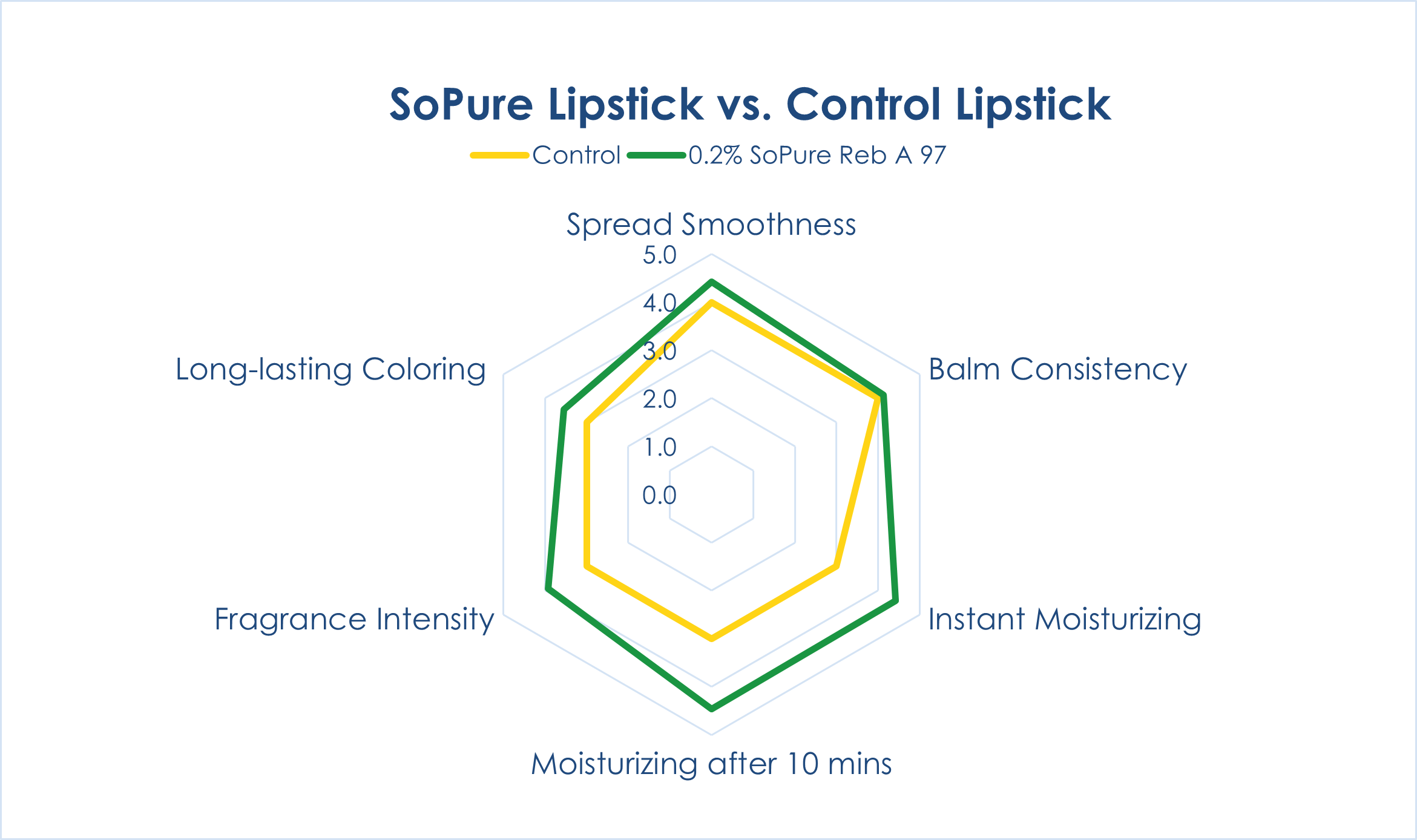 Figure 1. Sensory evaluation of lipstick formulations with and without SoPure RebA97.Song adds that SoPure was developed as “a multi-functional sensory solution, rather than a single-purpose ingredient.” Unlike traditional masking agents or sweeteners, it works holistically within the formulation to improve the overall sensory profile.
“First, it effectively neutralizes inherent off-notes from oils, plant extracts, colorants, and other raw materials, delivering a cleaner and more balanced taste experience. Second, it contributes additional care benefits, including antioxidant and anti-inflammatory properties — advantages that conventional masking agents typically do not offer,” says Song.
Equally important is its physical compatibility, says Song. “SoPure disperses smoothly in wax-oil systems without crystallization or instability. This ensures a uniform texture and consistent taste experience, addressing a common limitation seen with traditional ingredients that often struggle with uneven dissolution or phase separation in lip formulations.”
One of the primary challenges formulators face is balancing natural positioning with sensory performance. Compatibility is another major hurdle, according to Song. “Many commonly used synthetic sweeteners are highly water-soluble and not suited for oil-based systems, requiring polyols for dissolution. This can lead to poor dispersion, instability, or phase separation, resulting in uneven taste transfer and compromised product quality.”
Mucosal tolerance is also a critical consideration in lip care, she says. “Some conventional masking agents require high doses to be effective, but that can cause irritation or discomfort upon repeated use, particularly given the sensitive nature of the lip and oral interface. This creates additional constraints when trying to achieve effective sensory correction.”
Meanwhile, stability further complicates formulation, as natural extracts are more susceptible to heat, oxidation, and storage-related degradation, which can lead to flavor deterioration or the re-emergence of off-notes over time. “In addition, dosage limitations make it difficult to deliver effective masking without negatively impacting texture or increasing the risk of irritation,” explains Song.
Bridging the sensory gap
SoPure addresses sensory challenges through a combination of performance, formulation compatibility, and safety. It provides effective off-note masking and gentle sweetness without aftertaste, while its amphiphilic nature ensures uniform dispersion in wax-oil systems.
“It is also designed to be gentle on mucosal surfaces, making it suitable for repeated lip application without discomfort,” Song notes.
In parallel, she says it offers “strong full-cycle flavor stability across processing and storage conditions, helping maintain consistent sensory quality.”
According to Song, SoPure enables brands to bridge “what has traditionally been a difficult gap between natural positioning and high sensory performance. As a 100% plant-derived ingredient, it directly supports clean label and ‘natural beauty’ claims, reinforcing transparency and ingredient integrity.”
Additionally, it delivers measurable performance improvements. “Our sensory evaluations consistently show enhancements in aroma balance, mouthfeel, and overall harmony. This is compelling objective evidence that natural formulations can meet, and even exceed, conventional performance benchmarks.”
“SoPure allows brands to confidently claim: ‘Our products are not only naturally pure but also deliver superior sensory and care benefits through innovative natural science.’ We believe this represents a win‑win for positioning and performance, and can undo the perception that ‘natural’ comes at the expense of quality.”
Future applications
For Song, lip care is just “one entry point for a broader range of applications in personal care” for stevia. While consumers increasingly demand natural and organic ingredients, achieving a premium sensory experience with botanical bases remains a technical challenge.
In oral care, stevia already has a well-established role as an effective masking agent for challenging actives like fluoride.
It also offers anti-caries health benefits to prevent tooth decay and cavities. For the oral care product category where high-sensory-demand formulations are typical, SoPure helps deliver a cleaner taste, smoother mouthfeel, and long-lasting freshness.
“In skin care specifically, there is significant untapped potential,” says Song. “Stevia’s antioxidant and anti-inflammatory properties support claims around soothing, repair, and anti-aging benefits, while also contributing to a lighter, more pleasant sensory profile.”
“We also see opportunities in cleansing and makeup removal systems. SoPure’s amphiphilic molecular structure enables gentle yet effective performance, particularly in oil-based formulations, where it can enhance both functionality and user experience,” she highlights.
“Overall, SoPure is a versatile sensory platform that can extend across multiple personal care categories, wherever taste, feel, and overall sensory perception play a critical role.”