




Dermacosmetics drive L’Oréal and Galderma growth amid beauty market resilience

Key takeaways
- L’Oréal posted strong nine-month growth, led by dermatological beauty, professional products, fragrances, and hair care.
- Galderma raised its 2026 sales guidance after strong gains in therapeutic dermatology and dermatological skin care.
- The strong financial returns highlight sustained demand for clinically backed beauty and dermacosmetic products.

L’Oréal and Galderma have posted strong growth in their nine-month 2026 financial reports as dermacosmetic demand continues to rise.
L’Oréal has reported €35.33 billion (US$39.55 billion) in the first three quarters of 2026, representing 7.7% reported and 6.9% like-for-like growth. The French beauty conglomerate’s numbers were driven by “remarkable” performances in its Dermatological Beauty and Professional Products divisions. Fragrances and hair care were the primary drivers of growth, while skin care also accelerated.
Meanwhile, the net sales of Galderma were up 25.1% year-on-year at constant currency in the same timespan. It has raised its full-year net sales guidance.
The pure-play dermatology company saw record net sales of US$4.76 billion, propelled by a 64.4% increase in nine-month sales in the Therapeutic Dermatology segment. Dermatological Skincare rose by 16.2%. The company reports that its growth was driven by volume and complemented by a favorable mix.
The two companies’ strong nine-month performances point to continued resilience in beauty and dermatology despite a challenging macroeconomic and geopolitical backdrop.
“The global beauty market, once again, proved its resilience in a challenging context,” says Nicolas Hieronimus, CEO of L’Oréal.
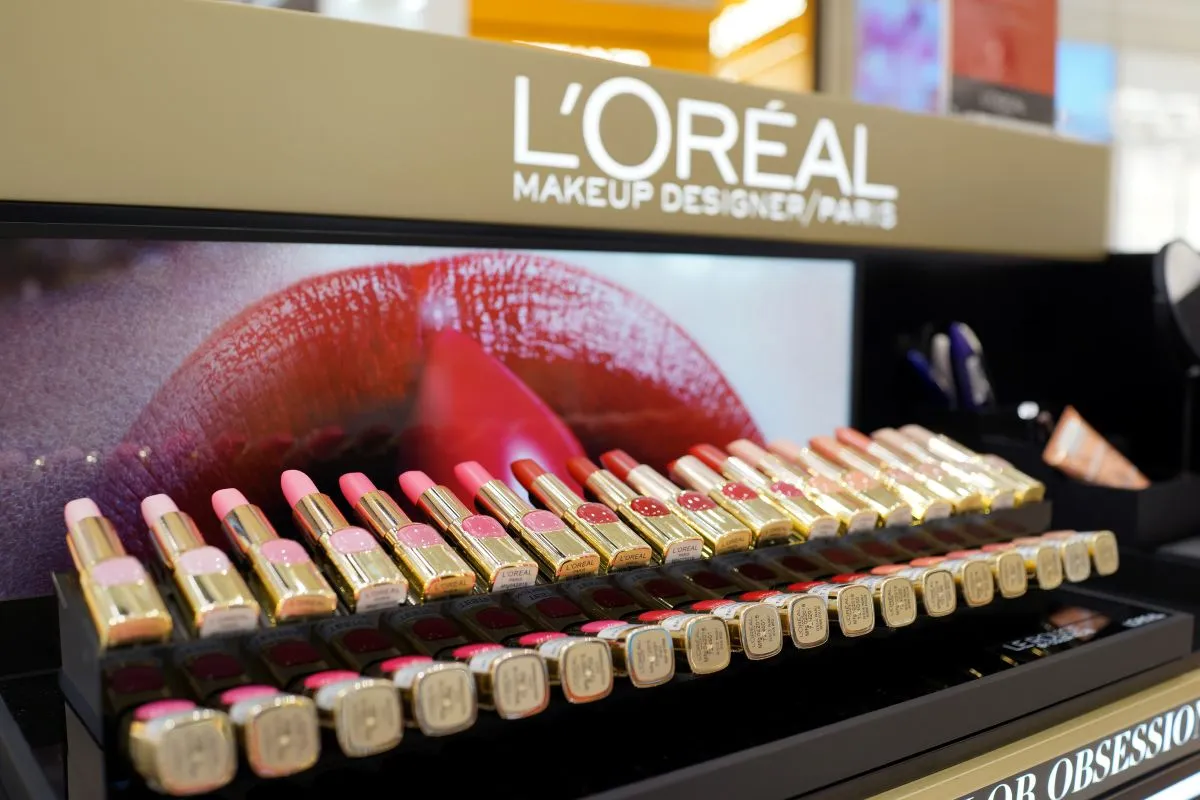
L’Oréal’s dermatological beauty division delivered strong growth in the first nine months of 2026.
Dermacosmetics drives L’Oréal
L’Oréal’s Q3 financial report reflects growth across all divisions. The company has shown nine-month adjusted like-for-like growth of 11.6% in Dermatological Beauty and 12.3% in Professional Products.
Dermacosmetic brands La Roche-Posay, CeraVe, and SkinCeuticals delivered double-digit growth, while premium hair care brands such as Kérastase and Redken boosted Professional Products. The performance of the brands demonstrates a steady demand for dermacosmetics as consumers continue to seek clinically backed efficacy in their routines.
The company also had a strong recovery in its Luxe division with nine-month adjusted growth of 5.8%. Fragrances remained its main growth engine, supported by Yves Saint Laurent, Prada, Armani, and Creed. Luxury skin care also accelerated.
E-commerce sales also jumped by approximately 17%, “well-ahead” of the online market.
The company’s growth was bolstered primarily by mix and volume.
“Driven by the success of our innovation plan, and the passion of our teams, we continue to win in hair care and fragrances but are now also outperforming the market in the all-important skin care category,” says Hieronimus.
Dermacosmetics continue to gain momentum as consumers seek clinically backed skin care.
L’Oréal’s regional investments
While the company saw growth across all regions, L’Oréal reports that SAPMENA–SSA (South Asia Pacific, Middle East, and North Africa, Sub-Saharan Africa) was the fastest-growing region.
It is up 15.8% adjusted like-for-like and was bolstered by India, Indonesia, Vietnam, and the Gulf Cooperation Council. Europe grew 7.0%, North America 6.3%, North Asia 5.5%, and Latin America 2.4%.
“The impressive results in SAPMENA-SSA, including in India, and the strong performances across all developed regions, with a special mention of Europe, illustrate our local teams’ ability to win across terrains,” says Hieronimus.
In a regional investment leveraging India’s beauty boom, L’Oréal closed its acquisition of a majority stake in Indian personal care group Innovist. The company also partnered with Nykaa to invest in high-growth Indian beauty brands.
In South Korea, L’Oreal recently signed an innovation collaboration with Cosmax to develop novel K-beauty-inspired cosmetics, ingredients, and sensorial formulations for global audiences.
The company’s business in China also improved notably, growing almost three times faster than the Chinese beauty market itself. The region’s performance was led by its Luxe, Dermatological Beauty, and Professional Products divisions.
Galderma raised its full-year sales guidance following strong dermatology growth.
Growing dermacosmetics
Galderma reports strong growth in Dermatological Skincare alongside Therapeutic Dermatology — the standout segment of its nine-month financial report. The company’s strong financial performance reflects the success of its integrated dermatology strategy, which unites three categories — Injectable Aesthetics, Dermatological Skincare, and Therapeutic Dermatology — under one model.
Dermatological Skincare sales increased 16.2% to US$1.24 billion, driven by Cetaphil and Alastin. The company reports that Cetaphil performed particularly strongly in the Asian market.
In Therapeutic Dermatology, Nemluvio contributed US$735 million to the segment’s US$1.35 billion in sales. Injectable Aesthetics also grew 13.2% to US$2.17 billion. Neuromodulators, derived from botulinum toxin, drove growth in the segment, rising 16.9% to US$1.26 billion.
“Robust demand for our differentiated, premium portfolio continues to drive growth, while we advance innovation and take decisive steps to strengthen our long-term growth prospects, including our agreement to acquire ZO Skin Health,” says Flemming Ørnskov, CEO at Galderma.
Galderma signed an agreement to acquire all of ZO Skin Health for an enterprise value of US$1.5 billion from its shareholders earlier this month. The acquisition enhances Galderma’s Dermatological Skincare portfolio.
“Building on this momentum and our confidence in the business, we are raising our full-year net sales guidance,” says Ørnskov.
Meanwhile, e-commerce is Galderma’s fastest- growing skin care platform globally.
Galderma has raised its 2026 sales growth guidance to 22.5–23.5% at constant currency, up from 19–21%, while maintaining its expected Core EBITDA margin of around 26%.
L’Oréal has taken note of Galderma’s growing presence in the derma-beauty space and the fast-growing aesthetics market. In December 2025, L’Oréal acquired an additional 10% stake in Galderma, bringing its ownership to 20%.