

L’Oréal and NUS partner to test skin’s role in whole-body aging


Key takeaways
- L’Oréal and NUS Medicine are investigating whether skin aging reflects aging elsewhere in the body.
- Researchers will compare skin assessments with cardiovascular, metabolic, cognitive, and musculoskeletal health data.
- Findings could inform L’Oréal’s next generation of personalized longevity products for skin, scalp, and hair.
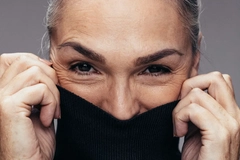
L’Oréal and the National University of Singapore (NUS) Medicine have launched a multi-year strategic research partnership to investigate the skin’s role in overall longevity. The collaboration aims to close a gap in skin aging science by exploring its role in how the rest of the body ages over time, potentially leading to more preventive approaches.
In the personal care industry, longevity science has moved beyond addressing visible signs of aging toward understanding the biological mechanisms that drive aging at a cellular level. The partnership takes the ethos behind longevity thinking further by asking whether the skin can act as a reliable indicator of systemic biological aging.
Dr. Angeline Tay, head of Advanced Research at L’Oréal Research and Innovation in Singapore, says the collaboration could help L’Oréal develop next-generation formulations and routines calibrated to how each person’s skin ages.
The skin is the body’s largest and most accessible organ, but L’Oréal and NUS Medicine say it has rarely been measured with the same scientific rigor as other organs or included in multi-organ aging research. The partnership aims to address this by testing an open question: “Does skin aging reflect what happens elsewhere in the body, or does it follow its own path?”
The joint research initiative combines L’Oréal’s skin and hair science expertise with NUS Medicine’s experience in geroscience (the study of the mechanisms of aging) and healthy longevity medicine. The duo will integrate skin assessments into clinical trials while measuring cardiovascular, metabolic, cognitive, and musculoskeletal health.
By collecting this multifaceted data from the same study participants, the researchers can directly compare how skin aging relates to other organ systems.
“Skin has been an underutilized window into the biology of aging. Our strategic partnership with L’Oréal enables us to integrate state-of-the-art skin assessments into our clinical trials, alongside systemic measures of biological aging across multiple organ systems,” says Andrea Maier, professor in Medicine, Healthy Aging, and Dementia Research at NUS Medicine and founder and director of the NUS Academy for Healthy Longevity.
.webp) The partnership will compare skin assessments with measurements of cardiovascular, metabolic, cognitive, and musculoskeletal health.“This will allow us to better understand how skin reflects and contributes to healthy aging within the context of systemic aging within persons.”
The partnership will compare skin assessments with measurements of cardiovascular, metabolic, cognitive, and musculoskeletal health.“This will allow us to better understand how skin reflects and contributes to healthy aging within the context of systemic aging within persons.”
The duo maintains that Singapore serves as an ideal location for this research, being one of the world’s fastest-aging regions.
Holistic longevity innovation
Testing whether skin aging has a connection to how the rest of the body ages would, regardless of the outcome, be scientifically meaningful according to the pair.
If skin aging does correlate with other systems, it could become a low-cost, non-invasive proxy for tracking whole-body aging. Currently, tracking whole-body aging requires blood draws, imaging, or specialized equipment. If the research concludes that skin follows its own aging trajectory, however, it will become a target for intervention “in its own right.”
“If signs in the skin turn out to be meaningful indicators about how the whole body is aging, that changes what a skin measurement really tells us. Instead of just reflecting appearance, it could become an early signal of what’s happening inside the body,” says L’Oreal’s Tay.
“This is a hypothesis we believe is worth years of careful, evidence-based research to properly understand, and it is central to our commitment to shifting the science of aging toward prevention.”
The collaboration reflects a broader shift in how scientists understand aging. Instead of treating visible signs of aging as purely cosmetic concerns, the research will treat skin health as part of overall well-being.
.webp) Longevity science is shifting skin care beyond correcting visible signs of aging toward understanding the biological processes behind them.Findings from the partnership will feed into L’Oréal’s Longevity Integrative Science framework, potentially informing novel longevity products and interventions for healthier skin, scalp, and hair.
Longevity science is shifting skin care beyond correcting visible signs of aging toward understanding the biological processes behind them.Findings from the partnership will feed into L’Oréal’s Longevity Integrative Science framework, potentially informing novel longevity products and interventions for healthier skin, scalp, and hair.
Healthy aging shift
L’Oréal’s partnership with NUS Medicine forms part of the company’s “Beauty of Longevity” strategy. The strategy aims to reframe aging as a lifelong beauty journey, moving from symptom improvement to root cause intervention, through integrated skin longevity science.
Multiple industry stakeholders are doubling down on understanding skin aging, as consumers increasingly show interest in solutions that target the biological process of aging.
“The cosmetic world is currently undergoing a profound paradigm shift from reactive correction to proactive maintenance and holistic skin health. Consumers increasingly recognize that lifestyle and biological resilience are the true determinants of aging quality,” Claire Liu, market and digital manager, Beauty Care at Seppic, previously told Personal Care Insights.
L’Oréal says it invests €1.3 billion (US$1.5 billion) annually in research and innovation globally, and longevity science represents a key strategic frontier for the company.
As the science expands, it is being applied across multiple product formats, extending beyond skin care into makeup, hair care, and body care.
Schwan Cosmetics, for example, is integrating longevity care into color cosmetics with its LipLift system, treating lips as a dedicated skin care zone. The product aims to deliver a non-invasive volume boost to lips, as, with age, lip volume decreases.