




Longevity signals “paradigm shift” in personal care

Key takeaways
- Seppic targets longevity-focused skin care and the fundamental causes of aging through cellular biology.
- The company’s Juvenessence and Sagacious support sustainable solutions designed to support long-term skin health.
- Consumers demand credible, science-backed claims for anti-aging products, moving beyond surface-level results.

Longevity and cellular-level aging messaging have become impossible to ignore in the personal care industry. Seppic is addressing the core mechanisms of aging, from cellular senescence to intercellular communication, offering sustainable, bio-inspired solutions that promote long-term skin health.
Personal Care Insights speaks with Claire Liu, market and digital manager, Beauty Care at Seppic, about how the beauty industry is undergoing a “profound paradigm shift” toward “celebrating aging with vitality.” We also discuss how future research will focus on adapting the skin to environmental stressors and on translating plant survival mechanisms into skin care solutions.
As consumers shift their focus from quick anti-aging fixes to maintaining vitality and resilience, Seppic’s ingredients, such as Juvenessence and Sagacious, are helping brands create products that support skin health at a cellular level. The company calls biotechnology an essential engine of its skin care advancements and touts that it is setting a new standard for longevity in the beauty space.
However, beauty buyers do not just want claims — they want clinical backing. Seppic states that anti-aging credibility now relies on transitioning from visual clinical scores to a biological and biophysical demonstration of the mechanism of action.
Which areas of longevity science are shaping next-generation personal care ingredients?
Liu: Next-generation innovation is no longer focused on surface-level aesthetics but is rooted in a deep understanding of the 12 Hallmarks of Aging. These biological markers allow us to move beyond simply treating wrinkles to addressing the fundamental mechanisms that govern long-term skin health.
At Seppic, we focus on two strategic pillars that are transforming active ingredient design: Cellular senescence and Intercellular communication.
Cellular senescence focuses on targeting ‘zombie cells’ that stop dividing but remain metabolically active, secreting inflammatory signals known as the Secretome Messenger of Senescence. This process contributes to the spread of aging in the surrounding healthy tissue. Ingredients like Aspar’age are designed to regulate this communication to protect young cells, while Juvenessence specifically targets progerin, a primary aging marker, to slow down chronological cellular decline.
Intercellular communication exemplifies how, as skin ages, the dialogue between cells and their environment weakens, leading to structural collapse. We address this by restoring the mechanotransduction pathway, which links the cytoskeleton to the extracellular matrix (ECM). Sagacious, a bio-inspired seaweed extract, is a prime example; it reconnects aged fibroblasts to the ECM via integrins, effectively restoring the traction forces and mechanical tension typical of much younger skin. From restoring youthful cellular function to bio-inspired resilience, Seppic’s innovations empower the future of longevity in personal care.
How important is it for end consumers to define and substantiate “longevity” claims for cosmetic ingredients?
Liu: Substantiation is critical because the modern consumer is shifting away from traditional anti-aging toward a more empowered focus on biological age and vitality. Credibility today depends on moving from purely visual clinical scores to a biological and biophysical demonstration of the mode of action.
We substantiate longevity claims through a multi-dimensional scientific approach. We restore the youthful phenotype. Instead of just measuring wrinkle depth, we prove that an ingredient can make mature cells behave like young ones. For example, we demonstrate that Juvenessence can restore a cellular phenotype characteristic of cells 30 years younger by acting on proteostasis and aging markers.
We also focus on reinforcing tissue architecture. We use high-resolution technology to show action at the skin’s most critical interfaces, such as the dermo-epidermal junction (DEJ). By measuring the physical restoration of cell mechanical properties and the boost in essential structural proteins like collagen IV and XVII, we provide tangible proof of long-term structural integrity thanks to Sagacious.
Additionally, Seppic uses bio-inspired resilience. We connect the science back to nature’s own survival strategies, explaining how the molecules used by resilient organisms, such as extremophile algae or stress-adapted plants, can enhance the skin’s detoxification and repair capacities.
How is the shift from short-term anti-aging effects to long-term skin health changing your R&D?
Liu: The cosmetic world is currently undergoing a profound paradigm shift from reactive correction to proactive maintenance and holistic skin health. Consumers increasingly recognize that lifestyle and biological resilience are the true determinants of aging quality.
At Seppic, this shift does not represent a sudden pivot, but rather a natural evolution and deepening of our scientific expertise. We are moving from simply filling signs of age to reinforcing the skin’s innate ecosystem:
Our research is expanding further into the exposome, focusing on how we can help skin adapt to environmental stresses, such as pollution or blue light, before they cause permanent cellular damage. We are intensifying our study of the skin’s junctions and deep structural layers to ensure the skin remains firm and anchored for as long as possible. We are also looking more closely at 3.8 billion years of natural evolution to translate survival mechanisms (such as those found in rhizomes or halophyte plants) into high-performance skin care.
How are biotech and sustainable production methods influencing the future of longevity-focused ingredients?
Liu: Biotechnology is an essential engine for the future of longevity, as it provides access to rare, potent molecules without depleting natura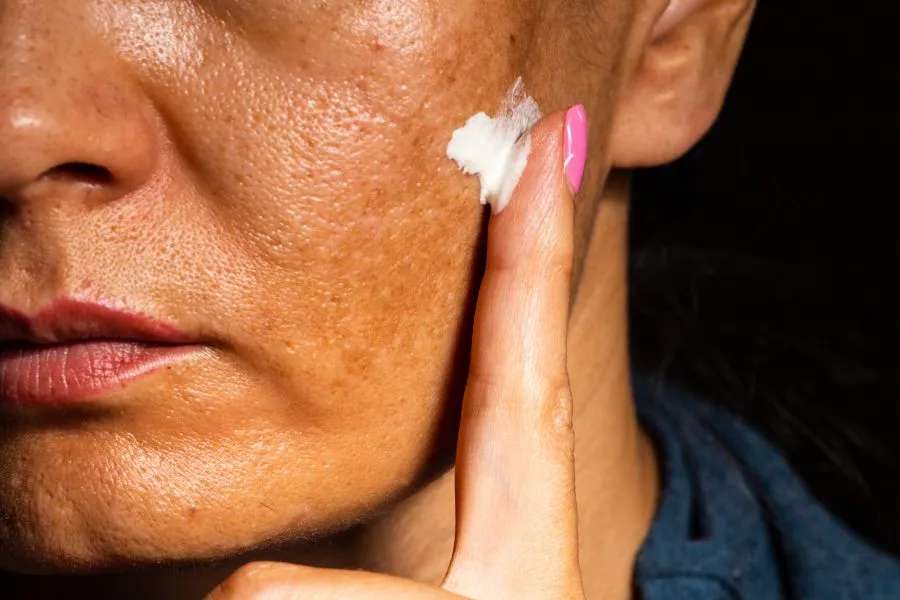 Seppic is creating bio-inspired solutions that promote skin resilience. l ecosystems. A cornerstone of our biotech strategy is plant cell culture and macroalgae cultivation, exemplified by our Celtosome and Celebrity biotechnologies. These offer several key advantages.
Thanks to Celtosome, we isolate undifferentiated native cells from plants. These cells are naturally rich in active molecules and contain a high concentration of exosomes. These nano-vesicles play a crucial role in biological communication, allowing cells to signal and repair one another, effectively acting as natural ‘wrinkle fillers’ from the inside.
The Celtosome and Celebrity biotechnologies offer low-impact sourcing. By using a single seed or a small plant fragment to initiate a cell culture in bioreactors, we ensure annual availability with low impact on biodiversity, no pesticides, and no risk of plant extinction. In macroalgae, we use photobioreactors (Celebrity technology) to isolate ephemeral life stages, such as gametophytes. This allows us to obtain a 10-times higher concentration of specific antioxidants than conventional extracts, ensuring maximum potency for protecting mitochondrial DNA.
Where do you expect longevity to go in the personal care industry, and what role do you see ingredient suppliers playing?
Liu: In the next decade, longevity will transition from a premium trend to the foundational standard for the entire beauty industry. The narrative will move entirely away from fighting time toward empowering consumers to celebrate aging with vitality.
Ingredient suppliers will evolve into strategic scientific partners. Our role is not limited to selling molecules; we are responsible for:
Translating complexity: Taking the sophisticated science of the 12 Hallmarks and making it accessible and inspiring for brands and their end consumers.
‘Skinification’ of new categories: Expanding longevity science beyond facial care into high-growth areas like scalp longevity and body resilience.
Scientific guardianship: Providing the rigorous clinical and biological data that sophisticated consumers demand, ensuring that every claim of biological rejuvenation is backed by transparent, ethical, and verifiable biotech innovation.