



Quadpack equips natural skin care start-up with airless jar for product protection


Key takeaways
- Quadpack has provided Ninella with its Regula Airless containers for its new plant oil-infused skin care range.
- The packaging, available in PET or PP, features a metal-free pump and high restitution rate for minimal waste.
- Ninella’s founders highlight Quadpack’s personalized approach, offering small-run production for their start-up.
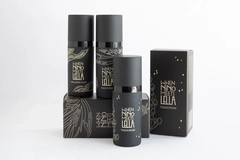
Quadpack has supplied German start-up When Nino Meets Lella (Ninella) with its Regula Airless container for the skin care company’s new plant oil-infused skin care range.
The 30 mL plastic container houses Ninella’s day cream, night cream, and hyaluronic fluid. It is available in polyethylene terephthalate (PET) or polypropylene with a metal-free pump and is manufactured at Quadpack’s Kierspe factory in Germany.
Nino Waldschmidt, co-founder of Ninella, says: “It was a positive experience from start to finish. As a start-up, we’ve often found ourselves being seen and treated as ‘just another customer’. That wasn’t the case with Quadpack. They gave us the chance to produce a relatively small run and supported us right from the start.”
He says the packaging has been well received since the launch in May 2025: “The feedback on the airless dispensers has been consistently positive. Customers and retailers are impressed by their effectiveness and design, and they have already opened many doors for us.”
Airless technology can help preserve natural formulas, and a high restitution rate can minimize waste. The design of the container features gold lettering on a black background, with a soft-touch lacquering for a smooth feel.
Nino Waldschmidt and his parents, Pamela and Thomas, founded the company to continue the work of his grandmother, Liselotte Sartori (Lella), who founded Switzerland’s first beauty farm in the 1960s in Locarno, Lake Maggiore. Lella developed skin care creams using natural ingredients.
Glass or plastic?
According to Quadpack, Ninella “deliberately avoided” using glass jars due to the material’s carbon footprint and energy-intensive production, transportation, and recycling.
Last year, a McKinsey & Company survey revealed that while there is no single material deemed the most sustainable, glass and paper ranked as top choices across all surveyed countries. PET bottles ranked as the second most sustainable packaging type in Sweden and Japan.
Both plastic and glass can offer sustainable qualities, depending on a manufacturer’s approach. Glass is energy-intensive to produce but highly recyclable and suited for reuse. Plastic, while more energy-efficient in production, faces challenges with recyclability claims and environmental impact.
Recent developments in personal care packaging showcase the industry divide, with both glass and plastic perceived as suitable materials for product protection.