




Side streams to scalable solutions: Upcycled ingredients fuel beauty R&D


Key takeaways
- Upcycled ingredients are moving from a sustainability concept to mainstream formulation strategy as resilience, performance, and traceability become critical.
- Advances in processing, biotechnology, and green extraction are transforming side streams into scalable, high-performance cosmetic ingredients.
- Consumer demand for transparency and lower environmental impact, combined with supplier innovation and brand adoption, is accelerating these shifts.

Cosmetic and beauty formulators are increasingly recognizing the functional benefits that upcycled ingredients deliver in personal care innovation. Among these benefits are more robust supply chains and clearer quality frameworks, leading to more appealing products. As the industry demonstrates that upcycled materials can meet beauty buyers’ expectations, products made with upcycled ingredients are progressively used.
Personal Care Insights speaks with Tate & Lyle, Ingredients + Specialties from Univar Solutions, and The Upcycled Beauty Company to discuss how cosmetic upcycled ingredients are gaining attention due to consumer expectations, brand strategy, and ingredient supplier innovation.
“Today’s formulations still require high sensorial performance, even as they shift away from synthetic ingredients. Consumers expect products with the right firmness, pickup, spreadability, and overall application experience. Pectin and citrus fiber, for instance, can meet these expectations — offering effective thickening and stabilization,” Jacqueline Scarborough, director, Consumer Care at Tate & Lyle, tells us.
However, she flags that functional performance alone is not enough to elevate upcycled inputs into mainstream R&D.
“Brands depend on long-term availability and predictable performance. That’s why consistency is central to everything we do. Reliable sourcing and rigorous quality control become non-negotiable parameters. When these elements are in place, upcycled ingredients shift from being ‘nice-to-have’ to credible, scalable, and high-performing solutions that meet both formulation requirements and commercial expectations,” explains Scarborough.
She notes that formulators are increasingly drawn to upcycled ingredients because they deliver performance advantages beyond their original functional role. “When an upcycled material enables reformulation toward more nature-based, label-friendly products — without compromising sensorial expectations — the decision becomes straightforward.”
“Nice-to-have” to mainstream?
Anna Crovetto, community lead at The Upcycled Beauty Company, believes that several factors have moved upcycled ingredients from niche innovation into mainstream R&D pipelines.
“Structural pressure on traditional raw material sourcing, including land constraints, supply volatility, and competition between industries, has made resilience a strategic priority rather than a sustainability feature,” says Crovetto.
Additionally, regulatory scrutiny and procurement requirements are demanding transparency, traceability, and real impact, exposing the limits of conventional fossil-based and virgin bio-based inputs. Upcycled ingredients are gaining visibility across personal care.
“Ingredient developers have matured their technologies: upcycling is no longer framed as waste recovery alone, but as an industrially repeatable, scalable production model capable of delivering consistent performance,” adds Crovetto.
Meanwhile, R&D teams are recognizing that circularity is not new. Crovetto details that many legacy ingredients have always been derived from byproducts, but were never called out as such.
“What’s new is the intentional design for circularity, supported by modern analytics, biotechnology, and industrial partnerships that make these materials reproducible, compliant, and fit for global supply chains.”
She explains that this reframing allows sustainable alternatives to be granted new authority rather than being perceived as experimental concepts.
Sum of sustainability parts
According to Monika Ruiz-Golcher, senior technical specialist, Beauty and Personal Care – EMEA, Ingredients + Specialties from Univar Solutions, upcycling trends today are driven by the interaction of several forces “rather than a single trigger.”
“Consumer expectations around sustainability and transparency shape brand positioning, while brands translate those expectations into concrete formulation and sourcing requirements. Ingredient suppliers support this shift by developing upcycled solutions that are consistent, scalable, and compatible with formulation realities,” she says.
“Distributors such as Univar Solutions — and Ingredients + Specialties from Univar Solutions — play a key role by providing technical support and formulation expertise, helping integrate upcycled ingredients into application-ready cosmetic formulations.”
Tate & Lyle’s Scarborough agrees that a single force does not drive the rise of upcycled ingredients, but rather, the interaction of consumer expectations, brand strategy, and ingredient supplier innovation.
“Consumer demand is a powerful catalyst: people increasingly expect beauty and personal care products to reflect lower environmental impact while maintaining high performance and sensorial quality. They will not compromise on texture, efficacy, or user experience, so brands must ensure that any environmentally friendly ingredient also meets these functional expectations,” says Scarborough.
At the same time, ingredient suppliers and brands are actively shaping the market by developing upcycled materials that meet commercial and technical requirements. Scarborough explains that Tate & Lyle’s ability to meet consumer demands while offering sustainable alternatives brings credibility to upcycling.  Upcycled ingredients are no longer seen as experimental but now as realistic options within standardized development processes.
“Ultimately, consumer expectations create the pull, while supplier innovation and brand adoption create the push. When all three align — consumer demand, brand commitment, and supplier capability — upcycled ingredients can move from niche innovation to mainstream formulation strategy.
Meanwhile, Crovetto at The Upcycled Beauty Company shines a light on evolving regulations.
“Ingredient suppliers are often the initial innovators, developing technologies that make circular inputs technically and economically viable. Brands may then respond by integrating these ingredients as part of broader resilience, sourcing, and impact strategies, some for marketing differentiation.”
Consumer expectations — particularly around transparency and credibility — reinforce both sides by rewarding solutions that deliver real environmental benefits without compromising the product experience.
“None of these forces operate in isolation: supplier innovation enables brand adoption, brand demand justifies scale, and consumer scrutiny helps keep the system honest,” explains Crovetto.
Exploring quality-rich side streams
For Ruiz-Golcher at Ingredients + Specialties from Univar Solutions, many upcycled ingredients deliver strong functional value because they originate from biologically rich side streams.
She believes that materials recovered from food or agricultural by-products often retain valuable bioactive components that translate into real performance benefits. Many of these ingredients are also naturally multi-functional. “Their complex composition allows them to contribute to texture, sensoriality, and active performance simultaneously, helping simplify formulations and reduce the number of ingredients required.”
“As upcycling has matured, ingredient suppliers have focused on standardizing how side streams are sourced and processed, which has improved consistency and has made scale-up more realistic for brands. From a formulation perspective, many upcycled ingredients now perform and behave much like conventional cosmetic raw materials,” says Ruiz-Golcher. “Regulatory aspects are handled through established cosmetic compliance pathways, helping upcycled ingredients move from niche use into mainstream R&D.”
Ruiz-Golcher adds that agro-food byproducts have strong long-term potential because they are widely available and rich in functional components, providing access to lipids, antioxidants, and rheology modifiers or structurants already familiar to formulators.
She continues that fermentation-derived streams are also gaining interest, particularly where controlled processes improve consistency and performance. These streams have strong long-term potential because processing technologies have caught up.
“Green extraction and biotechnological approaches such as fermentation, enzymatic processing, or solvent-free extraction now enable turning variable side streams into stable, high-performance cosmetic ingredients, while supporting more resilient and circular supply chains,” says Ruiz-Golcher. 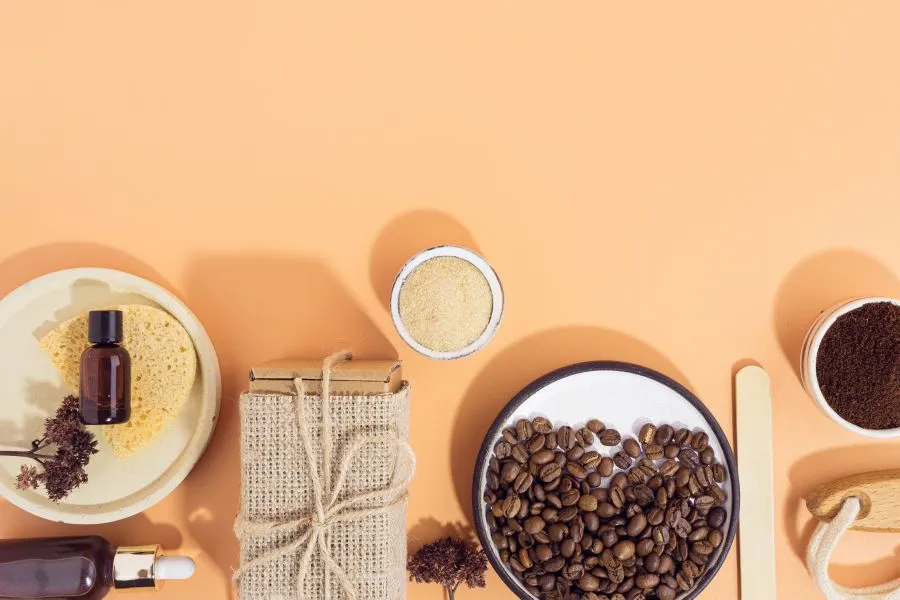 Personal care raw material manufacturers can use the Upcycled Certified standard created by the Upcycled Food Association.
Future of upcycled ingredients
Experts say that upcycled ingredients are likely to remain ambiguous as a category. The ingredients are increasingly embedded in the design and sourcing of active and functional materials across various applications.
“As performance expectations continue to rise, upcycling is increasingly seen as a sourcing approach rather than a standalone claim. Over time, it will be less about labeling an ingredient as ‘upcycled’ and more about selecting, processing, and integrating resources intelligently into high-performing formulations,” Ruiz-Golcher says.
Companies that succeed will treat upcycling as part of product design, not just as something communicated, Ruiz-Golcher continues.
“This means investing in long-term supplier partnerships, scalable processing, and formulation-ready solutions that help meet performance, quality, and supply expectations. Over time, the companies that succeed will be those that integrate circular thinking into sourcing, formulation, and innovation decisions, making upcycling a natural part of their development process for personal care products.”