


EML Techs tackles cosmetic labeling errors with AI regulatory checks

Key takeaways
- AI-powered compliance tools are helping beauty brands reduce labeling errors, regulatory costs, and product launch delays.
- EML Techs’ Export AI identifies cosmetic labeling violations across international markets using regulation-specific checks.
- Evolving EU ingredient restrictions and fragrance allergen rules are driving demand for automated cosmetics compliance solutions.
Beauty brands are facing an increasingly complex compliance landscape as regulations, ingredient restrictions, and labeling requirements evolve across markets. AI-powered guidance, designed specifically for navigating this landscape, is emerging as a solution since it can remove the time-intensive and costly work that can knock back launch dates by weeks or even months.
Export AI by EML Techs is an AI-powered label and regulatory compliance checker for cosmetics, detergent, and aerosol products entering international markets. The software scans packaging artwork and product documentation against destination market regulations and flags compliance issues prior to exporting.
Melike Sönmez, head of product at EML Techs, tells Personal Care Insights that AI tools specifically trained and designed for cosmetics compliance are more effective than generic chatbots or large language models (LLMs) when brands need regulatory guidance or product assessments.
“We ran the same EU cosmetic label through Export AI and a general-purpose chatbot and recorded both results. The chatbot gave a reasonable-sounding summary. Export AI came back with 21 specific fixes the chatbot hadn’t caught,” she says.
Sönmez describes a cat-and-mouse game between brands aiming to meet compliance and changing regulations. According to Sönmez, incorporating effective AI in this step of a product launch can act as a crucial time and money saver, as often while one rule is being vetted, another can change.
“The first check of a product is never the expensive one. The tenth is. A label changes many times before it ships,” she says.
EML Techs was founded out of a frustration with the cumbersome compliance process it aims to fix. The company is backed by Diora Kimya, a Turkey-based cosmetics, soaps, wipes, and household products manufacturer. Sönmez cites the bureaucratic challenges Diora Kimya has experienced across its 60 years of exporting to over 70 markets as the inspiration behind Export AI.
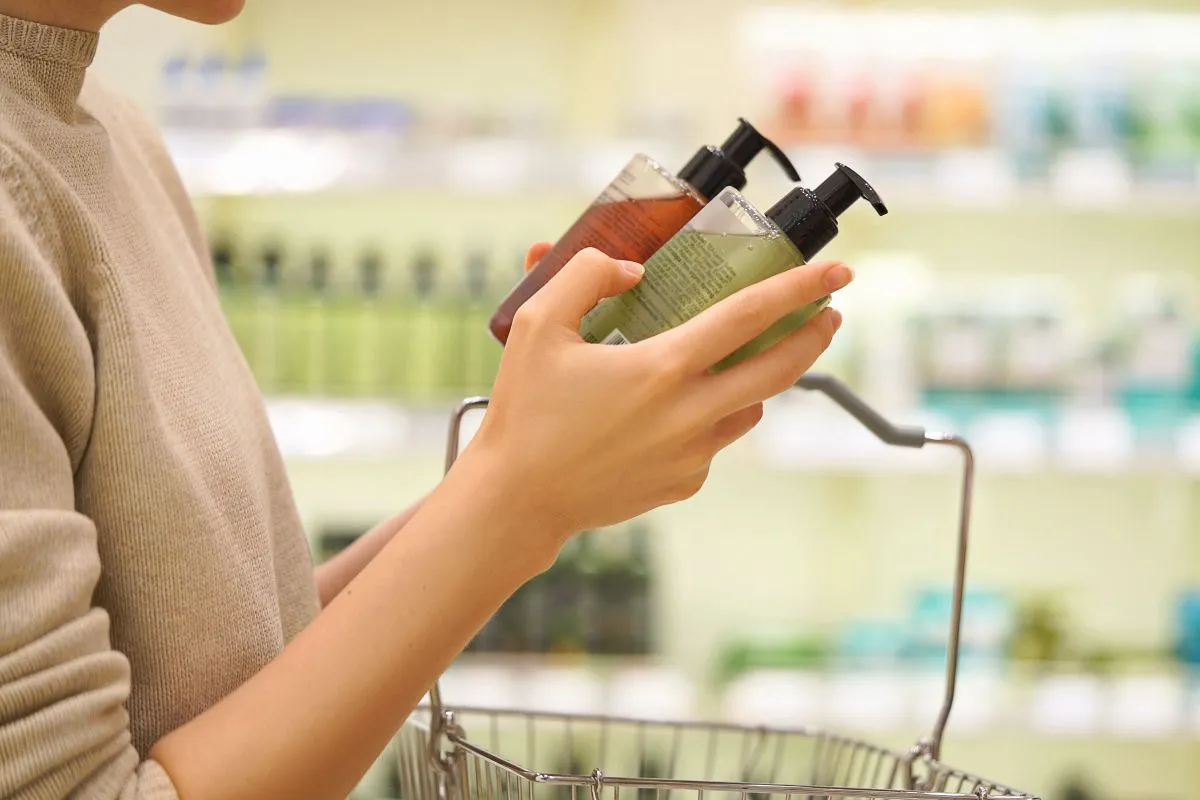
AI-powered tools are helping cosmetics brands navigate increasingly complex global regulations.
Chasing compliance
Sönmez says that necessary but minute changes to a cosmetics label can throw off export times. Small changes add up, as each edit needs to be carefully checked to avoid compliance violations.
“The Responsible Person asks for a wording change, the retailer rewrites a claim, or a new market needs its own language. Each change means checking the label again. Today, that usually means another email to a consultant and a few more days of waiting. Meanwhile, the rules keep moving.”
Sönmez lists various guardrails that have recently tightened, creating strain on brands aiming to achieve compliance across markets. “Omnibus VIII applied on 1 May with no sell-through period. Meanwhile, Regulation (EU) 2023/1545, the fragrance allergen list, went from 26 to over 80 substances, and new products placed on the EU market since July 31 must label them.”
“Even large groups with big regulatory teams get caught out, because nobody can re-read a whole range by hand every time an annex changes,” she tells us.
Last month, the European Parliament approved revised rules under the Omnibus VI chemicals package, giving beauty brands more room to plan reformulations and run down existing inventory.
Despite the added leeway, the compliance deadline still looms, pushing brands and manufacturers to seek efficient and effective ways to align their ingredients with the incoming rules.
“That repetitive first pass is where AI helps most,” says Sönmez. “With Export AI, you upload the finished artwork and pick the market. A few minutes later, every issue is marked on the label with the rule behind it: restricted ingredients, missing warnings, claims, and translations in over 23 languages.”
“R&D, marketing, quality assurance, and whoever signs off on the artwork all draw from the same report, so problems come up before print rather than after. When the next rule lands, you re-run the range instead of starting over.”

EML Techs’ Export AI checks cosmetic labels against regulations in international markets.
Specified guidance over generic LLMs
Sönmez sees three primary reasons a pinpointed guidance tool such as Export AI is performing more effectively than a chatbot or LLM.
First, she highlights that chatbots answer from memory. They are prone to confusing the rules in regions such as the EU and UK or quoting a concentration limit or an article that does not exist. The added risk comes from the chatbot “sounding completely sure,” Sönmez says.
Export AI internally fact-checks its claims before offering them to the user.
“Export AI checks against the regulation text itself: 34 regulations, annexes and lists, plus over 26,000 ingredient entries in the EU’s CosIng database. If it can’t tie a finding to a specific article, it drops the finding.”
The second way Export AI outperforms a generic LLM is that while a chatbot reads whatever text you paste in, Export AI reads the printed artwork, curved and multilingual.
“This is the version an inspector actually picks up. It marks each problem where it sits on the pack,” says Sönmez.
“Third, a chatbot gives you an answer, but a compliance team needs a record: severity, the article, suggested wording, and something quality assurance can file, and a safety assessor can review. General models are good with language. Compliance also needs every finding to be traceable to its source.”

Cosmetics manufacturers face costly delays as labeling requirements evolve across markets.
Global demand, shifting rules
EML Techs is getting most of its demand for automated compliance tools from two groups.
The first group is small and mid-sized brands selling in multiple markets, often both the EU and the UK, “whose rulebooks are slowly drifting apart.”
“The second is companies that check other people’s labels: retailers screening supplier artwork, contract manufacturers, and regulatory consultancies that want a faster first pass before their own review,” says Sönmez.
Recent rule changes are also driving interest in the compliance tool across categories. Fragrance-led and natural brands, for example, are re-checking whole ranges for the new allergens, Sönmez tells us.
“Nail brands are dealing with the TPO ban: BD-API has counted 235 Safety Gate alerts on TPO nail products since it took effect, and Great Britain’s off-shelf date is 14 February 2027,” she says.
By task, Sönmez adds that artwork checking is the most used feature. Teams use it on new products before they go to print, and on products already on the shelf to see whether the latest rule changes affect them.
“Multi-variant ranges get a lot out of it too. When you have one base formula with twenty shades or scents, every variant has its own label to get right,” she says.
Export AI is also seeing demand from exporters in Turkey and Asia “who want to get into Europe and don’t know where to start.”
Turkey is emerging as a strategic geography across beauty manufacturing and exports, as it is at the crossroads of Europe, Asia, and the SWANA (Southwest Asia and North Africa) regions.
“We see Turkey as a strategic manufacturing and supply location for the personal care ingredients industry,” a Kale Care spokesperson previously told Personal Care Insights.
Export AI identifies restricted ingredients, missing warnings, and labeling errors before products reach the market.
Identifying the gap
Sönmez tells us that operational stagnation from navigating regulatory landscapes was apparent in Diora Kimya’s Gaziantep, Turkey-based operations.
“The formula was ready, and the product was ready, and then the label went to a consultant, and everyone waited. A comment came back, then a fix, then another round. Collecting supplier safety data sheets and certificates for a product file could take weeks on its own.”
This waiting game spanned every department for the factory, Sönmez says. In her experience, problems surfaced late — when repairs are most expensive.
Sönmez tells us that she has also seen the stutter of the compliance routine with her own skin care brand, 9to skin, a natural, petroleum-free brow balm brand. “Finished stock in the warehouse, the label with a consultant, and weeks before I could sell.”
“What was missing was anything in between. Consultants are essential, but they’re slow and expensive if you need them for every small change, and the alternative was a spreadsheet.”
“For cosmetics, Export AI drafts the safety report for a qualified assessor to review and sign. Our regulatory partner, Taobé, a consultancy in Belgium, covers the steps where the law needs a person.”