




CH-Bioforce combats unsustainable hairstyling with microplastic-free biopolymer

Key takeaways
- Hairforsense Technology replaces fossil-based polymers with bio-based, microplastic-free ingredients derived from renewable biomass.
- The biopolymer delivers the same styling results as traditional polymers, including hold, frizz control, and curl definition.
- Hairforsense enables hair care brands to future-proof their formulations by using eco-conscious ingredients without compromising performance or consumer satisfaction.
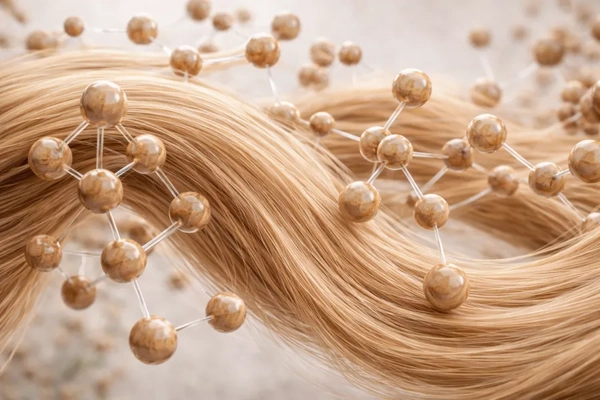
CH-Bioforce has launched Hairforsense Technology, a bio-based polymer system designed to replace conventional fossil-based styling polymers. The company specializing in hairstyling ingredients is tackling sustainability in hair care with its release.
The biopolymer is derived from renewable biomass and is said to support “more responsible” use of raw materials in line with circular economy principles.
CH-Bioforce says the industry relies on fossil-based synthetic polymers as styling ingredients in hair care. This dependence prompted the Finnish ingredient company to identify the need for ecologically minded, microplastic-free alternatives to petrochemical film formers.
Performance coupled with ecology
The biomaterials company explains the challenges of balancing sustainability and performance. To compromise on either front, the polymers must deliver the same results as their predecessors. Delivering hold, frizz control, curl definition, and flexibility while also maintaining a pleasing sensory experience, Hairforsense is designed around these functional demands.
Hairforsense is a polymer system that accounts for the interaction of various bio-based polymers and hair fiber. Traditional hairstyling polymers function by creating glue-like films that bind the strands together with petrochemical acrylic and vinyl materials, and can lead to build-up due to dense inter-fiber connections.
Conversely, Hairforsense relies on a “fundamentally different approach” that forms crystalline-like biopolymer particles that target the scalp and hair strand. The particles aim to create a flexible film structure that provides discontinuous strand reinforcement rather than adhesive film formation.
CH-Bioforce lists the characteristics of the flexible film as: providing and holding shape memory, enhancing curl clusters and definition, reducing visible frizz, maintaining flexibility and softness, and allowing restyling without product breakdown. The flexibility of the bio-polymer allows a natural finish on the hair strand that does not harden or crack.
Application potential
The ingredient has been designed for easy incorporation into existing formulations as a drop-in alternative to microplastic-based polymers. This process enables updated formulations without invasive restructuring.
Some potential applications of the bio-polymer include creams and lotions, gels and styling products, sprays, and products aimed at curl definition and texture enhancement.
The company underscores the lag in sustainability efforts in the hairstyling segment of the beauty industry. As the segment remains one of the primary users of fossil-derived ingredients, it is also responsible for the presence of persistent pollutants, such as microplastics.
The biopolymer is touted to help brands future-proof their portfolios without compromising formulation performance or consumer satisfaction by engaging ecologically informed formulation approaches and coordinating with regulatory developments.