



Waste-derived feedstocks push circular beauty toward commercial scale

Key takeaways
- Circular feedstocks can reduce beauty’s reliance on virgin agricultural and petrochemical resources.
- Biotechnology and precision fermentation are improving the consistency and performance of waste-derived ingredients.
- Life cycle data, clearer standards, and regulatory recognition will be critical to mainstream adoption.

Circular feedstocks — ingredients sourced by upcycling food, agricultural, or industrial byproducts — are emerging as minimally resource-intensive personal care solutions as the industry pushes to achieve genuine sustainability.
The beauty industry is increasingly rooted in sustainability through heightened consumer demands and tightening regulations. The sector is also facing an enhanced sense of urgency to generate resource-low ingredient options as supply chains feel the strain of climate-related biodiversity loss.
Innova Market Insights data indicates a +56% CAGR in personal care launches with circular claims from July 2021 to June 2026. Innovation is increasingly focused on reducing environmental impact through upcycled and renewable ingredients. The market researcher says circularity is becoming an increasingly visible part of product development across skin care, hair care, and body care.
“Ultimately, the transition toward circular beauty is not only about replacing fossil-derived ingredients, but also about reducing reliance on virgin agricultural resources. In that context, well-characterized industrial side streams represent one of the most promising pathways for the next generation of sustainable cosmetic ingredients, combining environmental benefits with the scalability needed for widespread adoption,” an AmphiStar spokesperson tells us.
AmphiStar says biotechnological developments are contributing to innovations in producing alternative feedstocks that are not as resource-intensive as petrochemical or virgin feedstocks. In addition to saving resources, the company believes that industry players should adopt waste-derived ingredients to fortify their supply chains, as access to petrochemical and first-generation resources becomes more volatile.

Upcycled side streams can reduce reliance on virgin agricultural resources.
Offering an alternative and scaling recycling
AmphiStar tells us that emerging bio-based ingredients, including biosurfactants, are currently produced through fermentation using first-generation feedstocks such as glucose, sucrose, vegetable oils, or palm-derived raw materials. While these ingredients are significantly more sustainable when compared with petrochemical routes, they still depend on dedicated agricultural resources, which can cause a significant strain on natural resources.
“This is why there is growing interest in second-generation feedstocks. Instead of relying on virgin crops, waste side streams and industrial byproducts such as food-processing residues, used cooking oil, and other agri-food byproducts can serve as alternative carbon sources for fermentation,” says the spokesperson.
AmphiStar tells us that the greatest opportunity for scalable innovation lies in side streams that are already available at scale through existing industrial value chains.
“Used cooking oil, food-processing residues, and other agro-industrial byproducts offer an attractive combination of availability, supply security, and circularity. Rather than requiring dedicated agricultural production, these streams create value from resources that already exist within the economy.”
The company says that in personal care, innovations across biotechnology, feedstock processing, and fermentation technology are enabling efficient conversion of these underutilized carbon sources into high-performance ingredients.
Diversifying feedstock sourcing
As circular beauty matures, further alternatives for waste streams are popping up. Another source emerging for waste feedstocks is the brewing industry. Earlier this year, two separate studies identified that beer and brewing waste have potential applications for dermatological products and derma-cosmetics.
One of the studies examined the use of brewing waste for treating atopic dermatitis, while the other explored the antioxidant properties of beer and yeast-derived formulations and their potential applications in cosmetic formulations. Both studies demonstrated promising results in the applicability of beer by-products in skin care solutions.
Similarly, Evonik recently tapped scotch whisky waste to create a cosmetic emollient. The company is using Scottish green-tech company, Celtic Renewables’ bio-butanol to create a sustainable emollient. Celtic Renewables produces the bio-butanol entirely from waste materials at their Scottish biorefinery using locally sourced feedstocks, including whisky pot ale and rejected potatoes.
AmphiStar tells us that the circular beauty space is growing, and the focus is moving from proving that waste-derived feedstocks can work to deploying them at a commercial scale.

Biotechnology is helping beauty manufacturers scale circular ingredient production.
Technical challenges
Technical challenges may arise when transforming food, agricultural, or industrial byproducts into high-performance personal care ingredients. AmphiStar says these concerns primarily revolve around achieving competitive consistency, purity, safety, and efficacy when manufacturing from secondary feedstocks.
“Unlike conventional feedstocks such as refined sugars or vegetable oils, renewable side streams can vary in composition depending on their source and processing history.”
“One of the key challenges is therefore ensuring that these feedstocks can be efficiently converted into ingredients that consistently meet the stringent quality requirements of the personal care industry.”
The company offers a solution in fermentation and downstream processing. The increasingly sophisticated innovations are able to deliver consistent results in ingredient manufacturing through advancing biotechnological processes.
In a controlled fermentation process, microorganisms convert renewable carbon sources into well-defined target molecules, while purification steps ensure the final ingredient meets the required standards for purity, safety, and quality.
As such, the ingredient outcomes are determined by the increasingly controllable manufacturing process, rather than variability in the original feedstock.
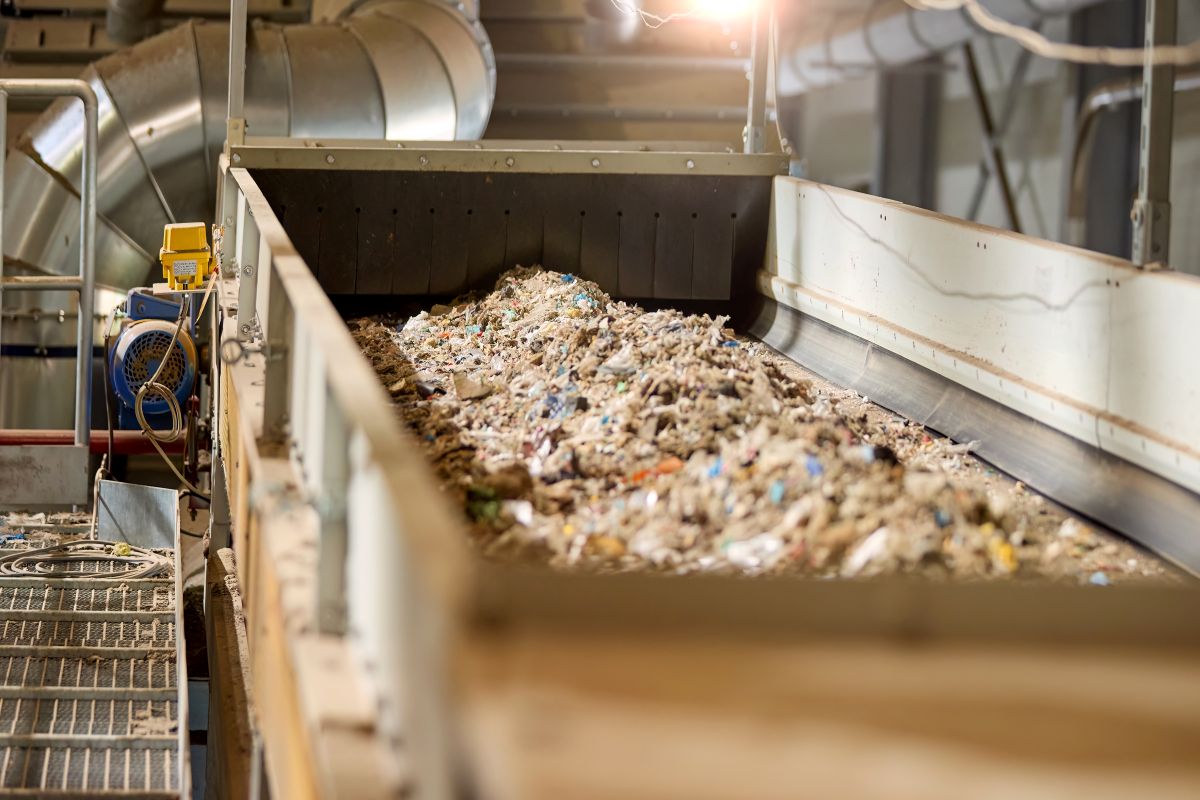
Food and agricultural byproducts are finding new applications in personal care.
Formulating the future
In many cases, using upcycled feedstocks offers environmental footprint reduction from not needing a dedicated crop, instead of the waste reduction itself.
“This drastically cuts land clearance and chemical use while enabling the use of feedstocks transported locally or regionally rather than across the world, all factors which contribute to the bulk of the environmental impact of non-upcycled feedstocks,” says AmphiStar.
However, the technological sophistication or the environmental benefits of circular beauty are inconsequential to a brand if the formulation’s performance cannot compete.
“Precision fermentation, such as the one we use at AmphiStar, lets the molecule be tailored to the application, instead of one ingredient being offered for everything. This means we can offer molecules with properties such as foaming, cleansing, and emulsification, while also being stable at a broad pH range.”
Earlier this month, microbiome cosmetics brand Esse Skincare launched the “world’s first” product formulated with 100% natural propionic acid, through its partnership with French biotech company Afyren. Alongside its fully circular operating model, the company touts the ingredient as being highly efficacious and deeply nourishing.
“This partnership shows how biotechnology can unlock new opportunities for both performance and sustainability in cosmetics, bringing tangible benefits for people and the planet,” said Joachim Merziger, chief commercial officer at Afyren.

Circular beauty is moving from niche innovation toward commercial scale.
Moving upcycling mainstream
AmphiStar underlines the necessity for robust evidence, clear standards, and transparent communication to encourage wider adoption of upcycled ingredients.
“Life-cycle data is a key part of this. A cradle-to-gate life cycle assessment with named comparators and stated boundaries is what separates a substantiated claim from a marketing one,” says the company.
It adds that data-driven verification will become more important as sustainability reporting and greenwashing regulations evolve. The Belgian biotechnology company believes that transparent environmental assessment should become standard practice across the category instead of being seen as a point of differentiation.
Regulation plays a large role in the adoption of new manufacturing methods, especially when moving away from industry go-tos such as palm-derived ingredients. But AmphiStar says regulation is “still catching up.”
“Not because the ingredients fall short, but because many certification schemes were built when ‘natural’ meant plant-derived, and they are only beginning to recognize ingredients defined by production method rather than by crop origin. This is changing as regulators establish clearer paths to recognition for genuinely different routes like waste-fed fermentation.”
The company explains that regulation and life cycle data are also relevant to consumer communication, allowing brands to speak clearly and with assurance about their products’ positioning.
“Once the evidence and the certification questions are settled, brands can talk about upcycled content plainly rather than hedging it in vague sustainability language. Moving beyond broad sustainability narratives toward measurable impact will be essential for mainstream adoption.”