



Shark protections tighten as squalene sourcing for cosmetics drains populations

Key takeaways
- New trade restrictions highlight that many cosmetics still contain shark-derived squalene, even when brands are unaware.
- Weak labeling rules make it difficult for consumers to know whether squalene in beauty products is plant- or shark-derived.
- Regulators are tightening trade rules for gulper sharks and other deep-sea species as their populations continue to collapse.
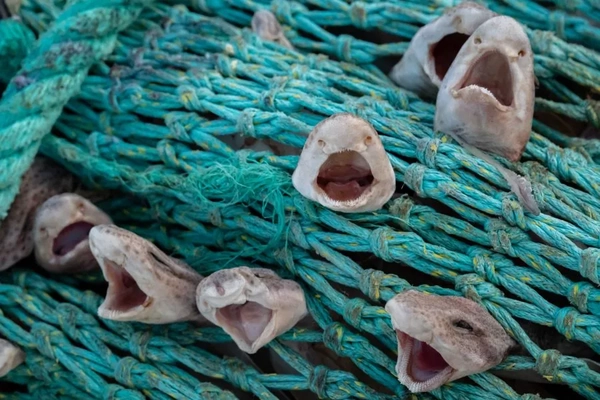
A sweeping expansion of marine protections is set to challenge the cosmetics industry’s dubious sourcing of shark liver oil. The ingredient is used in squalene production, but weak trade and transparency rules allow companies and consumers to unknowingly use it. With shark populations in steep decline, regulators are stepping in to increase oversight.
“According to a 2024 study published in the journal Science that looked at the plight of 521 species of deepwater sharks and rays, nearly two-thirds of threatened deepwater sharks have been used in liver oil products,” Barbara Slee, senior program manager at the International Fund for Animal Welfare (IFAW), tells Personal Care Insights.
“Liver oil from these sharks can be found in cosmetic stores and pharmacies. It’s likely many people will have it in their own homes without realizing,” she adds.
The 20th Conference of the Parties (COP) to the Convention on International Trade in Endangered Species of Wild Fauna and Flora (CITES) is a global conference where governments debate international wildlife trade regulations.
CITES COP20 is currently taking place in Uzbekistan from November 24 to December 5. At the conference, governments voted to establish the highest trade restrictions on marine species, like gulper sharks, who have historically been targeted for their fins and liver oil.
Conference delegates have voted to grant stronger trade protections to over 70 shark and ray species. “These new protections offer sharks a lifeline,” says Slee.
She adds that, while squalene demand is shifting toward ethical alternatives, a transparency gap remains.
“Brands still exploit opacity in sourcing — they advertise ‘vegan’ or ‘sustainable’ squalene without proof, and shark-derived oil remains in use.”
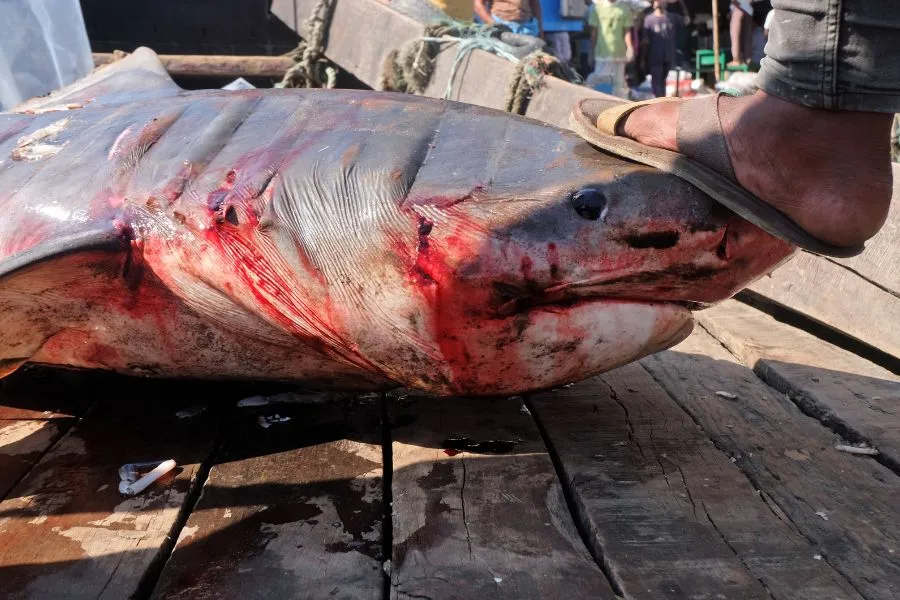 Liver oil is often extracted through a process called “livering,” where sharks are caught, their livers are extracted, and the rest of the body is discarded back into the sea.Cosmetics that kill
The Olive Wellness Institute, an archive of published research on olive science, estimates that between 77 and 1,250 metric tons of olive oil yields one metric ton of squalene — depending on the olive variety, extraction method, and level of refining.
In contrast, the Food and Agriculture Organization of the United Nations estimates that approximately 3,000 sharks are needed to harvest one ton of squalene.
Slee cites data from an NGO study that found 90% of the world’s shark liver oil production is used in the cosmetics industry. This figure corresponds to 2.7 million deep-sea sharks caught every year.
“These sharks have been around since the time of the dinosaurs, but could become extinct because of our desire for face creams and moisturizers, especially when plant-based alternatives to shark liver oil are readily available,” Slee says.
A lack of transparency is a key driver behind the use of shark-derived squalene.
The NGO study outlines that “blind tests run on the products of major cosmetics brands have shown that businesses were sometimes misled by their suppliers into believing that the squalene being sold to them was plant-based.” Shark liver oil is highly valued at around US$15 a kilo.
Squalene is used in various cosmetic products, including makeup, aftershave, sunscreen, and facial cream. However, under the EU’s Cosmetics Regulation (EC No 1223/2009) and its latest updates, cosmetics companies are not required to specify the origin of ingredients on product labels.
The regulation requires an INCI ingredient list, but does not demand disclosures of whether ingredients are animal-derived or plant-derived.
.webp) Cosmetic rules in the EU do not demand disclosures of whether ingredients are shark-derived.Therefore, consumers wanting to make an ethical purchase cannot reliably tell from the label whether a product uses shark-derived or plant-derived squalene — unless the brand voluntarily discloses this information.
Cosmetic rules in the EU do not demand disclosures of whether ingredients are shark-derived.Therefore, consumers wanting to make an ethical purchase cannot reliably tell from the label whether a product uses shark-derived or plant-derived squalene — unless the brand voluntarily discloses this information.
“Many people are unknowingly buying these products. Unless a product is labelled as plant-based or vegan, it could contain shark squalene,” Slee says.
Because cosmetic products rarely disclose whether their squalene is derived from sharks, consumer pressure alone has been insufficient in tackling the issue. She urges the cosmetics industry to explore alternative options or offer customers as much transparency as possible.
“They could also make a public declaration, as other companies have done, to not use shark products and help make this the accepted status quo.”
Protecting sharks
IFAW notes that over 100 million sharks are killed annually, far outpacing reproduction rates. Advocacy and conservation organizations often mention that gulper sharks are the “preferred species” for liver oil.
For example, a Save Our Seas project developing DNA-testing for liver oil traceability explicitly names gulper sharks as among the most exploited.
Gulper sharks mature slowly, produce few young, and recover poorly once depleted, making them exceptionally vulnerable to over-harvesting.
According to IFAW, populations of this species have collapsed by more than 80% in some regions. The organization cites deep-sea fishing, which often occurs with minimal regulatory oversight.
“Controls on international trade are necessary to drive improvements in fisheries management and give these mysterious creatures a fighting chance of survival,” says Slee.
.webp) Shark populations are in steep decline, causing regulators to increase oversight.At the conference, delegates agreed that whale sharks, manta rays, and devil rays should be listed on Appendix I of the CITES treaty, banning all commercial international trade of these species.
Shark populations are in steep decline, causing regulators to increase oversight.At the conference, delegates agreed that whale sharks, manta rays, and devil rays should be listed on Appendix I of the CITES treaty, banning all commercial international trade of these species.
Meanwhile, gulper sharks were listed on Appendix II of the treaty. This listing still allows trade, but only if it is proven to be legal and sustainable.
Conservationists dub the decision overdue and essential.
“[The gulper shark listing] doesn’t stop trade, but it means it will be better regulated and documented as countries will have to give evidence of sustainability and legal origin if they want to continue to trade in these products,” Slee explains.
The Appendix II listing, therefore, contributes to closing the transparency gap between suppliers and manufacturers, which could help curb overall circulation. All CITES COP20 decisions must be ratified at the final plenary taking place today. Protections will take effect 90 days after the conference concludes.
“This could incentivize cosmetic companies to accelerate the transition toward more sustainable plant-based alternatives, as regulations on the trade of deepwater sharks take effect,” Slee says.
“Sharks should be treated as a conservation concern, not just a … resource.”