



ELF Beauty sales surge 51% as Rhode boosts growth and FY2027 outlook

Key takeaways
- ELF Beauty’s Q2 FY2027 net sales surged 51% to US$520.8 million, supported by strong portfolio performance.
- Rhode’s stronger-than-expected performance contributed to growth following its US$1 billion acquisition agreement.
- ELF raised its FY2027 sales outlook above US$2 billion amid global expansion and strong beauty demand.
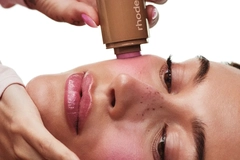 (Image: Rhode)
ELF Beauty has reported a 51% year-over-year increase in net sales to US$520.8 million in its Q2 2027 results. The report has prompted the company to raise its 2027 fiscal outlook, forecasting sales above US$2 billion.
Retail and e-commerce performance in the US and global markets drove the momentum across the company’s portfolio, which includes ELF Cosmetics, ELF Skin, ELF Hair, Rhode, Naturium, and Well People.
Rhode’s stronger-than-expected performance also drove the quarter’s growth. ELF reports a US$17.7 million rise in the projected fair value of contingent consideration regarding its acquisition of Hailey Bieber’s brand.
The results, which include Q2 and H1 of 2027 ended September 30, mark the beauty company’s 31st consecutive quarter of net sales growth.
ELF’s sustained momentum underlines the company’s accessible beauty positioning, ongoing global expansion, and diversifying brand portfolio.
“The consistency of our results is powered by our passionate team of owners, deep engagement with our community, and democratizing access to the best of beauty,” says Tarang Amin, ELF Beauty chairman and CEO.
Growing on all cylinders
In the fiscal quarter, gross margin increased to 71% year-over-year, approximately 160 basis points. The figure includes approximately 30 basis points of benefit from incremental US tariff refunds. The margin increase also benefited from lower year-over-year tariffs and a favorable product mix, which was partially offset by price investments.
Meanwhile, selling, general, and administrative expenses went up by US$69 million to US$300.1 million. Adjusted selling, general, and administrative expenses rose by US$81.9 million to US$275.1 million. The figures reflect higher marketing, merchandising, distribution, and personnel costs.
In the fiscal half, ELF reports US$1 billion in net sales, up 43%. The company records a net income of US$96.6 million and a 90% year-over-year increase in Adjusted EBITDA to US$291.6 million. In H1, gross margin was 77%, including significant benefits from tariff refunds.
The updated 2027 outlook includes an increase in net sales from the previously estimated US$1.94–1.97 billion to US$2.00–2.03 billion and moves the projected sales growth from 18–20% to 22–24%. It also raises adjusted EBITDA from US$401–407 million to US$421–427 million and adjusted net income from US$212–215 million to US$231–233 million. The adjusted diluted EPS now sits at US$3.82–3.86, updated from the previous US$3.50–3.55.
ELF completed its acquisition of Rhode in August 2025 for an initial US$800 million, with a further US$200 million in potential performance-based payments. Shares initially surged 12% following the acquisition announcement, but subsequently fell 11.8% as investors reacted to margin pressures and tariff-related costs disclosed in the company’s first-quarter FY2026 results.
ELF Business strategies
Despite the increasingly precarious diversity, equity, and inclusion space in US companies over the past few years, ELF maintained diversity at the forefront of its operations, arguing that diverse leadership is directly beneficial to the company itself.
Recently, the company announced its third National Association of Corporate Directors cohort as part of its inclusive corporate-director initiative, Change the Board Game.
ELF previously told Personal Care Inisights that a typical publicly traded US boardroom is 77% white and 72% male. However, diverse leadership results in higher revenues, better returns, and fewer lawsuits, the brand said.
“We believe diverse perspectives at the highest levels of leadership drive stronger governance, better decision-making, and long-term business success,” said a company spokesperson.
“To any brand reconsidering its commitments: the facts haven’t changed, diverse teams produce better results, diverse boards make better decisions, and your consumers are watching.”
ELF’s financials demonstrate a case for the profitability of “democratized” beauty.
Recently, beauty multi-brand giants Unilever and Beirersdorf differed in their approach to prioritizing affordability in their pricing. Unilever hiked its prices to compensate for higher commodity costs, and it proved successful. On the other hand, Beiersdorf kept Nivea’s price tags steady, arguing that the brand was competing with more affordable brands.